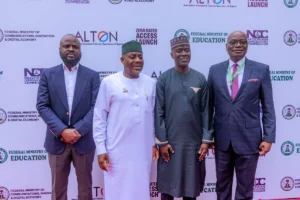
The National Open University of Nigeria (NOUN) has officially announced its 15th convocation ceremony, marking a significant milestone in the country’s educational landscape with the graduation of 24,575 students. Among this substantial cohort are 56 inmates from various correctional centers across the federation, a figure that highlights the university’s unique role in providing transformative education to marginalized and incarcerated populations. During a pre-convocation press briefing held on Tuesday in Abuja, the Vice-Chancellor of the university, Professor Uduma Uduma, emphasized that this upcoming event is more than a mere academic ritual; it is a testament to the institution’s commitment to "education without boundaries" and its belief in the redemptive power of knowledge.
The 15th convocation, scheduled for April 18, 2024, will be conducted through a decentralized model, utilizing the university’s extensive network of study centers nationwide. This approach mirrors the institution’s Open and Distance Learning (ODL) philosophy, which seeks to bring quality higher education to the doorsteps of Nigerians, regardless of their geographical location or social circumstances. Professor Uduma, flanked by the University Registrar, Oladipo Ajayi, the Deputy Vice-Chancellor (Academics), Prof. Chiedu Mafiana, and the Deputy Vice-Chancellor (Administration), Prof. Christine Ofulue, noted that the inclusion of inmates in the graduating class remains a cornerstone of NOUN’s social responsibility and inclusive policy.
A Philosophy of Redemption and Reintegration
The decision to provide tuition-free education to persons serving sentences in Nigerian correctional facilities is rooted in the conviction that no individual is beyond the reach of positive change. Professor Uduma articulated this stance by describing the initiative as a "deliberate policy" aimed at fostering meaningful national transformation. By equipping inmates with academic degrees, the university is providing them with the intellectual tools and moral fortitude necessary for successful reintegration into society upon their release.
"The inclusion of inmates aligns with NOUN’s broader mandate of widening access to education and ensuring that no segment of society is excluded," the Vice-Chancellor stated. He further explained that the academic work performed by these inmates is rigorous and identical to that of their counterparts outside prison walls. Their success serves as a powerful indicator that education can serve as a primary tool for rehabilitation, potentially reducing recidivism rates and offering a pathway for individuals to rebuild their lives and identities.
This initiative is part of a long-standing partnership between NOUN and the Nigerian Correctional Service (NCoS). Over the years, this collaboration has seen a steady increase in the number of inmates enrolling in various programs, ranging from undergraduate degrees in Law and Social Sciences to postgraduate diplomas. The 56 inmates graduating this year represent a diverse group of individuals who have demonstrated resilience and dedication to self-improvement despite the constraints of incarceration.
Logistics and the Decentralized Convocation Model
The 15th convocation ceremony is designed to reflect the university’s nationwide reach. Unlike traditional universities that gather all graduands at a single campus, NOUN’s decentralized model allows for a more inclusive and logistically manageable celebration. On April 18, various study centers across Nigeria’s six geopolitical zones will host simultaneous events, allowing students to celebrate their achievements within their local communities.
This model is particularly significant for a university that boasts the largest student population in Nigeria. The logistics of managing over 24,000 graduands require a highly coordinated effort involving technology and administrative synchronization. Professor Uduma commended the staff and partners who have sustained this nationwide structure, noting that such coordination is what makes it possible to reach underserved populations, including those in remote areas and custodial centers.
In a move toward greater efficiency and student-focused service delivery, the Vice-Chancellor also announced that certificates would be issued immediately following the ceremony. This shift addresses a long-standing challenge in the Nigerian tertiary education system, where graduates often face significant delays in obtaining their original certificates. By streamlining this process, NOUN aims to ensure that its graduates can immediately utilize their qualifications for employment or further academic pursuits.
The Growth and Impact of Open and Distance Learning
Since its reinvigoration in the early 2000s, the National Open University of Nigeria has undergone what Professor Uduma described as a "quiet revolution." By breaking the barriers of the traditional brick-and-mortar classroom, NOUN has opened doors for non-traditional students who might otherwise have been excluded from the higher education system. This includes working professionals seeking to upgrade their skills, stay-at-home mothers, individuals in rural communities, and now, those in the correctional system.
The 2026 graduating cohort is a reflection of this diversity. The 24,575 students represent various faculties, including Education, Health Sciences, Law, Management Sciences, and Social Sciences. The university’s ODL model relies heavily on technology-driven learning, utilizing online platforms and digital resources to deliver curriculum content. This flexibility has made NOUN an attractive option for Nigerians who need to balance their studies with professional and personal responsibilities.
Supporting data suggests that the demand for ODL in Nigeria is on the rise. With traditional universities unable to accommodate the millions of applicants who sit for the Unified Tertiary Matriculation Examination (UTME) annually, NOUN provides a critical safety valve for the nation’s educational pressure. The university’s ability to scale its operations without the need for massive physical infrastructure allows it to grow at a pace that traditional institutions cannot match.
Historical Context and Evolutionary Timeline
The National Open University of Nigeria has a storied history. Originally established in 1983 by the administration of President Shehu Shagari, the institution was suspended shortly after by the succeeding military government in 1984. It remained dormant for nearly two decades until it was resuscitated in 2001 by the administration of President Olusegun Obasanjo, who recognized the need for a flexible educational model to address Nigeria’s growing literacy and manpower needs.
Since its revival, NOUN has evolved from a fledgling institution into a leader in distance education in Africa. Key milestones in its chronology include:
- 2001: Formal resuscitation and appointment of pioneering leadership.
- 2002: Launch of academic programs and establishment of initial study centers.
- 2018: The Presidential assent to the NOUN Amendment Act, which resolved the long-standing issue regarding the recognition of NOUN graduates for the National Youth Service Corps (NYSC) and the Nigerian Law School.
- 2020-2022: Rapid digital transformation in response to the COVID-19 pandemic, solidifying its position as a technology-first institution.
- 2024: The 15th Convocation, marking one of the largest graduating classes in the university’s history and a significant increase in inmate participation.
Broader Implications for National Development
The implications of NOUN’s inclusive model extend beyond individual academic achievement. On a national level, the graduation of over 24,000 citizens contributes significantly to Nigeria’s human capital development. In an era where the global economy is increasingly driven by knowledge and digital literacy, the infusion of thousands of degree-holders into the workforce is a vital component of economic growth.
Furthermore, the specific focus on inmate education has profound social implications. By treating education as a fundamental right rather than a privilege, NOUN is challenging societal stigmas associated with incarceration. The success of the 56 inmates in this cohort sends a message to the larger society about the potential for reform and the importance of providing "second chances."
The Vice-Chancellor called on stakeholders, particularly the media and the private sector, to continue supporting these initiatives. He emphasized that the university’s long-term vision is to position NOUN as a leading institution in inclusive and flexible learning across the African continent. This vision aligns with the United Nations Sustainable Development Goal 4, which aims to ensure inclusive and equitable quality education and promote lifelong learning opportunities for all.
As the university prepares for the April 18 ceremony, the atmosphere is one of anticipation and reflection. For the thousands of students across the country—and especially for those behind bars—the 15th convocation represents the culmination of years of perseverance and the beginning of a new chapter. The National Open University of Nigeria continues to demonstrate that while physical walls may confine the body, the mind remains free to explore, learn, and excel.