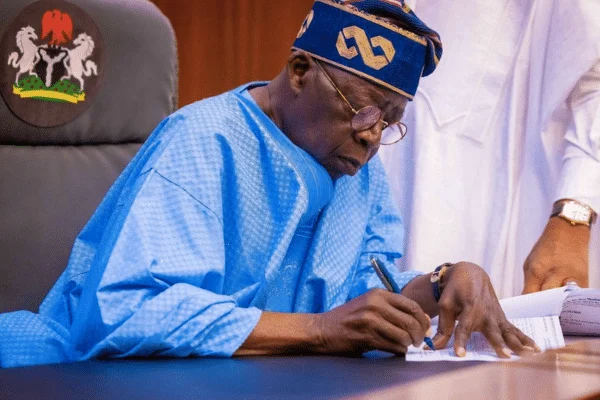
In a decisive move to modernize the nation’s financial architecture and secure its digital economy, President Bola Ahmed Tinubu has signed the Presidential Executive Order on Virtual Assets Coordination, 2026. This landmark directive establishes a comprehensive framework designed to harmonize the oversight of virtual assets, blockchain technology, and digital financial services across Nigeria. The executive order marks a significant shift from fragmented, agency-specific policies to a unified national strategy, aiming to balance the rapid pace of technological innovation with the necessity of rigorous financial security and consumer protection.
According to an official statement released by the Special Adviser to the President on Information and Strategy, Bayo Onanuga, the new order creates a high-level Virtual Asset Council. This council is tasked with bridging the gaps between various financial, revenue, and security agencies that have previously operated in silos. The Central Bank of Nigeria (CBN) will chair the council, and its secretariat will be housed within the apex bank, signaling a centralized approach to the regulation of an industry that has historically challenged traditional banking definitions.
The implementation of this order comes at a critical juncture for Nigeria, which remains one of the world’s most active markets for cryptocurrency and digital asset adoption. By creating a clear regulatory pathway, the federal government seeks to mitigate risks associated with money laundering, terrorism financing, and cybersecurity threats, while simultaneously fostering an environment where legitimate blockchain enterprises can thrive.
Addressing the Challenges of Fragmented Oversight
For years, Nigeria’s digital asset ecosystem has navigated a complex and often contradictory regulatory landscape. Different government bodies, including the Securities and Exchange Commission (SEC), the Central Bank of Nigeria (CBN), the Nigerian Financial Intelligence Unit (NFIU), and the Federal Inland Revenue Service (FIRS), have exercised varying degrees of authority over digital assets. This lack of coordination often led to "regulatory arbitrage," where fraudulent operators exploited gaps between agency mandates to defraud citizens or facilitate illicit financial flows.
The Presidential Executive Order on Virtual Assets Coordination, 2026, explicitly addresses these overlaps. The Presidency noted that when agencies operate without a shared framework, the country is exposed to significant revenue losses and security vulnerabilities. The new council will ensure that policies regarding taxation, securities classification, and anti-money laundering (AML) protocols are consistent and mutually reinforcing.
Under the new framework, the SEC will continue its role in classifying and regulating digital assets that function as securities, while the CBN will oversee the impact of virtual assets on the national payment system and monetary stability. The NFIU and law enforcement agencies will gain streamlined access to data and coordination tools to track suspicious transactions, closing the loopholes that previously allowed unregistered entities to operate with impunity.
A Chronology of Nigeria’s Crypto Regulatory Journey
The signing of this executive order is the culmination of a decade-long evolution in Nigeria’s stance toward digital assets. The journey has been marked by periods of strict prohibition followed by a gradual move toward formal integration.

In 2017, the Central Bank of Nigeria issued its first major warning to banks and the public, cautioning against the volatility and lack of regulation surrounding Bitcoin and other cryptocurrencies. However, adoption continued to surge among the country’s youth, driven by the need for cross-border remittances and a hedge against inflation.
A pivotal moment occurred in February 2021, when the CBN issued a circular prohibiting deposit money banks and other financial institutions from facilitating transactions for cryptocurrency exchanges. This move effectively pushed the industry underground, leading to a massive surge in peer-to-peer (P2P) trading. Despite the restrictions, Nigeria’s transaction volume remained among the highest globally.
By 2023, the tide began to turn. Recognizing the futility of an outright ban and the potential economic benefits of a regulated industry, the CBN lifted its restrictions on banks servicing virtual asset service providers (VASPs). This was followed by the SEC’s introduction of the Accelerated Regulatory Incubation Programme (ARIP), which allowed crypto firms to operate under a "test-and-learn" framework while seeking full licensure. The 2026 Executive Order represents the final stage of this transition, moving Nigeria from a defensive posture to a proactive, coordinated regulatory regime.
Supporting Data: Nigeria’s Position in the Global Digital Economy
The necessity for this executive order is underscored by the sheer scale of digital asset activity within the country. According to data from Chainalysis and other blockchain analytics firms, Nigeria has consistently ranked in the top 10 of the Global Crypto Adoption Index. Between 2022 and 2024, Nigeria was often ranked as the leading country in Africa for crypto transaction volume, with tens of billions of dollars in value flowing through digital wallets annually.
Furthermore, a significant portion of the Nigerian population—estimated at over 30% of adults—has used or owned some form of cryptocurrency. This high level of penetration is driven by a tech-savvy youth demographic and the practical utility of stablecoins for business payments in the face of foreign exchange liquidity challenges.
The Federal Inland Revenue Service (FIRS) has also noted the untapped potential of this sector. Prior to the harmonization efforts, capturing tax revenue from digital asset transactions was nearly impossible due to the lack of a legal definition for virtual assets in the tax code. The new framework is expected to provide the legal basis for the FIRS to implement a digital assets tax regime, potentially adding billions of naira to the national treasury.
Balancing Responsible Innovation with Enforcement
A core tenet of the 2026 Executive Order is the dual objective of encouraging technological advancement while maintaining a "zero-tolerance" policy toward financial crime. The Presidency emphasized that the order is not intended to introduce "new layers of bureaucracy" but rather to optimize the efficiency of existing institutions.
For legitimate startups and Virtual Asset Service Providers (VASPs), the order provides much-needed clarity. Historically, fintech founders in Nigeria have struggled to determine which licenses were required to remain compliant across multiple agencies. By centralizing coordination under the Virtual Asset Council, the government aims to create a "single window" for regulatory guidance, reducing the compliance burden on innovative firms.

Conversely, the order empowers security agencies to take more aggressive action against "bad actors." The Presidency stated that unregistered and fraudulent operators have cost Nigerian families significant portions of their savings through "rug pulls" and Ponzi schemes disguised as crypto investments. The coordinated framework will allow for faster freezing of illicit assets and more effective prosecution of cybercriminals.
Stakeholder Reactions and Industry Implications
The announcement has been met with a mixture of optimism and cautious observation from the local fintech community. Industry experts suggest that the move could trigger a new wave of venture capital investment into Nigeria’s blockchain sector. Investors who were previously wary of the "regulatory flip-flops" may now see Nigeria as a stable environment for long-term capital deployment.
"This is the clarity we have been asking for since 2021," said a senior executive at a leading African crypto exchange. "Knowing that the CBN and SEC are finally on the same page allows us to build products with the confidence that the rules won’t change overnight. It also helps us in our international partnerships, as global banks are more willing to work with entities that are clearly regulated by a unified national framework."
However, some analysts warn that the success of the order depends entirely on its implementation. The Virtual Asset Council must ensure it does not become a bottleneck for innovation. There are also calls for the council to include private sector representatives to ensure that the evolving nature of blockchain technology is understood at the policy level.
Analysis: A Strategic Shift Toward Digital Sovereignty
The signing of the Presidential Executive Order on Virtual Assets Coordination, 2026, reflects a broader global trend where nations are realizing that digital assets cannot be ignored or simply banned. By integrating virtual assets into the formal economy, Nigeria is asserting its digital sovereignty.
The move mirrors international developments such as the European Union’s Markets in Crypto-Assets (MiCA) regulation, which also seeks to harmonize rules across different jurisdictions. By adopting a similar coordinated approach, Nigeria positions itself as a leader in African digital finance, potentially serving as a model for other nations on the continent struggling with similar regulatory challenges.
In the long term, this framework may pave the way for more advanced financial products, such as tokenized government bonds or a more robust environment for the eNaira, Nigeria’s Central Bank Digital Currency (CBDC). As the boundaries between traditional fiat currency and digital commodities continue to blur, the Virtual Asset Council will play a pivotal role in ensuring that Nigeria’s financial system remains resilient, transparent, and competitive on the global stage.
The immediate focus for the council will be the full registration of all VASPs operating within the country and the establishment of a real-time data-sharing protocol between the SEC and the CBN. As these measures take effect, the Nigerian public can expect a more secure digital marketplace, while the global tech community will be watching closely to see if this harmonized approach can truly turn Nigeria into the "blockchain capital" of Africa.