The seventh round of intensive negotiations for the World Health Organization’s (WHO) Pandemic Agreement concluded on Friday with a profound division between the Global North and the Global South over the architecture of the Pathogen Access and Benefit-Sharing (PABS) system. This system, often described as the "heart" of the proposed treaty, remains the most contentious and final major hurdle for member states. As delegates departed Geneva, two fundamentally different visions for how the world should share dangerous viruses and the medical countermeasures derived from them remained on the table: a "federated" model championed by the Africa Plus Group and a "hybrid" model proposed by the European Union and its developed-country allies.
The PABS system is designed to rectify the systemic inequities laid bare during the COVID-19 pandemic. Its primary function is to establish a legal framework for the rapid sharing of pathogen samples and their genetic codes (access) during public health emergencies, while ensuring that the resulting vaccines, diagnostics, and therapeutics are distributed fairly across the globe (benefit-sharing). While there is a consensus that a system must exist, the mechanism of its enforcement and the degree of centralized control remain points of fierce diplomatic friction.
WHO Director-General Dr. Tedros Adhanom Ghebreyesus, addressing the closing session of the Intergovernmental Negotiating Body (INB), acknowledged the friction but maintained an optimistic outlook. He noted that while "access" and "benefit-sharing" appeared to be opposing arguments at the start of the week, the discourse had shifted toward viewing them as "two halves of one promise." However, Tedros did not minimize the obstacles, stating, "I will not pretend the remaining issues are small. Real gaps remain, and they deserve the same seriousness in the next session that they have received in this one."
The Federated Model: Africa’s Push for Sovereignty and Traceability
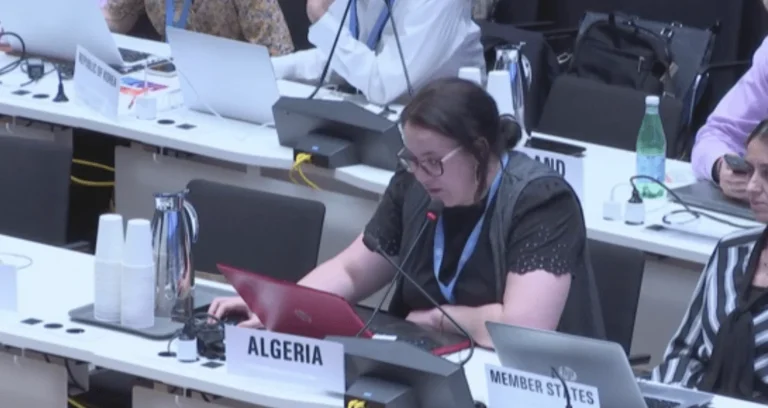
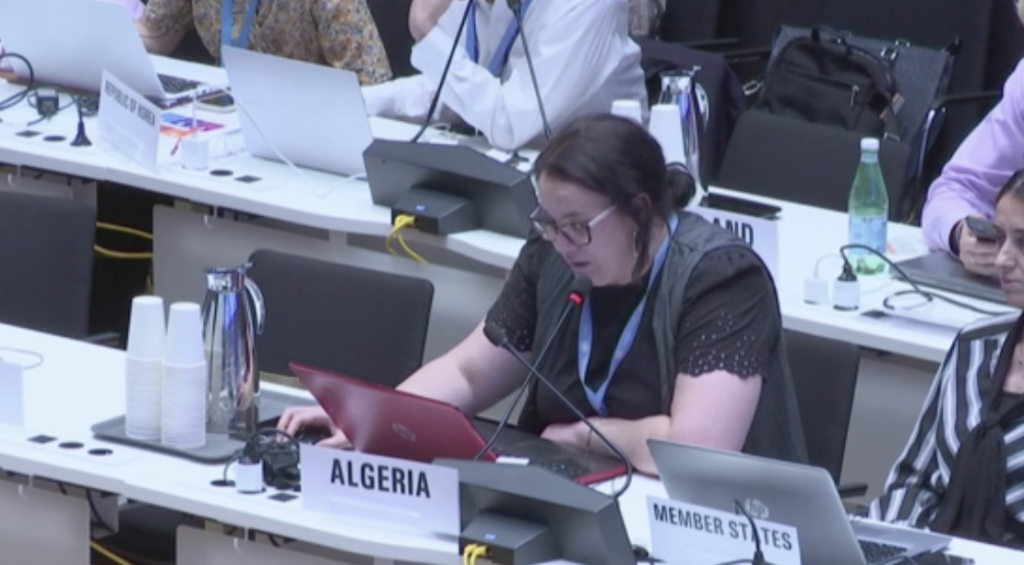
The Africa Plus Group—comprising the WHO Africa region along with Egypt, Somalia, and Sudan—consolidated its position around what it terms a "federated" model. Presented by Algeria on behalf of the group, this model envisions a decentralized architecture built upon sovereign national and regional nodes. These nodes would be interconnected through a metadata index and catalogue hosted by the WHO, utilizing unique, persistent identifiers to ensure end-to-end traceability of both biological materials and pathogen sequence information (PSI).

The hallmark of the federated model is its insistence on conditionality. Under this proposal, any entity—whether a government laboratory or a private pharmaceutical corporation—seeking access to pathogen data would be required to sign binding benefit-sharing commitments at the point of entry. This "contractual" approach is designed to prevent the "free-riding" that occurred during COVID-19, where manufacturers utilized sequence data shared in good faith to develop products that were then sold primarily to wealthy nations.
Algeria’s representative emphasized that the federated model treats digital sequence information (DSI) and physical biological materials with parity. In the modern era of synthetic biology, a physical sample is often unnecessary for vaccine development; the digital code is sufficient. By treating DSI as a resource that triggers benefit-sharing, the Africa Plus Group aims to close a loophole that has historically allowed developed nations to bypass equity obligations. The group argued that this model offers a more sustainable approach than centralized infrastructures, which they claim could "dilute access conditionalities" or maintain the status quo that failed the developing world in 2020.
The Hybrid Model: The EU’s Vision of Voluntary and Mandatory Mixes
In contrast, the European Union formally introduced its "hybrid model," a proposal that has been under discussion in informal circles for months. The hybrid approach seeks to balance mandatory requirements with voluntary cooperation, aiming to preserve the speed of scientific research while providing some guarantees for global equity.
The EU’s proposal envisages a dual-track system. On one track, a global PABS system would operate through the WHO-Coordinated Laboratory Network (WCLN), involving specific benefit-sharing commitments for those who utilize its resources. On the other track, national processes would remain in place, allowing countries to share pathogen materials with laboratories and private entities outside the formal WHO PABS system according to "mutually agreed terms."
Critics of the hybrid model, particularly from the Global South, argue that this "parallel channel" approach could allow wealthy nations and their pharmaceutical sectors to circumvent the WHO system entirely. They fear that if a "voluntary" option exists, the most valuable pathogen data will be shared through bilateral agreements that prioritize profit and national security over global public health equity.
Historical Context: From the PIP Framework to Article 12
The current negotiations are deeply rooted in the history of global health law, specifically the Pandemic Influenza Preparedness (PIP) Framework. Adopted in 2011, the PIP Framework established a system for sharing influenza viruses with human pandemic potential. However, its scope is limited to flu. When COVID-19 struck, there was no equivalent legal structure for a non-influenza pathogen (SARS-CoV-2), leading to the "vaccine apartheid" that saw low-income countries waiting months or years for doses that were being hoarded in the West.
The "Article 12" mentioned by Algeria refers to the specific section of the draft Pandemic Agreement that deals with the PABS system. The debate over Article 12 is essentially a debate over the price of participation in global surveillance. Developing countries, which are often the sites of emerging zoonotic threats, argue that they provide a "global public good" by identifying and sharing new pathogens. In return, they demand a guaranteed share of the "benefits"—typically cited as 20% of pandemic-related product production (10% as a donation and 10% at affordable prices) to be managed by the WHO.
Chronology of the Pandemic Agreement Negotiations
The journey toward a Pandemic Agreement has been a marathon of international diplomacy, marked by the following milestones:
- December 2021: A Special Session of the World Health Assembly (WHA) establishes the Intergovernmental Negotiating Body (INB) to draft and negotiate a WHO convention, agreement, or other international instrument on pandemic prevention, preparedness, and response.
- February 2022: The first meeting of the INB takes place to define the process and timelines.
- December 2022: A "Conceptual Zero Draft" of the agreement is published, outlining the broad ambitions of member states.
- May 2023: The 76th WHA sees member states reaffirming their commitment to finishing the treaty by May 2024, though this deadline was later extended due to the complexity of the PABS system.
- Late 2023 – Early 2024: Multiple rounds of negotiations (Rounds 4 through 6) see progress on articles related to "One Health" and prevention, but a complete stalemate on Article 12.
- July 2024: The seventh round ends with the formal tabling of the Federated and Hybrid models, setting the stage for a final showdown in September.
Leadership Transitions and the Path Forward
The conclusion of the seventh round also marked a significant shift in the leadership of the negotiations. Several veteran diplomats, who have steered the process since its inception, are stepping down. These include co-chair Matthew Harpur of the United Kingdom and vice-chairs Madeleine Heywood of Australia and Dr. Hanan Al Kuwari of Qatar.
The departure of Madeleine Heywood was particularly poignant. She reflected on the five-year journey, noting that her child had grown from an infant to a school-aged child during the duration of the talks. "There aren’t many left now here who were in this room, masked and distanced, when we started this process," Heywood remarked. She urged the remaining delegates to bridge the gap through empathy and active listening: "What more can I be doing towards a common understanding in this room to find common ground? Who can I reach out to?"
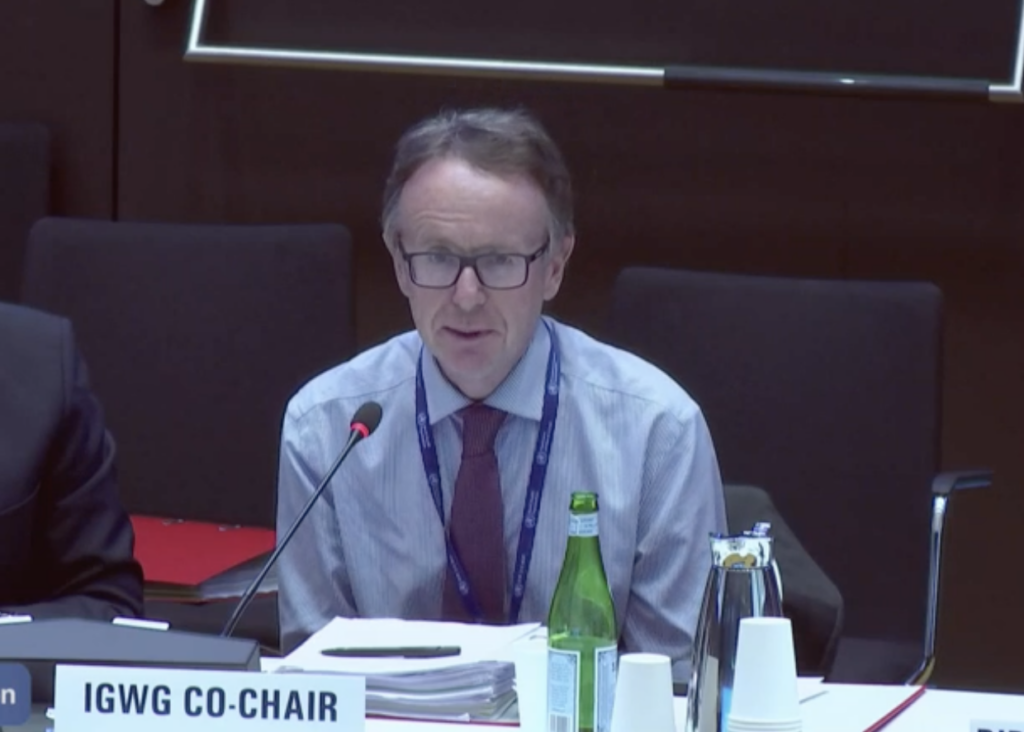
The vacuum left by these experienced negotiators will need to be filled quickly as the IGWG (Intergovernmental Working Group) prepares to reconvene from September 14 to 19. The pressure to finalize the PABS annex before the end of 2024 is immense, as political windows in many member states—particularly the United States and European nations—may close following upcoming elections.
Implications for Global Health Security
The outcome of the PABS negotiations will have profound implications for the future of global health security. If a Federated model is adopted, it could signal a new era of "health sovereignty" for the Global South, where access to biological data is strictly tied to equity. However, pharmaceutical industry groups have warned that overly stringent conditionalities could slow down the rapid sharing of data, potentially delaying the development of vaccines in the next pandemic.
Conversely, a Hybrid model favored by the West could ensure that the scientific community continues to have frictionless access to data, but it risks leaving the world’s most vulnerable populations dependent on the charity of wealthy nations rather than legally binding rights.
As Algeria noted, the implementation of any system must be accompanied by "adequate financial, technical, and capacity-building support." This includes strengthening national laboratories and the WHO-Coordinated Laboratory Network (WCLN) to ensure that every country, regardless of its economic status, can contribute to and benefit from the global surveillance of dangerous pathogens.
The world now looks toward the September session. The goal remains a "Pandemic Agreement" that is not merely a document of intent, but a functional, legally binding framework that ensures the tragedy of COVID-19—where geography determined survival—is never repeated. As Dr. Tedros reminded the room, the promise of the agreement is only as strong as the willingness of member states to treat access and equity as inseparable.