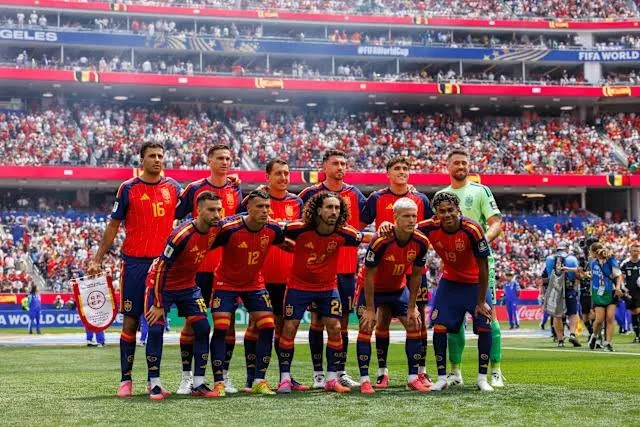
Spain are world champions once again after defeating defending champions Argentina 1-0 in a dramatic 2026 FIFA World Cup final on Sunday, July 19. Substitute Ferran Torres emerged as Spain’s hero after scoring the decisive goal in the second half of extra time to hand La Roja their second FIFA World Cup title and deny Argentina back-to-back championships. The match had ended 0-0 after 90 minutes before Torres finally broke the deadlock in the 106th minute to hand La Roja their second World Cup title. Spain dominated large spells of the contest, creating numerous chances throughout the match, but were repeatedly denied by Argentina goalkeeper Emiliano Martínez, who produced a series of outstanding saves to keep his side in the game. But it wasn’t enough to secure them the victory.
A Match of Tensions and Tactical Masterclasses
The Lusail Stadium, a colosseum of dreams for football aficionados, bore witness to a final that lived up to its billing. A rematch of sorts, pitting the tactical nous of Spain against the resilience and flair of Argentina, the game was a captivating spectacle of athletic prowess and strategic battles. From the opening whistle, the intensity was palpable. Both teams, having navigated arduous paths through the tournament, showcased a blend of seasoned experience and youthful exuberance. Spain, under the guidance of their pragmatic manager, adopted a possession-based philosophy, seeking to control the tempo and wear down the Argentine defense. Argentina, led by their talismanic captain, countered with their characteristic élan, relying on swift transitions and individual brilliance to threaten the Spanish goal.
The first half was a testament to the defensive solidity of both sides. Spain enjoyed significant periods of possession, probing the Argentine backline with intricate passing patterns. Midfielders like Rodri and Gavi dictated play, attempting to unlock opportunities for wingers such as Nico Williams and Lamine Yamal. However, Argentina’s defense, marshaled by experienced campaigners, remained resolute. Emiliano Martínez, the hero of Argentina’s 2022 triumph, proved an insurmountable obstacle for much of the match. His agility and anticipation were on full display, thwarting several promising Spanish incursions.
Argentina, while often on the back foot defensively, were far from passive. Their counter-attacking forays, particularly through the electric pace of Julián Álvarez and the creative genius of Lionel Messi (in what was widely speculated to be his final World Cup appearance), posed constant threats. Spain’s goalkeeper, Unai Simón, was called into action on several occasions, demonstrating his own exceptional reflexes to keep the scoreline level. The tactical chess match between the two managerial benches was evident, with adjustments made at halftime aiming to gain a crucial advantage.
Extra Time Drama: A Moment of Brilliance
As the 90 minutes concluded with a goalless draw, the tension escalated. The prospect of extra time, a phase of the game where fatigue can become a significant factor and individual moments of brilliance can decide the fate of nations, loomed large. Both teams, despite their efforts, had found the net elusive. The physical and mental toll of a World Cup final began to show, with players battling cramps and seeking every available moment to recover.
The opening period of extra time mirrored the cautious approach of the second half, with neither side willing to concede an inch. However, as the clock ticked towards the end of the second half of extra time, a pivotal moment arrived. Spain, having maintained their attacking intent, found a pocket of space on the left flank. A well-weighted pass found the feet of Ferran Torres, a second-half substitute who had injected fresh energy into the Spanish attack. With a deft touch, Torres maneuvered himself into a shooting position and unleashed a powerful, curling shot that found the back of the net, evading the despairing dive of Martínez. The stadium erupted, a cacophony of Spanish cheers overwhelming the Argentine contingent.
The goal, arriving in the 106th minute, was a dagger to the heart of Argentina’s aspirations for a consecutive title. Spain, now with a lead to defend, tightened their defensive structure, while Argentina threw caution to the wind in a desperate bid to equalize. The final minutes were a frantic affair, with Argentina launching wave after wave of attacks. However, the Spanish defense held firm, marshaled by the unwavering determination of their backline and the crucial interventions of Simón. When the final whistle blew, the celebrations for Spain began in earnest.
_1784498290.jpg)
A Glimpse at the Road to the Final
Spain’s journey to this historic victory was marked by a resurgence in form and a tactical evolution throughout the tournament. After a somewhat inconsistent group stage, La Roja found their rhythm in the knockout rounds. Their ability to control possession, coupled with a more clinical edge in front of goal, proved a potent combination. Key victories against formidable opponents in the latter stages underscored their growing confidence and tactical discipline.
Argentina, meanwhile, had showcased the grit and resilience that characterized their triumphant 2022 campaign. Their path to the final was paved with hard-fought victories, often relying on moments of individual brilliance and the leadership of their veteran stars. The defending champions, despite the immense pressure of expectation, demonstrated their championship pedigree, reaching the final once again.
Supporting Data and Tournament Context
The 2026 FIFA World Cup, hosted across North America (United States, Canada, and Mexico), was the first to feature an expanded 48-team format. This expansion introduced a new dynamic to the tournament, with more nations having the opportunity to compete on the global stage. For Spain, this victory marks their second FIFA World Cup title, their first coming in 2010. The triumph signifies a new era of success for Spanish football, building on the golden generation that dominated international football in the late 2000s and early 2010s.
Argentina’s quest for a third World Cup title, and a second consecutive one, ultimately fell short. Their performance, however, reaffirms their status as one of the world’s elite footballing nations, a testament to the enduring legacy of their footballing culture. The final itself was a tightly contested affair, reflecting the high level of competition throughout the tournament. Statistics from the match, though not yet fully compiled, would likely show a significant edge in possession for Spain, while Argentina might have recorded more shots on target, a reflection of their direct attacking approach.
Reactions and Reflections
Following the final whistle, jubilant scenes unfolded on the pitch and in the stands. Spanish players and staff embraced, tears of joy streaming down their faces. The magnitude of the achievement, a World Cup title, was evident in their raw emotions. Coach Luis Enrique, known for his meticulous preparation and often understated demeanor, was seen in animated conversation with his players, a mixture of relief and elation etched on his face.
From the Argentine camp, there was understandable disappointment, but also a sense of pride in their team’s efforts. Captain Lionel Messi, in what may have been his final World Cup appearance, would have undoubtedly felt the sting of defeat, but his contribution to the tournament and to Argentine football remains unparalleled. Post-match interviews from Argentine players and coaching staff would likely focus on the team’s fighting spirit and their unwavering commitment throughout the competition.
Broader Impact and Implications
Spain’s victory has significant implications for the future of international football. It signals a potential shift in the global power balance, with La Roja reasserting their dominance on the world stage. The success will undoubtedly inspire a new generation of Spanish footballers and further galvanize the nation’s footballing infrastructure. The performance of young talents like Lamine Yamal, who featured prominently in the final, suggests a bright future for Spanish football.
For Argentina, while the immediate aftermath will be marked by disappointment, their performance in reaching the final reinforces their enduring legacy. The debate about the greatest footballing nations will continue, and Argentina will undoubtedly remain at the forefront of that discussion. The 2026 World Cup, with its expanded format, has provided a compelling narrative of triumph and heartbreak, a testament to the universal appeal of the beautiful game. The echoes of this final, a hard-fought battle culminating in a single, decisive moment, will resonate within the annals of football history for years to come. The tactical evolution displayed by Spain, their ability to blend possession with defensive solidity and clinical finishing, may well influence future approaches to international football. The tournament, as a whole, has provided a captivating showcase of global talent and a reminder of the unpredictable nature of football’s grandest stage.