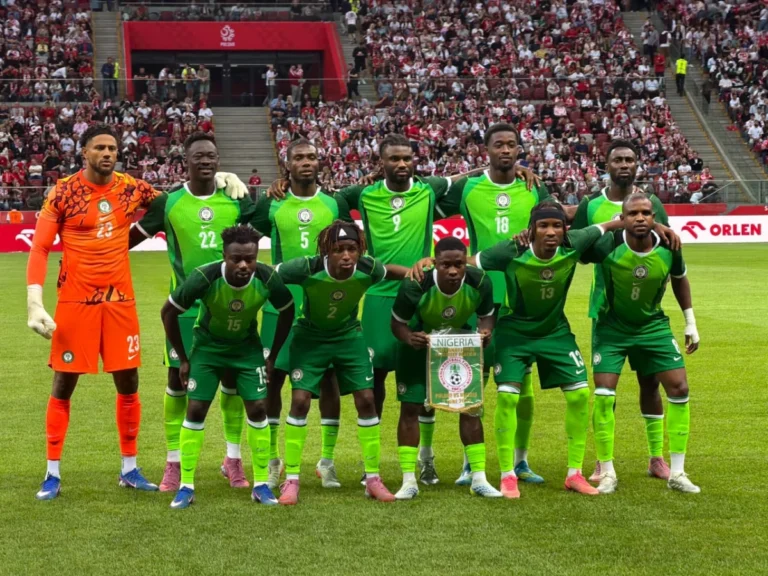
Nigeria’s Super Eagles have maintained their steadfast position at 26th in the latest FIFA Men’s World Rankings, a testament to their consistent performance on the international stage. However, the latest rankings, released on Monday, reveal a shift in the continental pecking order, with Eric Chelle’s squad conceding one spot to fourth in Africa as Egypt surged ahead. This development underscores the dynamic nature of international football rankings and the intense competition among African nations vying for global recognition.
The Super Eagles’ current standing comes after a period of inactivity since their last outing in June, where they faced a challenging 2-1 defeat against former European champions Portugal in an international friendly. While this absence from competitive fixtures might have contributed to the slight repositioning within the African hierarchy, their global ranking remains a strong indicator of their established presence among the world’s elite footballing nations.
African Powerhouses Realign in FIFA Rankings
The ascent of Egypt to third in Africa is a significant narrative within the latest release. The Pharaohs have enjoyed a particularly impressive campaign in the 2026 FIFA World Cup qualifiers, a performance that has clearly resonated with FIFA’s ranking algorithms. Their journey in the tournament saw them reach the Round of 16, a commendable achievement that culminated in a narrow and hard-fought 3-2 defeat against the eventual runners-up, Argentina. This sustained positive performance in major tournaments is a key factor in their climb up the continental ladder.
Morocco continues to assert its dominance as Africa’s highest-ranked nation, holding firm at the sixth position globally. The Atlas Lions, who captivated the world with their historic run to the quarter-finals of the recent World Cup, have seen their global standing improve by one spot. This remarkable World Cup performance has cemented their reputation as a formidable force in African and indeed world football, allowing them to maintain their continental supremacy.
Senegal, another consistent performer on the African continent, maintains its second-place position in Africa. Despite a three-place drop in the global rankings, their strong continental standing reflects their sustained presence among Africa’s top teams. Algeria rounds out the top five African nations, though they have slipped one spot in the continental rankings, indicating the fierce competition and the fine margins that differentiate these top-tier teams.
Global Landscape: Spain Reclaims Top Spot
At the apex of the global rankings, a seismic shift has occurred with the newly crowned FIFA World Cup champions, Spain, reclaiming the coveted No. 1 position. This triumph in the World Cup has propelled them back to the summit, displacing Argentina, who now occupy the second spot. The fierce rivalry and the high stakes of international football are vividly illustrated by this change at the very top.
The global top five is further bolstered by perennial powerhouses France, England, and Brazil, completing a formidable quartet of nations that consistently contend for major international honors. Their sustained presence in the top echelon of the rankings underscores their rich footballing heritage and their continuous investment in talent development.
Understanding FIFA’s Ranking System: A Chronology of Impact
The FIFA Men’s World Ranking system, officially known as the Coca-Cola FIFA World Ranking, is a complex algorithm designed to reflect the current strength of national teams. Introduced in August 1999, it has undergone several revisions to improve its accuracy and relevance. The current methodology, adopted in 2006 and further refined, considers several key factors:
- Match Results: The most crucial element is the outcome of matches – wins, draws, and losses.
- Match Importance: Not all matches carry the same weight. FIFA World Cup matches and continental championship finals are given more significance than friendly matches. The ranking system differentiates between competitive matches (e.g., World Cup qualifiers, continental qualifiers, final tournaments) and friendly internationals.
- Strength of Opponent: A victory against a highly-ranked opponent is rewarded more than a win against a lower-ranked team. Conversely, a loss to a significantly weaker opponent incurs a greater penalty.
- Confederation Strength: The system also takes into account the relative strength of the confederations (UEFA, CAF, CONMEBOL, CONCACAF, AFC, OFC), with matches against teams from stronger confederations potentially carrying more weight.
- Regional Strength: Within confederations, there are further considerations for regional strength.
The rankings are updated periodically, typically on a monthly basis, allowing for the reflection of recent results and the dynamic nature of international football. The Super Eagles’ current standing at 26th globally, for instance, is a product of their performances over a rolling four-year period, with more recent results carrying greater weight. Their last competitive matches, including their World Cup qualifying campaigns and participation in the Africa Cup of Nations, would have significantly influenced their position.
The period between June and the current ranking release would have seen various international friendlies and potentially the continuation of World Cup qualifiers for other nations. While Nigeria has been inactive, other teams have been accumulating points through their performances, leading to the shifts observed in the rankings. For instance, Egypt’s strong showing in their 2026 FIFA World Cup qualifiers, where they have likely secured crucial victories against regional opponents, would have significantly boosted their ranking points.
Data Snapshot: Key Movements and Trends
To provide further context, a hypothetical snapshot of the top African teams’ performances over the last few ranking periods could illustrate the dynamics:
- Morocco: Consistent strong performances in World Cup qualifiers and recent friendly victories against respectable opponents have solidified their No. 1 African status. Their journey to the World Cup quarter-finals provided a substantial point injection.
- Senegal: While maintaining a strong African position, a few unexpected draws or losses in recent friendlies or less critical qualifiers might have led to their slight global dip. However, their overall consistency remains high.
- Egypt: Their strong World Cup qualifying campaign, likely featuring dominant wins against lower-ranked African nations and perhaps a draw or win against a more established opponent, has been instrumental in their climb. Reaching the Round of 16 in a recent major tournament also contributes significantly.
- Nigeria: The Super Eagles’ inactivity is a key factor in their static global position and their slip within Africa. Without recent match results to earn points, they are susceptible to being overtaken by teams that are actively competing and accumulating victories. Their last competitive outing, the 2-1 loss to Portugal, would have resulted in a point deduction, but the subsequent lack of points accumulation means they haven’t been able to offset this or gain new points.
Implications for Nigeria and African Football
The Super Eagles’ current ranking, while respectable, highlights the need for consistent engagement in international fixtures. For Nigeria, maintaining a high global and continental ranking is not just a matter of prestige; it has practical implications for tournament seedings and qualification pathways. A higher ranking generally affords teams a more favorable draw in major tournaments like the Africa Cup of Nations and the FIFA World Cup, potentially leading to easier qualification routes and more advantageous group stage pairings.
The slip to fourth in Africa, while a minor adjustment, serves as a reminder that the continental landscape is highly competitive. Nations like Egypt are demonstrating a resurgence, and teams like Morocco and Senegal continue to set a high bar. For the Super Eagles, this means that future performances in upcoming tournaments, such as the Africa Cup of Nations and the 2026 FIFA World Cup qualifiers, will be crucial in reclaiming lost ground and solidifying their position as a top African force.
The improved standing of Egypt is a positive development for African football as a whole, showcasing the growing strength and competitiveness of the continent’s national teams on the global stage. This trend of African nations consistently performing well in FIFA rankings and major tournaments is vital for increasing the continent’s representation and influence in world football.
Looking Ahead: The Next Ranking Release
FIFA has confirmed that the next edition of the Coca-Cola Men’s World Ranking will be published on Wednesday, October 7, 2026. This upcoming release will undoubtedly be keenly anticipated, especially by nations like Nigeria, as it will reflect the outcomes of any matches played in the interim. The Super Eagles’ schedule for upcoming international windows will therefore be a critical factor in their ability to climb back up the rankings and reinforce their status among Africa’s elite. Fans and analysts will be closely watching for the team’s return to competitive action and the impact it has on their standing. The journey to the top is a continuous one, and for Nigeria, the focus will now shift to future performance and strategic engagement on the international football calendar.