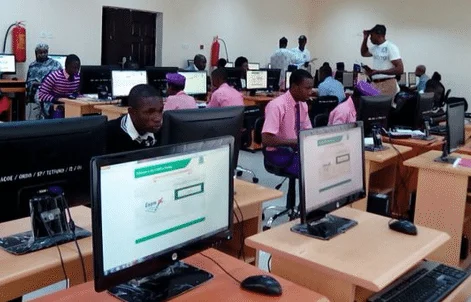
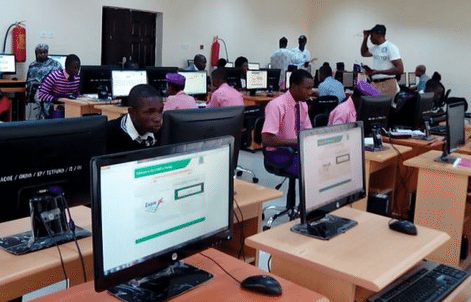
The Joint Admissions and Matriculation Board (JAMB) has officially finalized and released the comprehensive schedule for the 2026 Computer-Based Unified Tertiary Matriculation Examination (UTME), marking a critical milestone for millions of secondary school leavers and prospective tertiary students across Nigeria. According to the administrative timeline released by the Board’s management, the examination is slated to commence on Friday, April 19, 2026, and will conclude on Monday, April 29, 2026. This ten-day window will see candidates processed through a standardized digital testing environment designed to ensure the integrity and efficiency of the national entrance examination system.
In a move to streamline the pre-examination process, JAMB has directed all registered candidates to begin the reprinting of their Official Exam Slips several days prior to the commencement of the testing window. These slips serve as the primary identification and authorization document for candidates, providing essential details including the specific date of their individual examination, the approved venue, and the allocated time schedule. The Board emphasized that the examination will be conducted exclusively at accredited Computer-Based Test (CBT) centers located within the candidate’s self-selected examination towns.
Strategic Logistics and Candidate Conduct
The Joint Admissions and Matriculation Board has maintained a rigorous stance on punctuality and administrative discipline. Candidates are strictly advised to arrive at their designated CBT centers at least 30 minutes before their scheduled session. This early arrival is necessary to facilitate biometric verification, which remains the cornerstone of JAMB’s anti-malpractice framework. The verification process involves the use of fingerprint scanners to confirm the identity of each candidate against the data captured during the registration period.
Dr. Fabian Benjamin, the Head of Public Affairs and Protocol for JAMB, underscored the Board’s commitment to a rigid schedule, stating that the public should note that the Board would not reschedule examinations for any candidate who misses their allotted time. This "no-rescheduling" policy is a long-standing protocol aimed at maintaining the security of the examination questions and the technical synchronization of the nationwide testing network. Failure to appear at the designated time and venue effectively results in a forfeiture of the examination opportunity for that academic cycle.
Academic Requirements and Entry Standards
The 2026/2027 UTME serves as the gateway for admission into various levels of higher education in Nigeria, including First Degree programs in Universities, National Diploma (ND) programs in Polytechnics and Monotechnics, National Innovation Diploma (NID) programs in Innovation Enterprise Institutions, and the Nigeria Certificate in Education (NCE) in Colleges of Education.
To be eligible for admission through the UTME, candidates must meet the statutory O’Level requirements. This generally entails securing at least five (5) credit passes in relevant subjects, which must include Mathematics and English Language, obtained in no more than two sittings through recognized examination bodies such as WAEC, NECO, or NABTEB. To assist candidates in making informed choices regarding subject combinations and institutional requirements, JAMB provides an e-Brochure and an Integrated Brochure and Syllabus System (IBASS). These digital resources are distributed to candidates at accredited CBT centers and JAMB State Offices upon registration, ensuring that every applicant has access to the specific criteria required by their chosen institutions and departments.
Historical Context and the Evolution of CBT
The transition of the UTME from a Paper-Pencil Test (PPT) to a Computer-Based Test (CBT) represents one of the most significant technological shifts in the Nigerian education sector. Initiated as a pilot program in 2013 and fully implemented by 2015, the CBT model was adopted to eliminate the logistical nightmares associated with transporting physical question papers and to drastically reduce examination malpractice, such as "mercenary" test-takers and the leaking of question papers.
Over the last decade, JAMB has refined its technological infrastructure. The 2026 cycle continues this trajectory, utilizing advanced encryption for question delivery and real-time monitoring through Closed-Circuit Television (CCTV) systems installed in every accredited center. The Board’s reliance on automation has not only improved the speed of result releases—often reducing the wait time from months to a few days—but has also enhanced the credibility of the scores used by tertiary institutions for their admission processes.
Chronology of the 2026/2027 UTME Cycle
The announcement of the examination date is part of a broader administrative timeline that governs the Nigerian academic calendar. While the main examination is set for April, the cycle typically follows a structured path:
- Registration Phase: Usually occurring in the first quarter of the year, where candidates create profiles using their National Identification Number (NIN).
- Mock Examination: A voluntary practice session typically held in March to allow candidates to familiarize themselves with the CBT interface and for the Board to test the robustness of its systems.
- Slip Reprinting: Commencing approximately one to two weeks before the main exam.
- Main UTME: Scheduled for April 19 to April 29, 2026.
- Result Release: Generally expected within 72 hours to two weeks following the conclusion of the examination window.
- Admission Processing: Managed through the Central Admissions Processing System (CAPS) starting in the latter half of the year.
Data Analysis: The Scale of the UTME
The UTME remains one of the largest single-window examinations in Africa. In previous years, registration numbers have consistently hovered between 1.6 million and 1.9 million candidates. For the 2026/2027 cycle, analysts expect similar or higher numbers due to the increasing population of eligible secondary school graduates.
The demand for tertiary education in Nigeria continues to outstrip the carrying capacity of the nation’s institutions. Data from the National Universities Commission (NUC) and JAMB suggest that while nearly 2 million students sit for the exam, the total available spots in all categories of tertiary institutions (Universities, Polytechnics, and Colleges) often accommodate fewer than 800,000 students. This discrepancy highlights the highly competitive nature of the UTME, where high scores are a prerequisite for admission into "high-demand" courses such as Medicine, Law, and Engineering.
Infrastructure and Security Protocols
The integrity of the 2026 UTME relies heavily on the quality of the accredited CBT centers. JAMB maintains a strict accreditation process that requires centers to have a minimum of 250 functional computers, back-up power solutions (UPS and generators), and high-speed internet connectivity. Furthermore, the Board employs a "prohibited items" list to prevent digital cheating. Candidates are forbidden from bringing any electronic devices, including mobile phones, calculators, smartwatches, and even certain types of pens or jewelry, into the examination hall.
The use of the National Identification Number (NIN) for registration, mandated in recent years, has been credited with a significant reduction in multiple registrations and identity theft. By linking a candidate’s biometric data from the National Identity Management Commission (NIMC) to their JAMB profile, the Board has created a unified identity trail that follows the student through their academic career.
Implications for the Nigerian Education Sector
The announcement of the 2026 UTME dates provides much-needed clarity for the nation’s 170+ universities and hundreds of other tertiary institutions. It allows these institutions to align their post-UTME screening exercises and internal academic calendars. For parents and guardians, the early announcement facilitates financial planning for registration fees and travel logistics for candidates assigned to centers outside their immediate vicinity.
From a policy perspective, the continued success of the CBT model reinforces Nigeria’s move toward a digital economy. However, challenges remain, particularly regarding "digital literacy" among candidates from rural areas. To address this, JAMB has encouraged secondary schools to incorporate computer training into their curricula and continues to offer the mock examination as a bridge for those unfamiliar with computer systems.
Stakeholder Reactions and Expectations
While the official announcement has been met with general approval for its timeliness, stakeholder groups such as the National Association of Nigerian Students (NANS) and various parent-teacher associations often raise concerns regarding the geographical distribution of CBT centers. There is a recurring call for the Board to increase the number of centers in underserved areas to reduce the distance candidates must travel.
Owners of CBT centers, represented by various associations, have also expressed the need for consistent technical support from JAMB to ensure that local servers and networks do not fail during the high-pressure examination window. The Board has responded by deploying technical teams and "roving" supervisors to monitor center performance in real-time.
As the countdown to April 19, 2026, begins, the focus shifts to candidate preparation. Educational experts advise students to utilize the official JAMB syllabus and past questions to prepare, rather than seeking "short-cuts" or falling victim to examination fraudsters who often claim to have access to the Board’s question database.
Final Summary of the 2026 UTME Schedule
- Examination Start Date: Friday, April 19, 2026.
- Examination End Date: Monday, April 29, 2026.
- Venue: Accredited CBT Centers nationwide.
- Identification: Official Exam Slip (Reprinting required before the exam).
- Arrival Policy: 30 minutes before the scheduled session.
- Verification: Mandatory biometric (fingerprint) screening.
- Rescheduling: Not permitted under any circumstances.
The 2026/2027 UTME stands as a testament to the Board’s ongoing efforts to provide a fair, transparent, and technologically advanced platform for academic assessment. As the Joint Admissions and Matriculation Board prepares its infrastructure, the responsibility now lies with the candidates to ensure they meet the academic and administrative requirements necessary to secure their future in Nigeria’s tertiary education system.