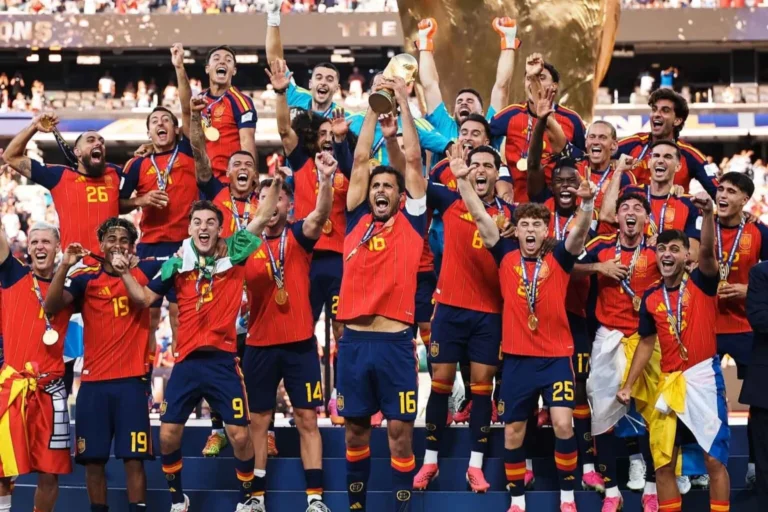
The dust has barely settled on the FIFA World Cup 2026, but the tournament has already reshaped the global football hierarchy. Spain’s dramatic triumph over Argentina in the final has triggered major changes in the latest FIFA Men’s World Rankings, with La Roja replacing the Albiceleste at the summit after a tournament that also produced significant movers across Europe, Africa, and the Americas. From Morocco strengthening their grip as Africa’s highest-ranked nation to Norway’s remarkable leap into the world’s top 20, the post-World Cup rankings reflect the biggest winners, and losers, from an unforgettable month in North America.
Spain Crowned New World No. 1 After Dominant World Cup Campaign
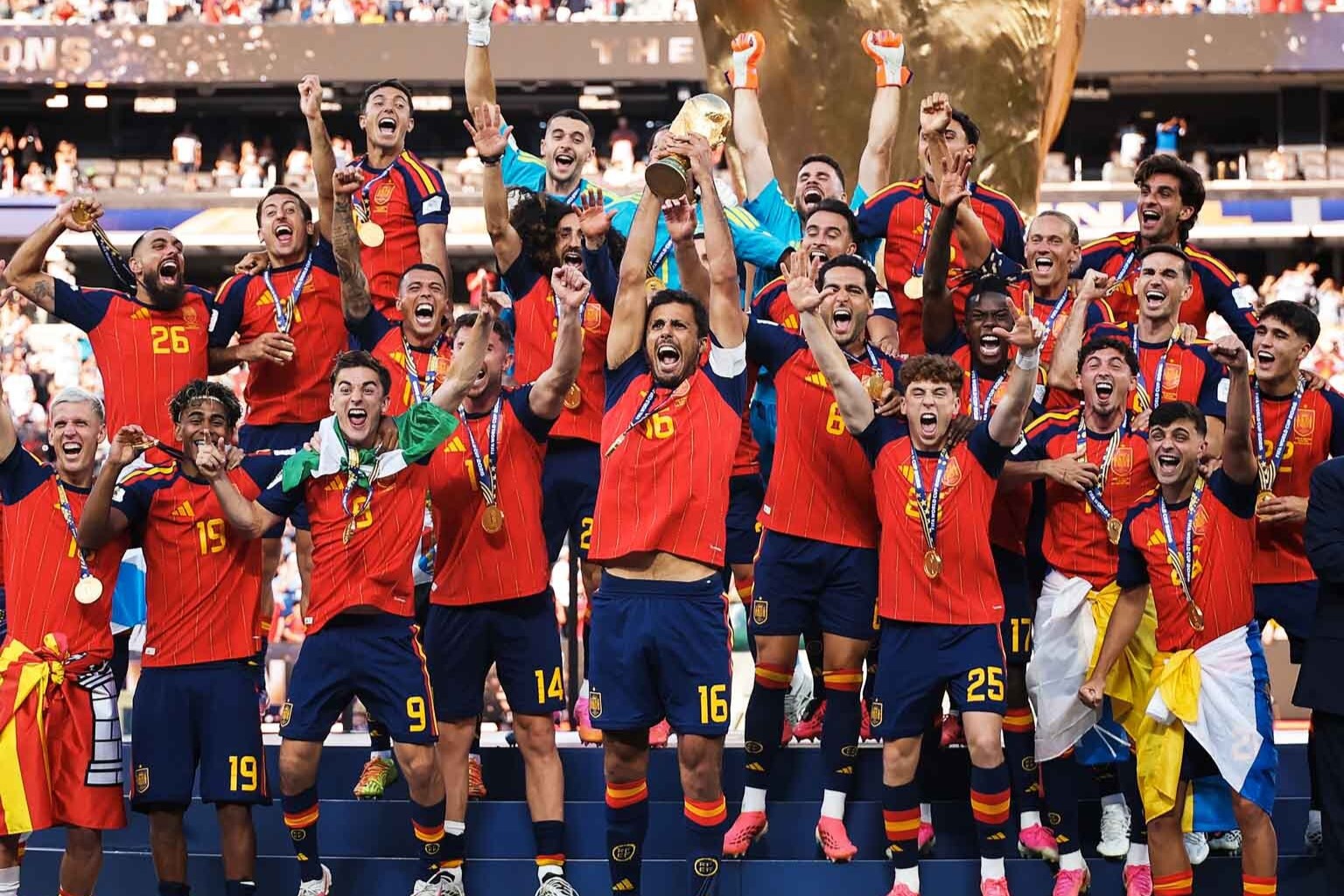
Winning the FIFA World Cup has come with the ultimate reward for Spain, culminating in their ascent to the pinnacle of international football. After Ferran Torres’s extra-time winner secured a hard-fought 1-0 victory over Argentina in the final at the New York New Jersey Stadium, La Roja have climbed to the top of the FIFA rankings for the first time since their golden era of the late 2000s and early 2010s. This latest achievement marks a significant resurgence for Spanish football, proving their enduring quality on the global stage.
Throughout their World Cup campaign, Spain accumulated a massive 121.17 ranking points, taking their overall tally to an impressive 1,995.88 points. This significant gain is a direct consequence of their undefeated run to the title, showcasing a blend of defensive resilience and tactical astuteness that characterized their performances under manager Luis de la Fuente. Their journey through the tournament saw them navigate challenging group stage matches, overcome resilient opponents in the knockout rounds, and ultimately triumph in a tense final, demonstrating a maturity and tactical discipline that has now been duly recognized by the global governing body of football.
The tactical blueprint employed by Spain proved exceptionally effective. Their ability to control possession, coupled with a high-pressing game and decisive attacking plays, allowed them to dictate the tempo of matches. This style of play, honed over years of development within their domestic leagues and youth academies, has once again proven to be a winning formula on the grandest stage. The collective effort, from their experienced stalwarts to emerging talents, underpinned their success and cemented their status as the world’s premier national team.
Argentina Surrender Top Spot Despite Another Historic Run
For Lionel Scaloni’s Argentina, the rankings update brings a mix of pride and disappointment. The defending world champions arrived in North America as the world’s top-ranked nation and came within touching distance of retaining both their title and their position atop the rankings. Their dramatic run to a second consecutive World Cup final, including a thrilling comeback victory over England in the semi-finals, had briefly returned them to the live summit of the rankings during the tournament.
However, Sunday’s heartbreaking defeat to Spain in the final proved decisive in the recalculation of points. The Argentines have now slipped to second place with 1,970.37 points, ending their reign as the world’s highest-ranked national team despite another outstanding World Cup campaign. This narrow margin of defeat highlights the fine margins that often separate elite teams and underscores the competitive nature of the modern international football landscape.
Argentina’s journey to the final was a testament to their fighting spirit and the enduring brilliance of players like Lionel Messi, who continued to inspire his teammates throughout the tournament. Their semi-final clash against England, a high-octane encounter that saw them overturn a deficit, captured the imagination of football fans worldwide. While the ultimate prize eluded them, their performance reinforced their reputation as a formidable force in international football, and their sustained presence at the top of the rankings is a clear indicator of their consistent excellence over the past few years. The emotional toll of the final defeat will undoubtedly serve as a powerful motivator for the team as they look ahead to future competitions.
France, England, and Brazil Reshuffle the Top Five
Behind the two finalists, the world’s traditional heavyweights continue to dominate the upper echelons of the rankings. France remain firmly entrenched in third place with 1,948.97 points, holding onto their position despite suffering a dramatic 6-4 defeat to England in the World Cup third-place playoff. This high-scoring encounter, while perhaps not carrying the same stakes as the final, provided an entertaining spectacle and allowed both teams to showcase their attacking prowess.
England’s entertaining victory over Les Bleus earned Gareth Southgate’s side a valuable 33.41-point boost, consolidating their place as the world’s fourth-ranked nation with 1,922.83 points. This strong performance in the tournament, coupled with their recent consistent form, has seen them solidify their position among the elite. Their attacking flair and ability to perform under pressure have been key factors in their upward trajectory.
Brazil complete the top five with 1,804.92 points. Despite the Seleção suffering one of the tournament’s biggest shocks in their quarter-final defeat to Norway, they still managed to climb one place in the rankings. This indicates the significant point-scoring potential of their squad and their historical standing in international football. The quarter-final loss, however, serves as a reminder of the unpredictable nature of knockout tournaments and the challenges posed by emerging forces.
Morocco Strengthen Grip on African Supremacy
No African nation benefited more directly from the World Cup’s impact on the rankings than Morocco. The Atlas Lions’ outstanding journey to the quarter-finals, where they narrowly missed out on a semi-final berth against eventual champions Spain, has elevated them to sixth in the world with 1,803.99 points. This remarkable achievement reinforces their status as Africa’s undisputed No. 1 team and signals their arrival as a genuine global contender.
Their latest rise further confirms Morocco’s emergence as one of the elite sides in international football, following consecutive impressive performances on the global stage. Their disciplined defense, tactical flexibility, and electrifying attacking counter-plays captured the hearts of many fans and demonstrated the growing strength of African football. This success is the culmination of years of investment in player development and a strategic approach to international competition.

In stark contrast, Tunisia experienced the steepest decline among African nations, dropping a significant 12 places to 57th. This substantial fall highlights the volatile nature of the rankings and the impact that tournament performance can have on a team’s standing. For Tunisia, the World Cup did not yield the desired results, leading to a considerable adjustment in their global ranking.
Egypt Overtake Nigeria After Impressive World Cup Campaign
The World Cup also altered the balance of power among Africa’s leading nations, with Egypt making a notable leap forward. Egypt’s impressive run to the Round of 16, where they pushed eventual finalists Argentina to the brink in a thrilling 3-2 encounter, earned the Pharaohs enough ranking points to move ahead of Nigeria and secure 24th place in the world. This performance showcased their resilience and attacking prowess, proving they are a force to be reckoned with.
While the Super Eagles of Nigeria remain 26th in the world, their inactivity during the primary World Cup tournament window, aside from a pre-World Cup friendly against Portugal, means they have slipped to fourth in Africa. They now find themselves behind Morocco, Senegal, and Egypt in the continental pecking order. This shift underscores the importance of consistent performance in major tournaments for maintaining and improving ranking positions. Nigeria’s absence from the core World Cup matches directly impacted their ability to accumulate points and defend their continental standing.
Senegal, despite slipping three places in the global rankings following the World Cup, still occupies 18th place globally with 1,653.43 points, remaining among Africa’s strongest sides. Their participation and performance in the tournament, even with a slight dip, signify their continued presence among the continent’s elite.
Norway Emerge as the Biggest Winners and Climbers
Perhaps no team enjoyed a more dramatic rise in the FIFA rankings following the 2026 World Cup than Norway. Inspired by a stunning World Cup campaign that included one of the tournament’s biggest upsets against five-time champions Brazil, the Scandinavians climbed an astonishing 12 places. This surge is a testament to their exceptional performance and their ability to punch above their weight.
Norway now occupy 19th place globally with 1,651.29 points, breaking into the world’s top 20 after one of the finest World Cup performances in the nation’s history. Their victory over Brazil was a landmark achievement, demonstrating their tactical discipline, defensive organization, and clinical finishing. This success is the culmination of a period of steady development and the emergence of a talented generation of players who have now made their mark on the international stage. The team’s spirited performances have undoubtedly captured the imagination of their nation and provided a significant boost to Norwegian football.

Portugal, Belgium, the Netherlands, and Mexico Headline the Top 10 Battle
The race immediately behind the world’s top six remains fiercely competitive, with several European powerhouses and one North American contender vying for prominence. Portugal sit seventh with 1,787.85 points, narrowly ahead of Belgium, who occupy eighth place on 1,778.36 points. The Netherlands are ninth with 1,775.54 points, leaving less than three ranking points separating these three European giants, highlighting the intense competition at this level.
Mexico produced one of the tournament’s biggest ranking surges, climbing four places to complete the top 10. El Tri now sit 10th with 1,754.30 points, forcing traditional powerhouses Germany and Italy out of football’s elite bracket. Mexico’s strong performance, characterized by their characteristic tenacity and tactical discipline, has been rewarded with a significant jump in the rankings, demonstrating the growing strength of CONCACAF teams on the global stage.
Germany and Italy Pushed Out of the Elite
Two of world football’s most decorated nations, Germany and Italy, find themselves outside the top 10 following the World Cup recalculations. Germany have dropped to 12th place with 1,726.22 points, slipping behind Colombia while remaining narrowly ahead of Croatia. This represents a dip for a nation historically synonymous with success on the international stage, indicating a period of transition or rebuilding.
Italy have fallen even further, occupying 15th place with 1,704.73 points, following a three-place decline during the latest ranking cycle. Their absence from the World Cup tournament itself likely contributed significantly to this drop. The Azzurri, despite their European Championship triumph in 2020, have struggled to replicate that success on the global stage, leading to a lower ranking position.
Colombia now sit 11th with 1,739.89 points, having gained 41.54 ranking points through an impressive World Cup campaign that saw them perform above expectations. Croatia occupy 13th place with 1,723.05 points, while Switzerland remain 14th, ahead of Italy. The United States are 16th, completing a tightly packed middle section of the global rankings, illustrating the increased parity in international football.
Japan, Senegal, Norway, and Uruguay Complete Top 20
The final places within the world’s top 20 underline the increasingly competitive nature of international football, with teams from across different confederations showcasing their strength. Japan remain Asia’s highest-ranked nation in 17th place with 1,673.68 points, following another consistent international campaign that has solidified their position as a top Asian power.

Senegal occupy 18th place with 1,653.43 points. As mentioned earlier, the Teranga Lions slipped three places in the global rankings following the World Cup, but they remain among Africa’s strongest sides, a testament to their consistent development and the quality of their squad.
Norway’s remarkable rise places them 19th, a significant achievement for the Scandinavian nation. Uruguay complete the top 20 with 1,634.70 points, despite dropping four places after the tournament. Their presence in the top 20 highlights their enduring pedigree and their ability to remain competitive at the highest level, even with some fluctuations.
Spain Begin New Era at the Summit
With the rankings now frozen until the next official FIFA update on October 7, 2026, Spain will enjoy life as the world’s highest-ranked national team after completing one of the most dominant World Cup campaigns in recent history. Their triumph signifies a new era for Spanish football, building on the foundations of their past successes and demonstrating their capacity for sustained excellence.
For Argentina, the disappointment of surrendering both the World Cup trophy and the No. 1 ranking will undoubtedly provide added motivation as Lionel Scaloni begins preparations for the next cycle, should he decide to remain with the national team. The desire to reclaim both titles will fuel their future endeavors.
Elsewhere, Morocco’s continued rise, Egypt’s leap ahead of Nigeria, and Norway’s extraordinary breakthrough serve as further evidence that the balance of power in international football continues to evolve. The 2026 FIFA World Cup has been a transformative event, not only crowning a new champion but also signaling significant shifts in the global football landscape, promising an exciting and unpredictable future for the sport. The impact of this tournament will be felt for years to come, as nations recalibrate their strategies and strive for similar success.