
The academic community and the Nigerian public have been drawn into a heated debate following the announcement that the Faculty of Law at the University of Ibadan (UI) produced 58 First Class graduates in the 2024/2025 academic session. This unprecedented number, representing nearly 40 percent of the graduating class, has sparked a wave of skepticism on social media, with critics questioning the integrity of academic standards at Nigeria’s premier university. In a swift and detailed response, the former Vice-Chancellor of the institution, Professor Idowu Olayinka, has come forward to defend the results, describing the backlash as "unwarranted and ill-informed" while providing a data-driven justification for the students’ exceptional performance.
Professor Olayinka, who served as the 12th Vice-Chancellor of the University of Ibadan from 2015 to 2020, clarified that the results were not a product of administrative leniency but a reflection of the high-caliber students the university admits. Speaking via a statement released on his official Facebook page on Tuesday, the Professor of Applied Geophysics noted that he was personally present at the Senate meeting held on 16 February, where the results were formally scrutinized and approved. He emphasized that the academic achievements of the 146 students who completed the programme were the result of rigorous training and a merit-based admission process that filters for the brightest minds in the country.
The Statistical Breakdown of the 2024/2025 Graduating Class
The controversy began when the breakdown of the results was made public. Out of a total of 146 students in the graduating cohort, 58 achieved a Cumulative Grade Point Average (CGPA) high enough to earn a First Class honours degree. This translates to a success rate of approximately 39.7 percent in the top bracket. Historically, First Class degrees in Nigerian law faculties have been notoriously rare, often with only one or two students—or sometimes none at all—achieving the feat in a single year.
The sudden surge in top-tier graduates has led to public discourse regarding "grade inflation." Critics argue that such a high percentage of top honors could potentially devalue the prestige associated with a First Class degree from a prestigious institution like the University of Ibadan. However, Professor Olayinka countered this narrative by arguing that success should not be measured by the "quantum of failures." He posited that when a university admits the best students in the nation, it should be expected that they will perform at an elite level if provided with the right environment and instruction.
Entry Requirements: The Foundation of Academic Excellence
Central to Professor Olayinka’s defense is the argument that the "raw material"—the students themselves—enters the university with an already established record of high performance. He pointed out that the Faculty of Law at UI maintains some of the most stringent admission requirements in the Nigerian university system. To be admitted into the programme, candidates must navigate a highly competitive process involving the Unified Tertiary Matriculation Examination (UTME) and the university’s internal Post-UTME screening.
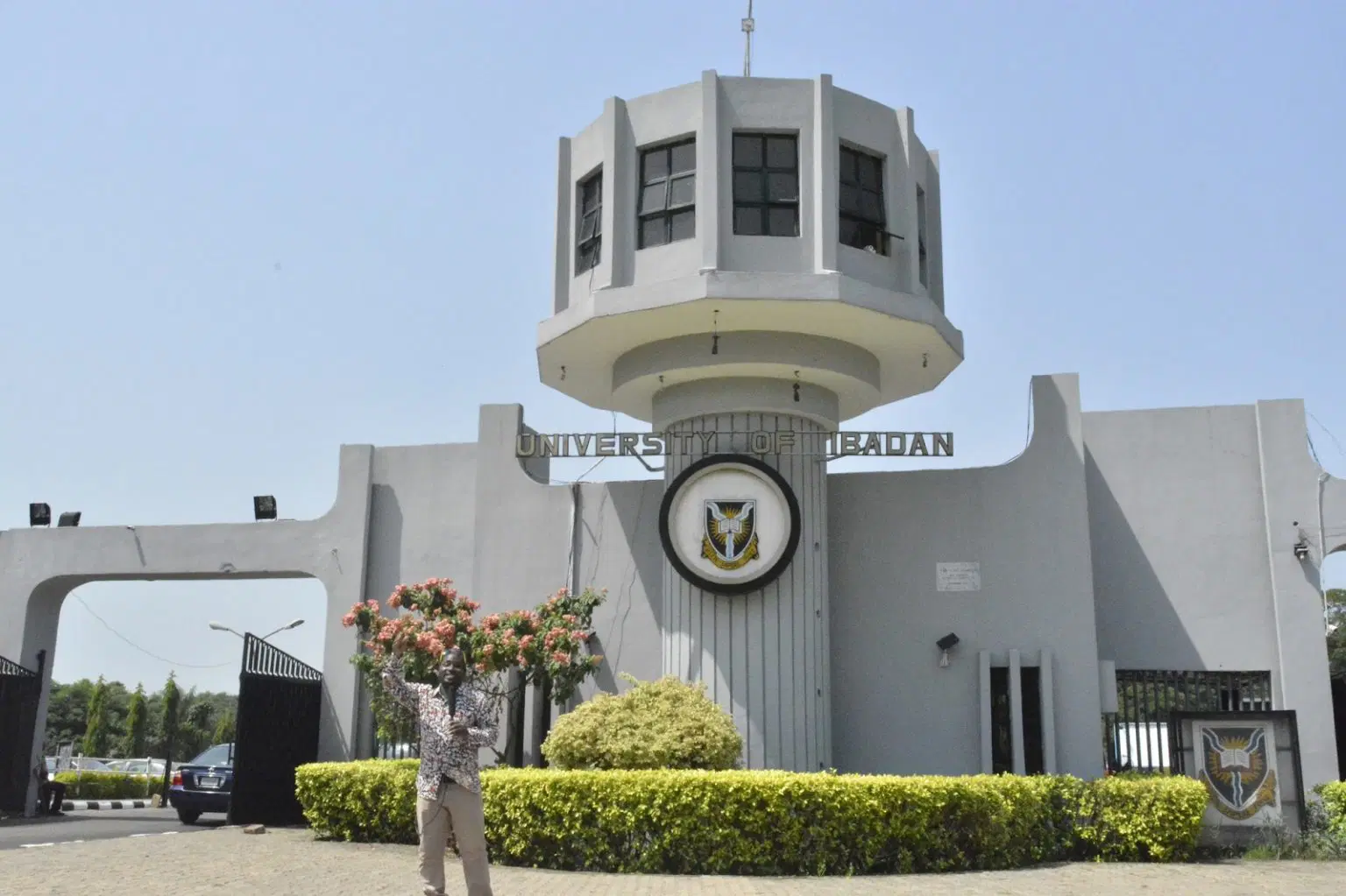
"In reality, all the students admitted into the Faculty of Law at the University of Ibadan have the potential to eventually graduate in First Class insofar as nearly all of them scored a weighted average mark of almost 70% in the UTME and post-UTME when they were offered admission," Olayinka stated. He further provided comparative data for the 2025/2026 academic session to illustrate the difficulty of gaining admission. For that cycle, the merit cut-off mark for Law was set at 70.875 percent. In comparison, other high-demand courses like Medicine and Surgery required 78.875 percent, and Nursing Science required 71.375 percent.
The former Vice-Chancellor argued that it would be a failure of the university system if these students, who entered as the top one percent of applicants, did not maintain that trajectory. "It should worry us if the majority of these academically outstanding students finished eventually after their five years of study with poor degrees," he added. This perspective shifts the focus from the output (the degrees) to the input (the students’ initial capability), suggesting that a high number of First Class graduates is a sign of a functioning and successful pedagogical system rather than a lowering of standards.
Historical Context and the Reputation of UI Law
The University of Ibadan’s Faculty of Law has long been regarded as a flagship programme within the institution and across West Africa. Its reputation is built on decades of producing prominent legal practitioners, judges, and scholars. Professor Olayinka reminded critics that this reputation was "earned and should be sustained." He noted that UI Law graduates have consistently proven their mettle at the Nigerian Law School, where students from all Nigerian universities and foreign-trained graduates compete on a level playing field in the Bar Final Examinations.
Over the years, UI has frequently dominated the prize list at the Nigerian Law School call-to-bar ceremonies. In several instances, UI graduates have secured the highest number of First Class results at the Law School level, validating the internal grading system of the university. Supporters of the current results argue that if the university can produce students who top the nation at the professional level, it is only logical that those same students would excel within their own faculty.
A Shift in Educational Philosophy
The debate also touches upon a broader shift in educational philosophy. Traditionally, Nigerian higher education has been characterized by a "weeding out" culture, where extreme difficulty and low pass rates were seen as markers of high standards. However, modern educational trends emphasize "nurturing" and "outcomes-based education," where the goal of the institution is to ensure that every student reaches their maximum potential.
Professor Olayinka’s stance aligns with this modern view. By celebrating the 58 First Class graduates, he is championing a system where excellence is fostered rather than suppressed by arbitrary grading curves. He urged the public to recognize the hard work of the Dean of Law, the academic staff, and the students themselves. "You cannot build something on nothing and expect it to stand," he remarked, referring to the solid foundation of the students’ prior academic achievements.

Broader Senate Approvals and Other Milestones
Beyond the Faculty of Law, the 16 February Senate meeting was a significant milestone for other departments within the University of Ibadan. Professor Olayinka also highlighted the approval of results for the institution’s first-ever set of Doctor of Pharmacy (PharmD) graduates. The PharmD is a professional doctorate that has recently replaced the Bachelor of Pharmacy (B.Pharm) in several top-tier Nigerian universities to align with international best practices in clinical pharmacy.
The graduation of the PharmD cohort, along with the high performance in the Law Faculty, signals a period of academic transition and achievement for the university. The former Vice-Chancellor extended his congratulations to all final-year students whose results were approved, emphasizing that the university continues to uphold its tradition of excellence across diverse disciplines.
Timeline of the Controversy and Response
- 16 February 2024: The University of Ibadan Senate meets to review and approve the results of the 2024/2025 graduating class.
- Late February 2024: News of the 58 First Class Law graduates begins to circulate on social media platforms like X (formerly Twitter) and Facebook.
- February 2024 (Ongoing): Public debate ensues, with some commentators praising the achievement and others alleging "grade inflation" or a "softening" of the Law curriculum.
- Tuesday (Following the debate): Professor Idowu Olayinka issues a formal statement on his Facebook page, providing data on admission cut-offs and defending the Faculty of Law’s standards.
Analysis: Implications for the Legal Profession and Higher Education
The production of 58 First Class graduates from a single institution in one year has implications that extend beyond the walls of the University of Ibadan. For the legal profession, it means a fresh influx of highly decorated candidates entering the job market. While some employers may initially be skeptical of the high volume of top-tier degrees, the ultimate test will remain the performance of these graduates in the Nigerian Law School and subsequently in legal practice.
Furthermore, this development may prompt other Nigerian universities to re-evaluate their grading systems. If the University of Ibadan, often seen as the "gold standard" of Nigerian academia, is producing such results, it may encourage a move away from the "scarcity" model of top honors toward a more performance-based model. However, the challenge remains for the Council of Legal Education and the National Universities Commission (NUC) to ensure that this increase in top grades is matched by a corresponding increase in practical skills and ethical grounding.
In conclusion, Professor Idowu Olayinka’s defense serves as a reminder that academic excellence is a product of rigorous selection and consistent effort. By pointing to the 70 percent-plus entry requirements, he has provided a logical framework to understand how such a feat was achieved. As these 58 graduates prepare for the Nigerian Law School, the eyes of the academic community will be on them to see if they can replicate their university success on the national stage, thereby silencing the critics once and for all.