The Promise of Accra: A Strategic Choice for Democracy and Tech
When Jack Dorsey tweeted "Twitter is now present on the continent," accompanied by a Ghana-themed emoji, it triggered a wave of optimism across West Africa. The decision to select Ghana over other tech heavyweights like Nigeria, Kenya, or South Africa was a deliberate one, rooted in the country’s reputation for political stability and its commitment to digital freedom. In a blog post released at the time, Twitter emphasized that Ghana was a "champion for democracy" and a staunch supporter of free speech and online freedom—values that were ostensibly core to Twitter’s mission.
President Nana Addo Dankwa Akufo-Addo welcomed the news with enthusiasm, describing it as "excellent news" for the nation’s tech sector. For the Ghanaian government, the arrival of Twitter was a validation of its "Digital Ghana" agenda, aimed at positioning the country as a regional gateway for technology and investment. The partnership was expected to foster local talent, provide high-level employment opportunities, and ensure that African voices were better represented in the platform’s global moderation and product development cycles.
Building the "Nest" in Africa: A Chronology of Growth
Following the announcement, Twitter began a rigorous recruitment drive to staff its Africa headquarters. Unlike many global firms that often transplant expatriate management to lead regional offices, Twitter made a point of sourcing local talent. Roles were filled in marketing, communications, engineering, and product management, with a specific focus on "curating" the African conversation and ensuring that the platform’s safety protocols were culturally and linguistically nuanced.
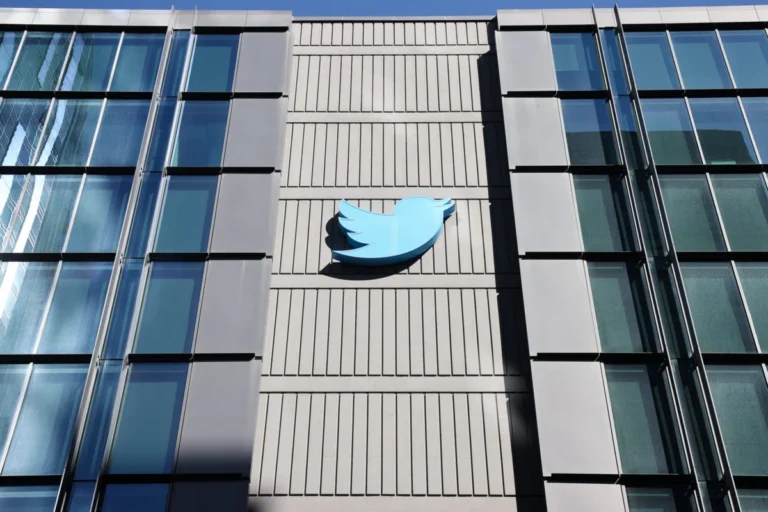
For the first year of its operation, the Twitter Africa team worked entirely remotely, a necessity born out of the COVID-19 pandemic. Despite the lack of a physical office, the team was credited with shipping features that amplified African cultural moments and improved the platform’s response to regional security issues. By late 2022, the team had grown significantly, and plans were finalized to move into a state-of-the-art physical office in Accra. On November 1, 2022, the team officially moved into "the nest," a move celebrated on social media as the beginning of a new era. Tragically, this era would last only seventy-two hours.
The Musk Acquisition: From Corporate Friction to Global Upheaval
The downfall of Twitter Africa cannot be viewed in isolation from the broader internal turmoil that gripped the company following Elon Musk’s initial offer to buy the platform in April 2022. The transition from Jack Dorsey to his successor, Parag Agrawal, in late 2021 had already signaled a shift in corporate priorities. Agrawal, a former Chief Technology Officer, was tasked with accelerating product development and revenue growth, but his tenure was almost immediately overshadowed by Musk’s hostile takeover bid.
The months between Musk’s April offer and the finalization of the deal in October 2022 were marked by intense legal battles and public vitriol. Musk’s public criticism of Twitter’s leadership, his obsession with "bot" accounts, and his frequent use of the platform to mock Agrawal created a climate of extreme uncertainty for employees worldwide. While the Africa team was celebrating the opening of their new office, the billionaire was finalizing a plan to slash the company’s global headcount by 50% to mitigate what he described as a loss of $4 million per day.
The "Black Friday" Layoffs: Chaos in the Accra Office
On Friday, November 4, 2022, the global workforce of Twitter was subjected to a brutal and impersonal termination process. Employees across San Francisco, London, Dublin, and Accra were abruptly locked out of their work laptops, Slack channels, and internal emails. For the staff in Ghana, the timing was particularly cruel. Just days after moving into their new office, they received notifications via their personal email addresses that their roles had been eliminated.
The termination notices were sent from Twitter’s Dublin office, informing the African staff that the company was "reorganizing its operations as a result of a need to reduce costs." The email stated that their last day of employment would be December 4, 2022, and that they would be placed on "garden leave" until that time. Unlike their counterparts in the United States, who were promised at least three months of severance pay—a move Musk claimed was "50% more than legally required"—reports emerged that the African team was initially offered far less favorable terms.
Data and Disparities: The Severance Controversy
The disparity in the treatment of African employees compared to their Western counterparts sparked international outrage. According to investigative reports and statements from legal representatives of the affected staff, the African team was initially offered only one month of notice and no additional severance pay, a direct contradiction to the public statements made by Musk regarding the generosity of the layoff packages.
Labor analysts pointed out that while Twitter’s actions might have been technically legal under certain interpretations of Ghanaian labor law—which can be less stringent than European regulations—the optics were disastrous. The move was widely interpreted as a sign of institutional disrespect toward the African workforce. Legal experts noted that under the Labour Act of Ghana (Act 651), "redundancy" requires a process of negotiation and fair compensation, leading to a protracted legal standoff between the former employees and the company.
Analysis: The Impact on Content Moderation and Safety in Africa
Beyond the human cost of the layoffs, the decimation of the Twitter Africa team has had significant implications for the safety and integrity of the platform on the continent. The Accra office was intended to be the frontline of content moderation for African markets, where linguistic diversity and complex political contexts require specialized knowledge to identify hate speech, misinformation, and incitement to violence.
With the removal of local moderators and partnership managers, many observers noted a decline in the platform’s ability to respond to crises in real-time. During subsequent elections and civil unrest in various African nations, the absence of a dedicated regional team meant that moderation was largely handled by automated systems or staff based in distant time zones with little understanding of local idioms or historical contexts. This "hollowing out" of regional expertise has been cited by digital rights activists as a major setback for the "Open Internet" that Jack Dorsey had originally promised to protect.
The "PR Gimmick" Allegations and Broader Implications
The rapid collapse of Twitter’s African operations has led to a cynical re-evaluation of the company’s original entry into the market. Critics argue that the establishment of the Accra office may have been more of a public relations exercise—a way to project a global, inclusive image—rather than a long-term strategic investment. The fact that the office was shuttered almost as soon as the ink was dry on the lease suggests that, in the eyes of the new ownership, the African market was an "expendable luxury" rather than a core component of the company’s future.
This event has sent a chilling message to other global tech firms and African governments. For countries like Ghana, which invested significant political capital into attracting Big Tech, the Twitter saga serves as a reminder of the volatility of the Silicon Valley model. It highlights the need for African nations to strengthen their own domestic tech ecosystems and implement more robust labor protections to prevent local talent from being exploited as "disposable" assets by foreign corporations.
Conclusion: A Legacy of Disrespect or a Lesson for the Future?
The story of Twitter Africa is a microcosm of the larger chaos that has defined the platform under Elon Musk’s ownership. It began with a vision of empowerment and ended with a display of corporate ruthlessness. While Musk continues to revamp the platform now known as X, the empty office in Accra stands as a silent monument to a partnership that failed to live up to its lofty rhetoric.
For the "Tweeps" of Africa, the experience remains a bitter one, characterized by a lack of communication and a perceived lack of dignity in their exit. However, the talent that Twitter helped consolidate in Accra has not disappeared. Many of the former employees have moved on to other roles in the tech sector, carrying with them the skills and insights gained during their time at the global giant. The ultimate lesson of the Twitter Africa experiment may be that while Big Tech can provide a spark, the true future of African technology must be built on African terms, with a focus on sustainability, local ownership, and a refusal to be treated as a mere footnote in a billionaire’s balance sheet.