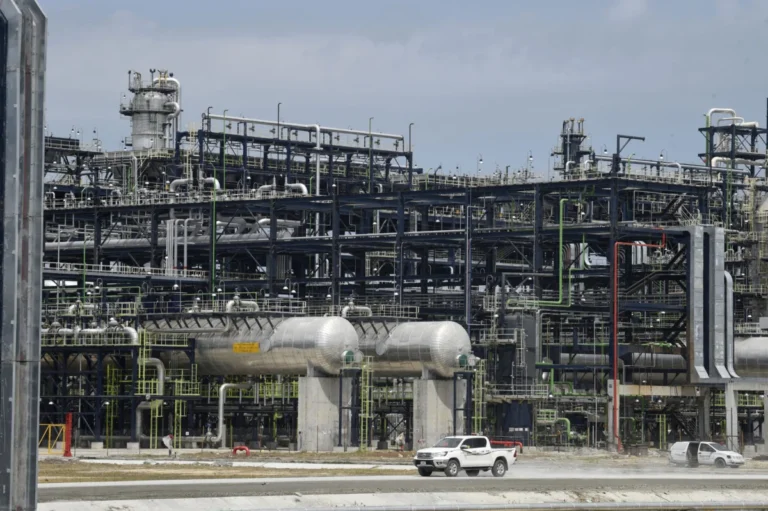
The Dangote Oil Refinery has reversed its earlier decision to price Premium Motor Spirit (PMS), commonly known as petrol, exclusively in United States dollars, opting instead to conduct sales in Nigeria’s local currency, the Naira. This significant pivot comes after a period of considerable economic uncertainty and follows a recent adjustment in the refinery’s ex-depot (gantry) price. The move is anticipated to provide a measure of relief to downstream petroleum marketers and consumers grappling with the volatility of foreign exchange rates and their impact on fuel costs.
The refinery has now set its new ex-depot price for petrol at N1,215 per litre. This represents an increase of N140 per litre, or approximately 13.02 percent, compared to its previous Naira-denominated price of N1,075 per litre. The announcement was made in a statement released on Wednesday, confirming the resumption of Naira sales and signaling a return to a more familiar pricing mechanism for the Nigerian market.
A Week of Economic Uncertainty and Market Readjustment
The decision by Dangote Oil Refinery, Africa’s largest single-train refinery with a capacity of 650,000 barrels per day, to initially adopt dollar-denominated pricing for its products had sent ripples of concern across the Nigerian economic landscape. For a significant period, the downstream petroleum sector had been accustomed to Naira-based transactions, making the shift to dollars a substantial departure. This departure necessitated a rapid recalibration by marketers and distributors who primarily operate and generate revenue in Naira.
The interim period, characterized by the suspension of Naira sales, led to widespread apprehension. Independent marketers, finding themselves unable to procure supplies directly from the Dangote facility under the new dollar terms, were compelled to seek alternative, often more expensive, sources from private depots. This situation created an immediate price disparity and fueled speculation about the potential for further inflation in the already sensitive fuel market. The logistical and financial challenges posed by operating in a foreign currency for a predominantly domestic market were significant.
Resumption of Naira Sales and Revised Pricing
The statement confirming the resumption of Naira sales on Wednesday brought a swift conclusion to the period of market speculation. "Dangote Petroleum Refinery has resumed the sale of Premium Motor Spirit (PMS) in naira, providing a measure of relief to marketers and consumers," the statement read. This assurance was accompanied by the definitive ex-depot price of N1,215 per litre.
The refinery had formally notified its clients of the new conditions on Tuesday, paving the way for the acceptance of orders for coastal loading. This signifies a strategic step back towards a more integrated operational model within Nigeria’s existing economic framework. The reinstatement of Naira-denominated pricing for truck loading is a critical development for businesses that rely on a stable and predictable fuel supply chain.
The Precedent of Dollar Pricing
Prior to this reversal, the Dangote Refinery had indeed implemented a dollar pricing system. This policy, outlined in communications to clients, stipulated specific dollar amounts for various petroleum products. Automotive Gas Oil (diesel) was slated to cost $1.087 per litre, while Aviation Turbine Kerosene (ATK) was priced at $0.942 per litre. Petrol delivered via coastal routes was set at $1,044.62 per metric tonne.
During this phase, the refinery had explicitly stated that all previously issued Naira-denominated Proforma Invoices and Deal Recaps for both gantry and coastal transactions were rendered invalid. A notice, purportedly signed by the refinery’s Group Commercial Operations, had informed stakeholders: "Following our email on the 9th of July, 2026, regarding the transition from Naira to United States Dollars, please note that all issued Naira Coastal and Gantry PFIs/Deal Recaps are now invalid, and no payments should be made against them." This directive underscored the seriousness of the initial shift and the expectation of a complete transition to dollar-based transactions.
Background and Context: A Strategic Move with Economic Ramifications
The Dangote Refinery, a monumental project representing one of the largest investments in Africa, commenced operations with the ambitious goal of transforming Nigeria’s refining landscape and significantly reducing its reliance on imported refined petroleum products. The refinery’s establishment was heralded as a potential panacea for the chronic fuel shortages and the foreign exchange drain associated with importing these essential commodities.
However, the complex interplay between the global oil market, domestic economic policies, and the fluctuating exchange rate presented immediate operational challenges. The decision to price in dollars, while potentially offering the refinery a hedge against Naira devaluation and ensuring a predictable revenue stream in a stable currency, had immediate and profound implications for the Nigerian economy.
Key Factors Leading to the Initial Dollar Pricing:
- Exchange Rate Volatility: The Nigerian Naira has experienced significant depreciation against the US dollar in recent years. This volatility creates uncertainty for businesses that incur costs in local currency but must procure raw materials or manage international financial obligations. Pricing in dollars would have provided a degree of insulation from these fluctuations.
- Import Dependency: For decades, Nigeria has been a major importer of refined petroleum products, despite being a leading crude oil exporter. This paradox has led to a substantial outflow of foreign exchange. The refinery’s output was expected to reverse this trend, but its pricing strategy directly impacted the availability and cost of these products domestically.
- Operational Costs: While the refinery processes crude oil, many of its inputs, maintenance services, and financial obligations might have international components that are dollar-denominated. Pricing in dollars could have been seen as a way to align revenue with these costs.
Broader Economic Implications and Analysis
The initial shift to dollar pricing by the Dangote Refinery, even if temporary, highlighted critical structural issues within the Nigerian economy. The reliance on a foreign currency for domestic transactions, particularly for a commodity as fundamental as petrol, underscored the vulnerability of the Naira and the broader challenges in achieving macroeconomic stability.
Analysis of the Reversal:
The swift reversal suggests that the refinery’s management recognized the immediate negative impact of its dollar-only policy on market liquidity, consumer affordability, and potentially its own sales volume.
- Market Acceptance: The Nigerian downstream sector is deeply entrenched in Naira-based operations. Marketers and consumers are accustomed to Naira pricing, and a sudden imposition of dollar pricing created significant friction and logistical hurdles.
- Government Intervention and Public Sentiment: While no explicit government intervention is detailed in the provided text, the economic implications of such a move would undoubtedly attract scrutiny from policymakers concerned about inflation and economic stability. Public sentiment would also likely favor Naira pricing for essential goods.
- Sales Volume and Revenue: Forcing all transactions into dollars could have depressed sales volumes if marketers and consumers struggled to access sufficient foreign currency at competitive rates. Returning to Naira, even at a higher price, might ensure a more consistent flow of revenue.
- Strategic Re-evaluation: The refinery might have reassessed its initial strategy, possibly negotiating more favorable terms for its dollar-denominated costs or finding a balance that allows for Naira transactions while still mitigating currency risks. The increased Naira price could be a mechanism to achieve a similar financial outcome as the dollar pricing, adjusted for current exchange rates.
The Significance of the Price Increase
The adjustment of the ex-depot price to N1,215 per litre, an increase of N140, reflects the current economic realities, including the prevailing exchange rate and potentially other operational cost factors. While the return to Naira is a relief, the higher price signifies that the cost of fuel is still being influenced by the underlying economic pressures.
This price hike is likely to have a cascading effect on transportation costs, the prices of goods and services, and overall inflation, particularly in a country where fuel costs are a significant component of household and business expenditures. The Nigerian National Petroleum Company Limited (NNPC) Limited, the state-owned oil company, also plays a crucial role in fuel pricing and distribution, and its pricing mechanisms will continue to be closely watched in relation to the Dangote Refinery’s movements.
Future Outlook and Recommendations
The Dangote Refinery’s oscillating pricing strategy underscores the need for sustained efforts to stabilize the Nigerian Naira and strengthen the domestic economy. For the refinery itself, a clear and consistent pricing policy that balances market realities with its operational needs will be crucial for long-term success and market integration.
Further analysis of the refinery’s cost structure and its hedging strategies against currency fluctuations would provide deeper insights into its pricing decisions. The government’s role in ensuring a stable macroeconomic environment, promoting local currency strength, and fostering fair competition within the downstream sector remains paramount.
The return to Naira sales by the Dangote Refinery, while accompanied by a price increase, represents a pragmatic adjustment that acknowledges the complexities of the Nigerian economic landscape. It offers a temporary reprieve from the immediate uncertainty caused by dollar-denominated fuel sales, but the underlying economic challenges that led to the initial pricing shift, and the subsequent price hike, continue to demand robust policy interventions. The long-term implications for inflation, consumer purchasing power, and the overall economic stability of Nigeria will depend on a sustained commitment to macroeconomic reforms and a predictable, stable pricing environment for essential commodities.