The landscape of public education in Lagos State received a significant boost recently as the Gbagada Campus of Harvesters International Christian Center (HICC) officially handed over newly renovated, state-of-the-art toilet facilities to Araromi Primary School, Gbagada. This intervention, described by school authorities as both timely and life-changing, marks a critical turning point for a school that had struggled for years with dilapidated infrastructure that posed severe health risks to its students and staff. The commissioning ceremony, attended by community leaders, education officials, and church representatives, highlighted the growing importance of faith-based organizations in bridging the gap between government resources and the pressing needs of local communities.
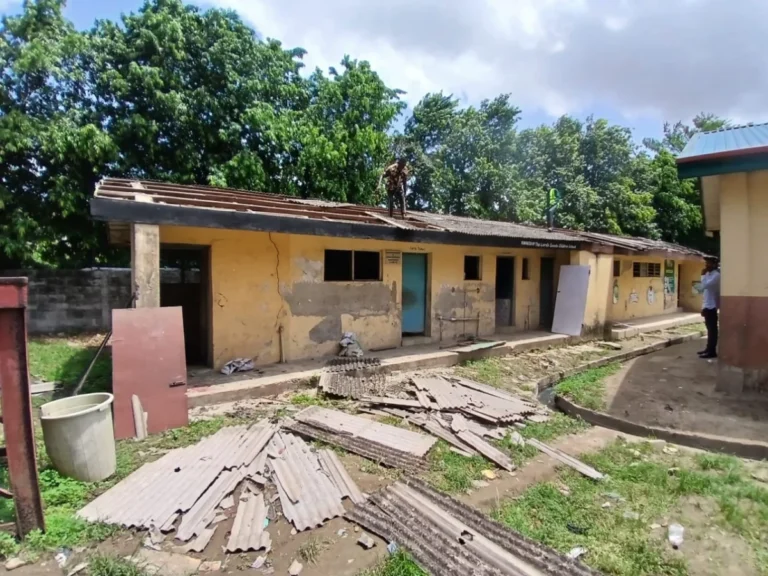
Prior to the intervention, the sanitary conditions at Araromi Primary School had reached a nadir that left the school management in a state of constant anxiety. The previous facilities were described as "deplorable," "horrible," and "irritating," creating an environment where both pupils and teachers were often afraid to utilize the basic amenities. This renovation project, spearheaded by the Lead Pastor of HICC, Bolaji Idowu, and executed through the Gbagada Campus, involved a total overhaul of the pupil’s toilet blocks and the restoration of the staff toilets, ensuring a comprehensive improvement in the school’s Water, Sanitation, and Hygiene (WASH) standards.
A Critical Intervention in a Time of Need
The Headteacher of Araromi Primary School, Mrs. Dorcas Oluranti Lawal, provided a poignant account of the struggles the school faced before the church stepped in. According to Mrs. Lawal, the state of the toilets was so hazardous that she lived in constant fear for the safety and health of the children under her care. She revealed that the school had made several attempts to secure assistance from various non-governmental organizations (NGOs) in the past. While at least two organizations had initially expressed interest in the project, they eventually withdrew, citing the prohibitive costs associated with the extensive repairs required.
"The toilet was so bad that in the past, I was always afraid whenever the children wanted to go there," Mrs. Lawal stated during the commissioning. "I want to thank Harvesters International Christian Center for this project. When the church first approached us, I suggested several needs, including a sick bay or a water system, but the church leadership insisted on the toilet project after seeing the dire state of the facilities. They didn’t just do the pupils’ section; they also repaired the staff toilets. We are like Oliver Twist now; the facilities are beyond our current capacity to manage alone, and we are hoping for further support in hiring dedicated cleaning staff to ensure these new facilities are maintained to the highest standards."
The joy of the students was personified by Amosu Esther, a pupil at the school, who did not mince words when describing the previous conditions. She noted that the old toilets were "horrible and irritating to the eyes," making the school day difficult for many of her peers. The new facilities, she noted, would significantly improve the daily lives of the students, allowing them to focus on their studies without the distraction of poor hygiene.
Chronology of a Long-Standing Partnership
The relationship between Harvesters International Christian Center and Araromi Primary School is not a recent development but rather a decade-long partnership rooted in community development. Evangelist Olasunkanmi Ogede, a former headteacher of the school, recalled that the church’s involvement dates back to 2009. This was a period when the Lagos State government, under the administration of then-Governor Babatunde Fashola, actively encouraged the "Adopt-a-School" initiative and the formation of School-Based Management Committees (SBMC) to foster private-sector involvement in public education.
Since 2009, HICC has intervened in the school’s affairs on at least three major occasions. This consistent support has been vital in maintaining the school’s functionality amidst the challenges of urban public education. The latest project was birthed through a logistical need that turned into a philanthropic mission. Pastor Gbenga Olaitan, the Associate Pastor of HICC Gbagada Campus, explained that the church had been searching for a suitable venue to host its December 2025 watch night service. Upon visiting Araromi Primary School and securing the necessary permissions from the State Universal Basic Education Board (SUBEB), the church’s leadership, including Campus Pastor Mayowa, conducted a site visit.
It was during this visit that the deplorable state of the sanitation facilities was discovered. While the school had requested a clinic, the church leadership, under the guidance of Lead Pastor Bolaji Idowu, determined that the lack of functional toilets was a more pressing emergency that affected every single child and staff member daily. This led to the immediate allocation of funds—exceeding the initial budget—to ensure the renovation was of the highest quality, reflecting the church’s commitment to "excellence."
Data and Context: The Crisis of School Sanitation in Nigeria
The intervention at Araromi Primary School highlights a broader systemic challenge within the Nigerian educational sector. According to data from the United Nations Children’s Fund (UNICEF), nearly 30% of schools in Nigeria lack basic water supply, and only about 35% have access to basic sanitation facilities. In urban centers like Lagos, the pressure on public infrastructure due to high population density often results in the rapid deterioration of school facilities.
Poor sanitation in schools is a leading cause of absenteeism, particularly among female students who require private and hygienic spaces during their menstrual cycles. Furthermore, the lack of functional toilets contributes to the spread of waterborne diseases such as cholera and diarrhea, which remain significant health threats in developing regions. By providing modern, clean facilities, HICC is not only improving the aesthetic of the school but is also making a direct investment in the health and academic retention of the pupils.
Official Responses and Community Commendations
The project received high praise from state education officials and local community leaders. Representing the Education Secretary of Lagos State, Hon. Adewuyi Ibrahim, Mrs. Tijani Yetunde expressed profound gratitude to the church. She noted that while the state government continues to invest in education, the scale of the needs requires the active participation of religious and corporate bodies. She echoed the headteacher’s plea for continued support, emphasizing that the development of the "total child" requires a collaborative effort.
Alhaji Olu Asekun, Chairman of the School-Based Management Committee (SBMC), who officially commissioned the project, commended HICC for its consistency. "On behalf of the management of Araromi Primary School, I thank Harvesters for this good gesture. You have been doing well, and we appreciate your dedication to our community," he said.
Local traditional and market leaders also added their voices to the commendations. Chief Mrs. Mercy Oye, the Iyaloja General of Ifako, and Mrs. Oluwafunmilayo Adeyemi, Headteacher of Kiniun Ifa Nursery and Primary School, both applauded the church for exceeding its budgetary commitments to deliver a project of such high quality. Mrs. Adeyemi noted that such gestures are rare and serve as a model for other organizations located within the Gbagada and Ifako axis.
The Church’s Mandate: Beyond the Pulpit
For the leadership of Harvesters International Christian Center, this project is an extension of their core mission. Pastor Biola Jewoola emphasized that the church’s mandate is dual-pronged: spiritual growth and physical impact. "We don’t deal with just our members, but the people of the community," Jewoola remarked. He pointed out that the church’s impact is visible across its various campuses in Gbagada, Lekki, and internationally, citing previous donations of transformers and the payment of hospital and school fees for the less privileged.
Pastor Isaac Onaolapo added that the church views its community work as a way to "influence culture" and bring hope to the next generation. He argued that every child, regardless of their background, deserves the best possible environment to foster their potential. "Our children need the best; the government cannot do everything. We have given books to students before and helped in flood-ravaged areas in the North. It is a challenge to us all to contribute in our own little way," Onaolapo stated.
Analysis of Implications and Future Outlook
The renovation at Araromi Primary School serves as a case study for the efficacy of Public-Private Partnerships (PPP) in the Nigerian education sector. As government budgets face inflationary pressures and competing priorities, the role of "faith-based CSR" (Corporate Social Responsibility) is becoming indispensable.
However, the intervention also raises the critical issue of sustainability. The headteacher’s request for a church-funded cleaner highlights a recurring problem in public infrastructure projects: the lack of a maintenance budget. While the church has provided the physical structure, the long-term hygiene of the facility will depend on consistent cleaning and the provision of consumables like soap and water.
Furthermore, the call by Evangelist Ogede for other organizations to emulate HICC is a reminder of the "out-of-school children" crisis. He noted that failing to provide quality environments in public schools could lead to a rise in the number of children dropping out, which ultimately poses a security and economic risk to the country. The legacy of former leaders like Alhaji Lateef Jakande, who pioneered free and accessible education in Lagos, was invoked as a standard that today’s society must strive to uphold through collective action.
As Harvesters International Christian Center prepares for its 2025 events at the school, the renovated toilets stand as a testament to the church’s philosophy that "we are all products of our communities." The project has not only restored the dignity of the students at Araromi Primary School but has also set a high benchmark for community-led educational reform in Lagos State.