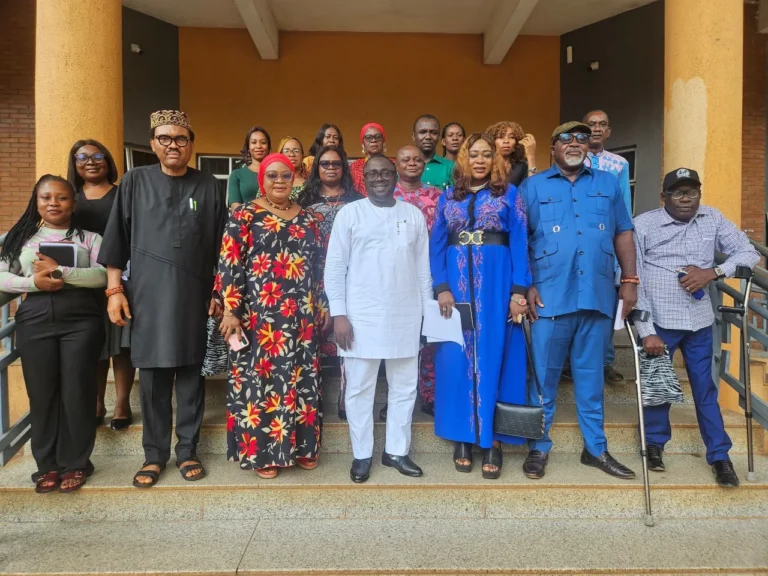
In a strategic move aimed at reinforcing the pillars of governance and long-term economic stability, the Anambra State Government has officially inaugurated the 2027 Budget Committee. This early commencement of the budgetary cycle underscores the administration’s commitment to meticulous planning, fiscal transparency, and the institutionalization of a culture of accountability. The inauguration ceremony, which took place on Friday at the Inter-Agency Board Room of the Ministry of Budget and Economic Planning, located within the Jerome Udoji Secretariat in Awka, marks a significant milestone in the state’s fiscal management strategy under the leadership of Governor Chukwuma Soludo.
The Commissioner for Budget and Economic Planning, Chukwukadibia Okoye, who presided over the inauguration, emphasized that the 2027 appropriation bill must serve as more than just a financial document. He described the budget as the primary instrument for the actualization of the state’s developmental aspirations, transforming policy rhetoric into tangible social and economic outcomes for the citizens of Anambra. By initiating the process well in advance, the state aims to avoid the pitfalls of rushed fiscal planning, ensuring that every naira allocated is backed by empirical data and a clear vision for public good.
A Mandate Rooted in Transparency and Meritocracy
During the inauguration, Commissioner Okoye delivered a stern charge to the newly appointed committee members, urging them to approach their responsibilities with a profound sense of ownership and professional integrity. He noted that the selection of the committee members was strictly merit-based, reflecting the administration’s desire to utilize the best intellectual and technical resources available within the civil service and relevant agencies.
The Commissioner highlighted that the 2027 budget process must be characterized by three core principles: transparency, discipline, and integrity. He asserted that for the state to achieve its goal of becoming a "livable and prosperous homeland," the budget must be shielded from the traditional inefficiencies of duplication and cost inflation. "The ministry opted for a physical inauguration to build teamwork and shared ownership," Okoye stated. "Members are reminded that their selection was merit-based and that they must serve the collective interest of Anambra. We urge members to prioritize evidence-based project selection that reflects the genuine needs and aspirations of the people. Projects must be selected on merit and based on their developmental impact."
This focus on evidence-based selection is a departure from historical practices where projects were often included in budgets based on political considerations rather than socio-economic necessity. By demanding rigorous justification for every line item, the government seeks to optimize its limited resources in an era of national economic volatility.
Strategic Objectives: Synergy and Realistic Projections
One of the central themes of the commissioner’s address was the necessity for effective synergy among various Ministries, Departments, and Agencies (MDAs). In previous fiscal years, the lack of coordination between different arms of government has often led to overlapping projects and wasted funds. The 2027 Budget Committee has been tasked with breaking down these silos, ensuring that the developmental goals of the Ministry of Works, for instance, are perfectly aligned with the economic projections of the Ministry of Finance and the social welfare targets of the Ministry of Health.
Furthermore, the committee has been directed to focus on accurate costing and realistic revenue projections. In the context of Nigeria’s fluctuating exchange rates and inflationary pressures, the Anambra State Government is prioritizing "prudent spending" and "smart prioritization." The Commissioner pointed out that a credible budget is one that acknowledges the reality of the economic environment while aggressively seeking to expand the state’s Internal Revenue Generation (IGR).
"Members must prioritize early budget preparation, effective synergy among MDAs, accurate costing, and realistic projections, as these are essential components of a credible budget process," Okoye added. He also encouraged the committee to look beyond federal allocations and explore ways to attract donor support and private-sector partnerships to fund critical infrastructure.
Addressing the Ecological Crisis: The Erosion Priority
Anambra State faces a unique and existential threat in the form of gully erosion. With over 1,000 active erosion sites across the state, the ecological challenge poses a direct threat to infrastructure, agriculture, and human settlements. Recognizing this, Commissioner Okoye explicitly directed the committee to prioritize projects capable of addressing the state’s most pressing environmental needs.
The 2027 budget is expected to allocate significant resources toward erosion control and environmental remediation. However, the Commissioner warned that these interventions must be properly planned and scientifically sound to ensure long-term effectiveness. The inclusion of erosion control as a top-tier budgetary priority reflects Governor Soludo’s broader "Solution" agenda, which seeks to protect the state’s topography and ensure the safety of its inhabitants.
The Budgetary Timeline and Procedural Framework
Following the Commissioner’s charge, the Permanent Secretary of the Ministry of Budget and Economic Planning, Chinyere Nwabachili, presented the official 2027 budget calendar. This document outlines a rigorous, multi-stage process designed to ensure inclusivity and legislative compliance.

The timeline begins with community-level submissions, where local governments and traditional institutions are invited to identify the specific needs of their constituencies. This "bottom-up" approach is intended to make the budget truly people-centered. Following these submissions, the process moves into the technical phase, involving MDA budget defenses, where each government body must justify its proposed expenditure before the Ministry of Budget and Economic Planning.
The final stages involve the consolidation of the budget by the executive council, followed by its presentation to the Anambra State House of Assembly for deliberation and eventual passage into law. By starting this process years in advance, the state government intends to provide the legislature with ample time for oversight, thereby strengthening the democratic process of checks and balances.
Background Context: Anambra’s Fiscal Evolution
To understand the significance of the 2027 Budget Committee, one must look at the recent fiscal trajectory of Anambra State. Under the Soludo administration, there has been a consistent push to increase the capital expenditure ratio in the budget. For the 2024 fiscal year, the state passed a budget of approximately ₦410 billion, with a heavy emphasis on infrastructure, education, and healthcare.
The 2027 planning cycle is part of a Medium-Term Expenditure Framework (MTEF) that seeks to sustain this growth. The government is operating under the philosophy that infrastructure—such as the massive road construction projects currently underway in Okpoko and other urban centers—requires multi-year funding commitments that must be captured in long-term budgetary planning.
The decision to inaugurate a 2027 committee in 2024/2025 suggests a move toward "Zero-Based Budgeting," a method where every expense must be justified for each new period, rather than simply adjusting previous budgets upward. This approach is designed to eliminate "ghost projects" and ensure that the state’s financial resources are directed toward high-impact areas.
Economic Implications and Analysis
Financial analysts suggest that Anambra’s proactive approach to budgeting could serve as a model for other sub-national entities in Nigeria. By emphasizing IGR growth and donor support, the state is attempting to insulate itself from the uncertainties of the Federation Account Allocation Committee (FAAC) disbursements, which are heavily dependent on fluctuating oil revenues.
The directive to "prioritize completion of ongoing projects" is also a crucial economic strategy. Nigeria is littered with abandoned projects that represent billions in sunk costs. By focusing on finishing existing work before embarking on new large-scale contracts, the Soludo administration aims to deliver immediate value to taxpayers and improve the state’s overall "Ease of Doing Business" ranking.
Furthermore, the emphasis on "no inflation and no duplication" addresses a long-standing criticism of Nigerian public procurement. If the committee successfully implements these directives, Anambra could see a significant reduction in the cost of governance, allowing more funds to be diverted toward social safety nets and human capital development.
Stakeholder Reactions and Expectations
While the inauguration was an internal government event, it has drawn interest from Civil Society Organizations (CSOs) and the organized private sector in Anambra. Advocacy groups have long called for more transparent budget processes and greater public participation. The ministry’s pledge to include community submissions in the 2027 calendar has been met with cautious optimism by community leaders, who hope that this will lead to more equitable development across the state’s 21 local government areas.
From a legislative perspective, members of the Anambra State House of Assembly are expected to follow the committee’s work closely. The early start gives the House Committee on Finance and Appropriation a longer window to analyze the state’s fiscal health and ensure that the proposed 2027 budget aligns with the legal frameworks governing public finance in Nigeria.
Conclusion: A Vision for the Future
The inauguration of the 2027 Budget Committee is a clear signal that the Anambra State Government is prioritizing institutional stability over short-term political gains. By demanding discipline, integrity, and transparency at every stage of the process, Commissioner Chukwukadibia Okoye and his team are setting the stage for a fiscal regime that is resilient, data-driven, and, most importantly, accountable to the people.
As the committee begins its work, the eyes of the state will be on its ability to navigate the complexities of economic planning in a challenging national landscape. The ultimate success of this committee will be measured not just by the timely passage of the budget, but by the tangible improvements it brings to the lives of Ndi Anambra through better roads, functional hospitals, protected environments, and a thriving economy. Through this early and rigorous preparation, Anambra State reinforces its position as a leader in sub-national governance and fiscal responsibility in Nigeria.