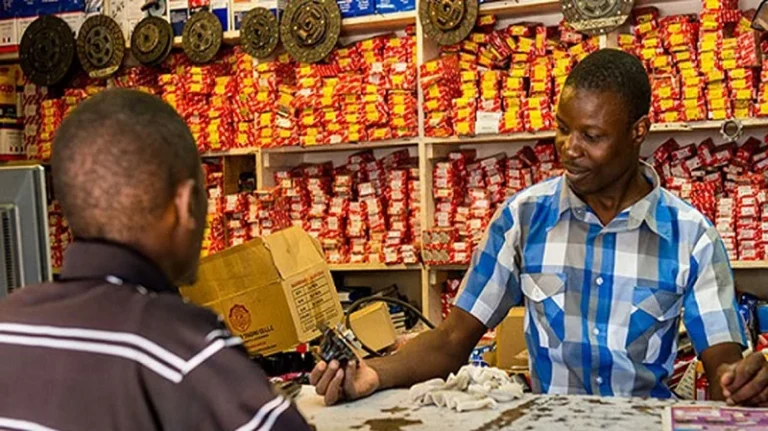
A stark reality has emerged for Nigeria’s vital Micro, Small, and Medium-sized Enterprises (MSMEs), revealing a persistent struggle for survival rather than sustainable growth. A comprehensive new report from Moniepoint, titled the "2025 Informal Economy Report," indicates that a significant majority of these businesses are grappling with razor-thin profit margins, with 38% earning less than a mere ₦10,000 (approximately $6.78 USD) in daily profit. This finding paints a concerning picture of an economic engine that, despite its critical role in job creation and GDP contribution, remains predominantly focused on navigating immediate operational challenges.
The study, which combines extensive data from over 5 million businesses on Moniepoint’s platform with in-depth physical surveys of small business owners nationwide, provides a granular view of the informal economy’s financial landscape. It reveals that the typical informal business in Nigeria generates daily revenues ranging between ₦20,000 ($13.56 USD) and ₦50,000 ($33.89 USD). However, profitability is a far more challenging metric. The report highlights that 38% of these enterprises operate with daily profits below the ₦10,000 threshold, and a staggering 70% earn less than ₦50,000 ($33.89 USD) daily. The median daily profit for these businesses falls precariously between ₦10,000 ($6.78 USD) and ₦20,000 ($13.56 USD), underscoring the limited financial buffer available to most entrepreneurs.
These findings are particularly concerning given the foundational importance of MSMEs to the Nigerian economy. They are widely recognized as the backbone, contributing an estimated 65% to the nation’s Gross Domestic Product (GDP) and generating over 80% of all employment opportunities. The report’s data suggests that a combination of escalating operational costs and persistent economic headwinds are actively hindering their ability to transition from a state of mere survival to one of significant growth and expansion.
The Profit Squeeze: Understanding the Financial Strain
Delving deeper into the report’s findings, the financial pressure on these businesses is evident. While 65% of informal businesses reported an increase in revenue over the past year, a significantly lower percentage, just 47%, experienced a corresponding rise in profit. This widening gap between revenue growth and profit realization points to a systemic issue: the escalating cost of doing business. Alarmingly, nearly eight in ten (79%) of surveyed businesses reported an increase in their operational costs over the last twelve months. This surge is primarily attributed to rising supplier prices, increased transportation expenses, and the depreciating value of the Nigerian Naira.
The report highlights that 44% of businesses within the informal economy are currently earning less than ₦20,000 ($13.56 USD) per day. This figure is a critical indicator of the widespread financial vulnerability within this sector.
Gender Disparities in the Informal Economy
The Moniepoint report also sheds light on existing gender disparities within Nigeria’s informal economy. Women entrepreneurs appear to be disproportionately affected by the current economic climate. The data indicates that 41% of women-owned SMEs earn less than ₦10,000 ($6.78 USD) daily, compared to 34% of men-owned businesses. Conversely, only 10% of women-led businesses report daily earnings exceeding ₦50,000 ($33.89 USD), a figure significantly lower than the 16% of men-owned businesses that achieve this revenue milestone. This suggests that women entrepreneurs face additional hurdles in achieving profitability and scaling their operations.
The Impact of Currency Depreciation and Inflation
A key driver behind the increased operational costs is the significant depreciation of the Nigerian Naira. The national currency experienced a substantial decline in value throughout 2024, losing approximately 70% of its worth against major foreign currencies. This devaluation, which followed the Central Bank of Nigeria’s relaxation of long-standing foreign exchange restrictions, has had a cascading effect on an import-dependent economy. Inflation has consequently surged, reaching a 28-year high in November 2024, further exacerbating the financial strain on businesses.
Nurudeen Abubakar Zauro, Secretary/Head of the PreCEFI Secretariat and Technical Advisor to the President on Economic and Financial Inclusion in the Office of the Vice President, provided critical context. He stated, "The value of the Naira against foreign currencies depreciated from 460 NGN/USD to around 1600 NGN/USD from June 2023 to June 2025. This has forced price hikes on imported commodities, reduced purchasing power, increased costs and bottlenecks in supply chain networks, logistics, and transport, thereby causing many SMEs to become bankrupt and diminishing the contribution of the informal economy to the country’s Gross Domestic Product (GDP)."
The direct consequence of these rising costs is a diminished capacity for savings. The report indicates that only 74% of informal businesses are currently able to save money, a sharp decline from 92.4% in the previous year. This reduction in savings directly impacts their ability to reinvest, expand, or weather unexpected financial shocks.
Resilience Under Pressure: A Survival Check
The Moniepoint report includes a "Survival Check" section, offering a snapshot of the resilience of businesses within the informal economy. It poses critical questions to business owners regarding their savings buffer and cost pressures.
Regarding savings, the data reveals a concerning trend: 42% of businesses can only sustain themselves for one month or less if their income were to cease. This highlights a critical lack of financial reserves for a significant portion of the informal sector.
The report also quantifies the impact of rising costs. As previously mentioned, 79% of businesses have experienced a significant or slight increase in their cost of doing business over the last 12 months, while only 21% reported no change or a decrease. This stark contrast underscores the pervasive nature of cost pressures.
Preferred Savings Channels and Funding Needs
Despite the challenges, informal businesses continue to prioritize savings as their primary source of funding. Cooperatives and digital banking platforms remain the preferred channels for these savings. The allocation of these savings is predominantly directed towards business expansion (41%) and the purchase of goods (24%). This indicates a strong desire among entrepreneurs to invest back into their ventures, even with limited capital.
However, the report also notes a growing appetite for borrowing, driven by a combination of higher interest rates and more stringent lending conditions. This presents a paradox: businesses need funding to grow, but the cost and accessibility of that funding are becoming increasingly challenging.
"Given the aversion to borrowing that has risen in the past year, savings are the primary means by which these businesses access the funding they need to expand their operations or cater to emergencies," Moniepoint stated in the report. This reliance on savings emphasizes the critical need for accessible and affordable financial products that can support the growth aspirations of these enterprises.
A Call for Policy Reform and Systemic Intervention
The findings of the Moniepoint report necessitate a serious re-evaluation of existing government policies aimed at supporting MSMEs. Experts are calling for a shift from fragmented, short-term interventions to more coordinated and systemic approaches that can foster sustainable growth and financial inclusion.
Foyinsolami Akinjayeju, CEO of Enhancing Financial Inclusion & Advancement, emphasized the need for a strategic policy overhaul. "Government policies must shift from fragmented interventions to coordinated, systemic measures to unlock growth and inclusion for informal businesses," she stated.
Chinyere Almona, Director-General of the Lagos Chamber of Commerce and Industry, echoed this sentiment, advocating for policies that deliberately guide these businesses toward scalability. "If informal businesses are to evolve into growth-oriented employers, policies must deliberately target their transition from survivalist enterprises to scalable ventures," Almona remarked.
A foundational step proposed by industry leaders involves the implementation of structured capacity-building programs. These programs, embedded within local chambers of commerce and trade associations, are crucial for upskilling entrepreneurs in essential areas such as bookkeeping, inventory management, and the adoption of digital tools. Such initiatives would equip business owners with the knowledge and skills necessary to navigate complex market dynamics, improve operational efficiency, and ultimately drive profitability.
The implications of the current economic climate for Nigeria’s informal sector are far-reaching. The continued struggle of MSMEs to move beyond survival mode not only limits their individual growth potential but also has a ripple effect on broader economic development, job creation, and poverty reduction. Addressing the root causes of rising operational costs, improving access to finance, and fostering an enabling business environment are paramount to unlocking the full potential of this critical economic sector. The insights from the Moniepoint report serve as a crucial call to action for policymakers, financial institutions, and stakeholders to collaboratively devise and implement strategies that will empower Nigeria’s informal economy to thrive.