The Kwara State Agro-Climatic Resilience in Semi-Arid Landscapes (KWACReSAL) Project has officially embarked on a transformative collaboration with the International Institute of Tropical Agriculture (IITA), launching a pioneering initiative focused on climate-smart agriculture. This critical partnership was formalized through a comprehensive stakeholders’ engagement held in Ijagbo, Oyun Local Government Area of Kwara State, marking a significant stride towards strengthening agricultural resilience and food security in the region. The intervention has commenced with the strategic formation of Community Interest Groups (CIGs), which will serve as the foundational units for the effective implementation of Climate-Smart Agriculture (CSA) and Farmer-Led Irrigation Development (FLID) interventions across selected pilot communities.
The Imperative of Climate-Smart Agriculture in Nigeria
Nigeria, a nation heavily reliant on its agricultural sector, faces an increasingly precarious future due to the escalating impacts of climate change. Erratic rainfall patterns, prolonged droughts, devastating floods, and accelerating desertification in the northern regions are severely compromising agricultural productivity and threatening the livelihoods of millions of smallholder farmers. Agriculture remains the backbone of the Nigerian economy, contributing approximately 23% to the Gross Domestic Product (GDP) and employing over 70% of the population, predominantly in rural areas. However, this vital sector is highly vulnerable to climate variability, leading to persistent food insecurity, rural poverty, and socio-economic instability. Kwara State, situated in Nigeria’s middle belt, experiences a transition from the humid south to the drier north, making it particularly susceptible to these climatic shifts. Farmers in the state frequently grapple with unpredictable growing seasons, diminishing yields, and the degradation of arable land.
In this context, the adoption of Climate-Smart Agriculture (CSA) practices is not merely an option but a critical necessity. CSA is an integrated approach to managing landscapes—cropland, livestock, forests, and fisheries—that addresses the interlinked challenges of food security and climate change. It aims to achieve three primary objectives: sustainably increasing agricultural productivity and incomes; adapting and building resilience to climate change; and reducing and/or removing greenhouse gas emissions (where appropriate). By fostering resilience and sustainability, CSA offers a pathway to mitigate the adverse effects of climate change while simultaneously enhancing food production and improving the economic well-being of farming communities.
Unveiling the KWACReSAL Project: A World Bank-Backed Initiative for Resilience
The Agro-Climatic Resilience in Semi-Arid Landscapes (ACReSAL) Project is a monumental initiative by the Federal Government of Nigeria, backed by substantial funding and technical support from the World Bank. Launched to address the multifaceted challenges of environmental degradation, climate change vulnerability, and unsustainable land management practices across 19 northern states and the FCT, ACReSAL aims to restore degraded lands, improve sustainable land and water management, and strengthen climate resilience. The Kwara State component, KWACReSAL, operates under this broader national framework, tailoring interventions to the specific ecological and socio-economic contexts of the state.
The project’s mandate extends beyond mere environmental conservation; it seeks to transform the lives of communities through sustainable practices that enhance their adaptive capacity to climate shocks. By focusing on semi-arid landscapes, ACReSAL targets regions most acutely affected by desertification and water scarcity, providing holistic solutions that encompass afforestation, sustainable agriculture, and integrated natural resource management. The initiation of the KWACReSAL project represents a strategic long-term investment in Nigeria’s environmental and agricultural future, with a clear vision to build a more resilient and food-secure nation. The collaboration with IITA underscores a commitment to integrating cutting-edge agricultural science and research into grassroots implementation, ensuring that interventions are evidence-based and highly effective.
IITA’s Legacy of Agricultural Innovation: A Global Partner
The International Institute of Tropical Agriculture (IITA) is one of the world’s leading research-for-development organizations dedicated to enhancing food security and improving livelihoods in Africa. With a rich history spanning over five decades, IITA has been at the forefront of agricultural innovation, developing improved crop varieties, sustainable farming systems, and effective pest and disease management strategies. Its mission aligns perfectly with the goals of ACReSAL, focusing on crop improvement (maize, cassava, cowpea, soybean, yam, banana/plantain), natural resource management, and capacity building for farmers and agricultural professionals.
IITA’s extensive network of researchers, state-of-the-art facilities, and deep understanding of tropical agro-ecologies make it an ideal partner for projects aiming to build climate resilience. The Institute has a proven track record of successful collaborations with national agricultural research systems, government agencies, and local communities across Africa. Its expertise in developing climate-smart crop varieties that are drought-tolerant, flood-resistant, and high-yielding, coupled with its knowledge of sustainable soil and water management practices, will be invaluable to the KWACReSAL project. This partnership brings global scientific rigor and practical, locally adapted solutions to the farmers of Kwara State, ensuring that the interventions are not only innovative but also relevant and sustainable.
Pioneering Resilience in Ijagbo: The Pilot Phase Commences
Ijagbo, a community within the Oyun Local Government Area, has been strategically selected as one of the initial pilot communities for this critical intervention under the ACReSAL-IITA collaboration. The choice of Ijagbo reflects its specific vulnerabilities to climate change impacts and its potential for demonstrating the efficacy of climate-smart agricultural practices. The stakeholders’ engagement event served as the official launchpad for these interventions, bringing together community leaders, farmers, project officials, and experts to foster understanding, ownership, and active participation.
Leading the KWACReSAL delegation to Ijagbo, the State Project Coordinator, Alhaji Shamsideen Olatunbosun Aregbe, emphasized the significance of the community’s selection. He described the initiative as a pivotal step towards strengthening farmers’ resilience to climate change through the adoption of sustainable agricultural practices. The immediate focus is on the formation of Community Interest Groups (CIGs), which are designed to be self-organizing units of farmers with shared interests in specific agricultural activities. These CIGs will serve as the primary conduits for knowledge transfer, practical training, and the collective adoption of new technologies. This grassroots approach ensures that interventions are tailored to local needs and that farmers have a direct voice in the implementation process. The initial phase will see approximately 300 farmers in Ijagbo benefiting from specialized training, demonstration-based learning, and the provision of free climate-smart seeds for priority crops such as maize, sorghum, cowpea, and soybean, all vital staples for food security in the region.
Core Components of the Intervention: CSA and FLID in Practice
The KWACReSAL-IITA partnership’s intervention in Ijagbo is meticulously designed around two interconnected pillars: Climate-Smart Agriculture (CSA) and Farmer-Led Irrigation Development (FLID). These components are critical for building a robust and sustainable agricultural system capable of withstanding the vagaries of a changing climate.
Climate-Smart Agriculture (CSA): The CSA component will introduce a suite of practices aimed at optimizing productivity while minimizing environmental impact. Farmers will be trained in techniques such as:
- Improved Crop Varieties: Access to climate-smart seeds for maize, sorghum, cowpea, and soybean, which are often drought-tolerant, disease-resistant, and higher-yielding, thereby ensuring better harvests even under challenging conditions. For instance, IITA-developed maize varieties can yield significantly more than traditional ones under moderate drought stress, potentially boosting farmer incomes by 20-30%.
- Conservation Agriculture: Practices like minimum tillage, direct seeding, and permanent organic soil cover (mulching) will be promoted. These methods enhance soil health, increase water infiltration, reduce erosion, and sequester carbon, leading to long-term soil fertility and productivity.
- Agroforestry: Integrating trees and shrubs into agricultural landscapes can provide multiple benefits, including soil enrichment, shade for crops and livestock, diversification of income sources (e.g., fruits, timber), and enhanced biodiversity.
- Integrated Pest and Disease Management (IPDM): Sustainable approaches to managing pests and diseases reduce reliance on harmful chemical inputs, protecting both the environment and human health.
- Nutrient Management: Efficient use of fertilizers, including organic options, to maximize nutrient uptake by plants and minimize nutrient runoff into water bodies.
These CSA practices are expected to lead to tangible improvements, including increased crop yields, reduced vulnerability to climate shocks, lower production costs, and enhanced environmental sustainability.
Farmer-Led Irrigation Development (FLID): Given the increasing unpredictability of rainfall, efficient water management is paramount. FLID empowers farmers to take ownership of their irrigation systems, moving away from dependence on rainfed agriculture or large, often unsustainable, government-managed schemes. The intervention will focus on:
- Small-Scale Irrigation Technologies: Introduction and training on accessible and affordable irrigation methods such as drip irrigation, small motor pumps, and rainwater harvesting techniques. Drip irrigation, for example, can reduce water usage by up to 50-70% compared to traditional methods while significantly improving crop water productivity.
- Water Management Practices: Training on efficient water use, scheduling, and source management to ensure optimal water application and conservation.
- Access to Technology and Finance: Facilitating access to necessary equipment and potentially linking farmers to micro-finance opportunities for investment in irrigation infrastructure.
FLID enables dry-season farming, significantly boosting food security, providing year-round income opportunities, and stabilizing agricultural production against erratic rainfall. By combining CSA and FLID, the project aims to create a resilient agricultural ecosystem that ensures food security and improves livelihoods for farmers in Ijagbo and potentially other communities across Kwara State.
Capacity Building and Knowledge Transfer: A Multi-Institutional Approach
A cornerstone of this initiative is the robust capacity-building framework designed to equip farmers with the practical knowledge and skills required for adopting these advanced agricultural practices. Alhaji Shamsideen Olatunbosun Aregbe reiterated that the engagement marked a significant milestone, emphasizing the project’s commitment to promoting sustainable agriculture through demonstration plots, farmer capacity-building, and the introduction of innovative climate-smart technologies. The training programs are meticulously structured to be hands-on and practical, ensuring that farmers can readily apply learned techniques in their fields.
The training will be facilitated by a consortium of experts from esteemed academic and research institutions, including Ahmadu Bello University (ABU), Zaria, and other reputable bodies, all coordinated by IITA. This multi-institutional approach ensures a blend of theoretical knowledge and practical, context-specific applications. ABU, Zaria, with its long-standing tradition of agricultural research and extension, brings valuable local expertise and a deep understanding of the Nigerian farming context. IITA’s coordination role ensures that the training content is aligned with global best practices in climate-smart agriculture and that the most effective methodologies for knowledge transfer are employed.
The Community Interest Groups (CIGs) will play a crucial role in this knowledge transfer process. As articulated by Mrs. Khadijat Oke, the Agricultural Officer of KWACReSAL, beneficiaries will be organized into these groups based on specific project focus areas. This structure ensures effective coordination, specialized training tailored to specific needs (e.g., maize farmers in one group, cowpea farmers in another), and practical demonstrations. Each CIG will have clearly defined leadership and responsibilities, fostering inclusiveness, accountability, and active participation. This peer-to-peer learning model within the CIGs is expected to accelerate the adoption of new technologies and ensure the sustained replication of best practices across the community and beyond. Mrs. Oke assured farmers, women, and youths that full participation in these training and demonstration exercises would significantly enhance their productivity and strengthen their resilience to climate change.
Stakeholder Endorsement and Collaborative Framework
The successful implementation of such an ambitious project hinges on strong stakeholder buy-in and a collaborative framework. The engagement event in Ijagbo garnered widespread support from various critical entities, underscoring the collective commitment to the initiative’s objectives.
Alhaji Shamsideen Olatunbosun Aregbe, the State Project Coordinator, expressed profound gratitude for the unwavering support from the World Bank, the Federal Project Management Unit (FPMU), and the Kwara State Government, under the visionary leadership of Governor AbdulRahman AbdulRazaq. He acknowledged their crucial role in creating an enabling environment for the project’s seamless execution. Aregbe urged community members to wholeheartedly embrace the initiative, emphasizing the importance of replicating the acquired knowledge and technologies in neighboring communities to maximize the project’s impact.
His Royal Majesty Oba Sharafudeen Adeniyi Buhari Babalola I, the Onijagbo of Ijagbo, offered a resounding pledge of full support from the traditional institution and the people of Ijagbo. The monarch lauded the initiative as timely and potentially transformative, capable of revolutionizing agricultural production, significantly increasing crop yields, and substantially improving the livelihoods of farmers. He extended his deep appreciation to the World Bank, the FPMU, the Kwara State Government, and the KWACReSAL Project for selecting Ijagbo as a pilot community, recognizing the profound positive impact this would have on his people. Oba Babalola I further commended the dedicated efforts of the State Project Coordinator and the entire KWACReSAL team for bringing such a vital program to the grassroots. He urged farmers, community leaders, and residents to actively support the initiative, thereby enabling the Federal Government and its development partners to fully achieve their objectives of strengthening agricultural resilience and enhancing rural livelihoods.
Mrs. Khadijat Oke, the Agricultural Officer of KWACReSAL, played a pivotal role in sensitizing community members on the practical aspects of forming and operating the Community Interest Groups (CIGs). Her detailed explanation of how beneficiaries would be organized, the defined leadership structures, and the responsibilities within each group helped demystify the process and encouraged active participation. She underscored that this structured approach was designed to promote inclusiveness, accountability, and active engagement throughout the project’s implementation cycle.
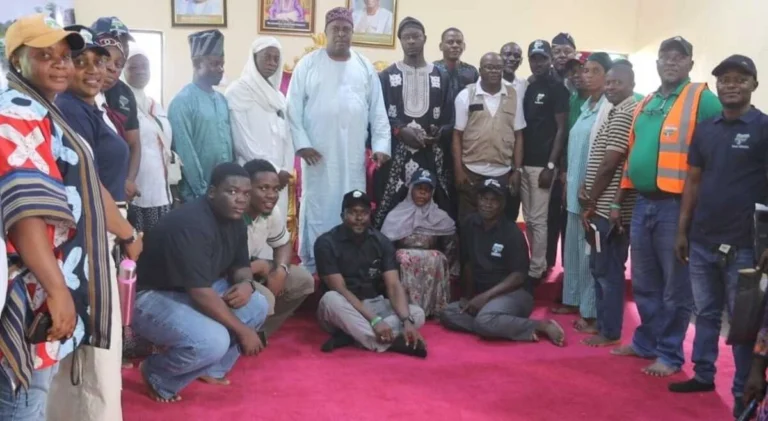
The stakeholders’ engagement itself was a testament to the broad-based collaborative spirit underpinning the project. Attendees included members of the FoNGO team (likely a Non-Governmental Organization focused on community development), directors and officials from key Kwara State Ministries (Environment and Water Resources), representatives of other relevant government agencies, local government officials, traditional and community leaders, as well as members of the KWACReSAL Project team. Their collective presence and reaffirmed commitment signal a strong, unified front for the successful implementation of the ACReSAL-IITA Climate-Smart Agriculture and Farmer-Led Irrigation Development initiative in Ijagbo. This multi-sectoral collaboration is crucial for addressing complex challenges like climate change and ensuring sustainable development.
Broader Implications: Towards Sustainable Development and Food Security
The KWACReSAL-IITA partnership in Ijagbo holds profound implications that extend far beyond the immediate pilot community, offering a blueprint for sustainable agricultural development and climate resilience across Kwara State and potentially other regions in Nigeria.
Economic Empowerment and Livelihoods: By introducing high-yielding, climate-resilient crop varieties and efficient irrigation techniques, the project is poised to significantly boost farmers’ incomes. Increased yields mean more produce to sell, leading to higher revenue. Moreover, FLID enables dry-season farming, providing continuous income streams throughout the year, thereby reducing financial vulnerability and improving overall household economic stability. This economic uplift can empower farmers to invest further in their operations, send their children to school, and access better healthcare, breaking cycles of poverty.
Food Security and Nutritional Outcomes: Enhanced agricultural productivity directly translates to improved food security at both household and state levels. A more stable and diversified food supply, particularly of staple crops like maize, sorghum, cowpea, and soybean, will mitigate hunger and improve nutritional outcomes. Cowpea and soybean, in particular, are vital sources of protein and micronutrients, contributing to better health for vulnerable populations, especially women and children.
Environmental Sustainability: The adoption of CSA practices such as conservation agriculture, agroforestry, and integrated pest management will have significant environmental benefits. These practices enhance soil health, reduce erosion, improve water quality, promote biodiversity, and contribute to carbon sequestration, helping to mitigate climate change. Efficient water management through FLID also ensures the sustainable use of precious water resources, preventing depletion and degradation.
Empowerment of Vulnerable Groups: The project explicitly targets women, youth, and other vulnerable groups, equipping them with practical knowledge and skills. By actively engaging these groups in CIGs and providing specialized training, the initiative fosters their economic independence and strengthens their role in agricultural production and community development. This inclusive approach is critical for achieving equitable and sustainable development.
Scalability and Replication: The success of the pilot phase in Ijagbo will serve as a powerful demonstration model. The lessons learned, best practices identified, and challenges overcome will provide invaluable insights for scaling up the intervention to other vulnerable communities within Kwara State and potentially inspiring similar projects in other Nigerian states facing similar agro-climatic challenges. The standardized training modules, CIG formation methodology, and monitoring frameworks developed through this partnership can be readily adapted for broader application.
Alignment with National and Global Goals: This initiative aligns perfectly with Nigeria’s national agricultural development policies, which prioritize food security, economic diversification, and climate change adaptation. Furthermore, it contributes directly to several United Nations Sustainable Development Goals (SDGs), including SDG 1 (No Poverty), SDG 2 (Zero Hunger), SDG 6 (Clean Water and Sanitation), SDG 13 (Climate Action), and SDG 15 (Life on Land).
In conclusion, the partnership between KWACReSAL and IITA, launched with such profound commitment in Ijagbo, represents a beacon of hope for agricultural transformation in Kwara State. By strategically combining scientific innovation, grassroots engagement, and multi-stakeholder collaboration, the project is poised not only to bolster agro-climatic resilience and enhance food security but also to lay a robust foundation for long-term sustainable development, improving the lives and livelihoods of thousands of farmers and their communities for generations to come. The collective efforts underscore a powerful commitment to tackling the pressing challenges of climate change and food insecurity head-on, setting a precedent for resilient and prosperous agricultural futures.