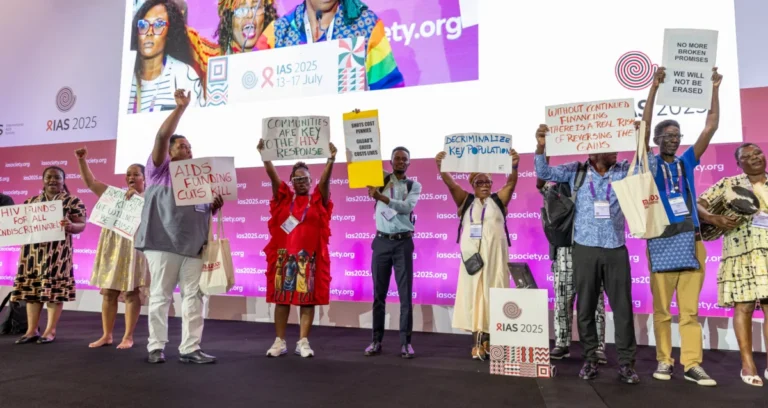
The global response to HIV and tuberculosis is facing its most significant challenge in decades as a combination of drastic funding withdrawals, political shifts, and international organizational restructuring threatens to dismantle the infrastructure built over the last quarter-century. As the International AIDS Society (IAS) prepares to open its global conference in Rio de Janeiro this Monday, the sector is reeling from data indicating that the progress made toward the 2030 goal of ending AIDS as a public health threat is not only stalling but, in many regions, actively reversing.
The crisis is characterized by a three-pronged threat: the massive disruption of services linked to changes in the U.S. President’s Emergency Plan for AIDS Relief (PEPFAR), the proposed "sunsetting" of the Joint United Nations Programme on HIV/AIDS (UNAIDS) under a broader UN reform strategy, and a persistent failure by many nations to meet domestic health spending targets. These developments formed the somber backdrop for a special African Union (AU) health summit held this week, where leaders scrambled to mobilize high-level political support for domestic health financing.
The PEPFAR Pulse Study: A Quantifiable Crisis in Service Delivery
The most immediate alarm was sounded by the release of the PEPFAR Pulse Study, conducted by the Foundation for AIDS Research (amfAR). The study provides a harrowing look at the ground-level impact of recent changes to PEPFAR, the cornerstone of global HIV funding for over two decades. According to the findings, which surveyed 166 PEPFAR implementing partners across 46 countries, the shift in U.S. policy and funding priorities has led to the closure of 1,714 HIV service sites. Perhaps most concerning is that more than 1,000 of these closures occurred within public health facilities, which serve as the primary point of care for the world’s most vulnerable populations.

The study’s data reveals a systemic collapse of support structures. More than half of the surveyed partners reported that at least one of their grants had been terminated, while over 75% had been forced to restrict their operational scope. The logistical fallout is equally devastating: 23% of partners reported an inability to obtain condoms, 22% faced shortages of pre-exposure prophylaxis (PrEP), and 20% were unable to secure a consistent supply of life-saving antiretroviral drugs.
This disruption has had a disproportionately severe impact on the most vulnerable demographic: children. A secondary analysis of PEPFAR data for the 2025 fiscal year revealed a 14.2% decline in the number of children living with HIV who received PEPFAR-supported treatment compared to 2024. This represents 77,163 fewer children receiving the care necessary for survival. South Africa, which has long been the epicenter of the global epidemic, recorded a staggering 45% drop in pediatric treatment support. The decline is attributed to a decision by the U.S. government to terminate all PEPFAR aid to South Africa by early next year, a move reportedly driven by escalating political disagreements between the two nations.
The UN80 Strategy and the "Sunsetting" of UNAIDS
While service delivery is faltering on the ground, the international architecture of the HIV response is undergoing a radical and controversial transformation. The United Nations Secretary-General’s "UN80" strategy has proposed the "sunsetting" of UNAIDS by the end of this year. Under this plan, the specialized agency’s capacity and expertise would be "mainstreamed" into other entities within the UN development system starting in 2027.
The transition is already underway and is marked by significant austerity. UNAIDS has already slashed its global workforce by approximately 55%, and its headquarters in Geneva has seen a massive reduction in size. The UNAIDS Programme Coordinating Board (PCB) has established a working group to finalize a plan by October that will dictate how functions will be transferred, merged, or absorbed.
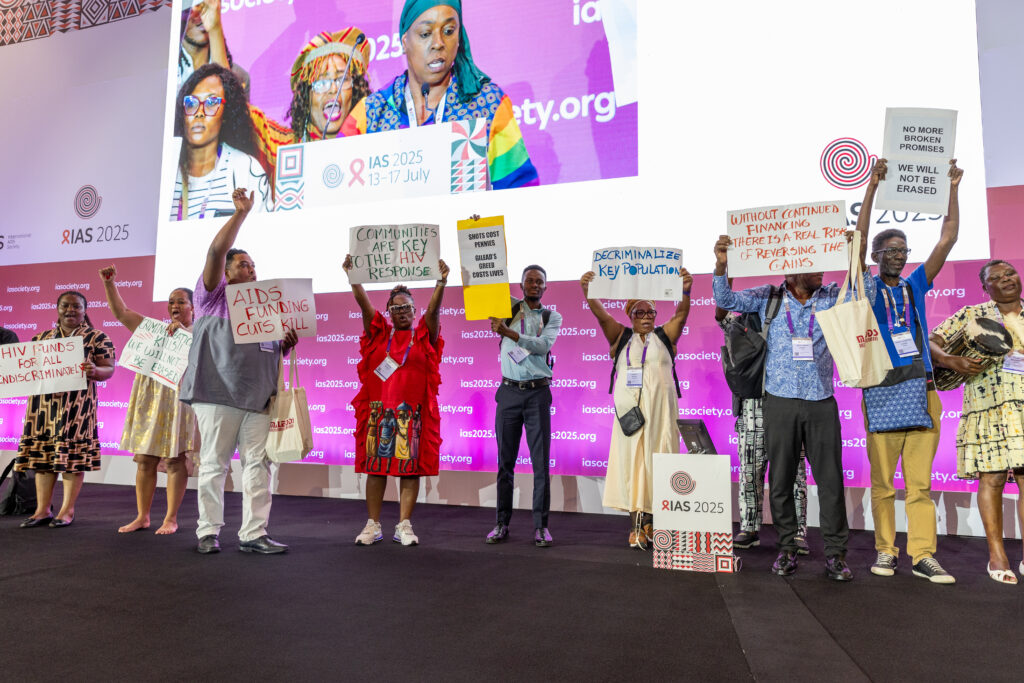
The move has sparked intense debate within the global health community. Proponents of the UN80 strategy argue that "mainstreaming" HIV services into broader health and development systems is a necessary step toward sustainability and efficiency. However, critics and activists, many of whom protested during the opening of the International AIDS Conference, fear that losing a dedicated, high-profile agency like UNAIDS will lead to a loss of political focus and the marginalization of the "community-led" model that has been the hallmark of the HIV response.
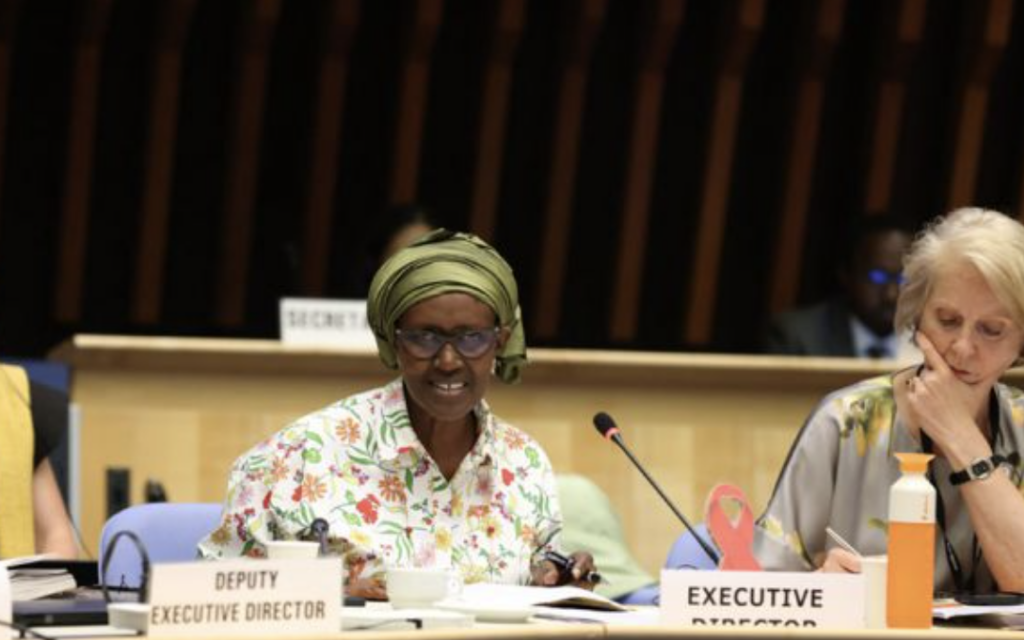
UNAIDS Executive Director Winnie Byanyima, addressing the PCB, emphasized that the mission to end AIDS cannot be achieved through institutions alone. She argued that while the organization is downsizing, the unique power of UNAIDS to unite the world and empower invisible communities must be preserved. The PCB has echoed this sentiment, mandating that core functions must be safeguarded and that the role of civil society must remain central to any future configuration.
The African Union Summit: Reclaiming the Abuja Promise
Amidst the global funding volatility, African leaders gathered this week for a special AU health summit to discuss the "Roadmap to 2030 and Beyond." The central theme of the summit was the urgent need for African states to fulfill the 25-year-old Abuja Declaration. In 2001, African heads of state pledged to allocate at least 15% of their national budgets to health—a target that the vast majority of countries have consistently failed to reach.
The summit’s deliberations were not limited to HIV but extended to tuberculosis, malaria, maternal health, and the rising threat of non-communicable diseases (NCDs). AU Commission Chairperson Mahmoud Ali Youssouf issued a stern call for a "decisive shift from commitments to implementation," noting that future generations would judge the summit by whether it fundamentally changed the trajectory of African health outcomes.
AU Health Commissioner Amma A. Twum-Amoah reinforced this by urging countries to translate the AU Roadmap into concrete national actions. These actions include strengthening primary healthcare, advancing the local production of vaccines and diagnostics, and investing in the health workforce to reduce the continent’s reliance on fluctuating international aid.
Chronology of the Current Crisis
- 2001: African Union states sign the Abuja Declaration, pledging 15% of national budgets to health.
- 2003: PEPFAR is launched, becoming the largest commitment by any nation to address a single disease.
- 2021-2024: Political shifts and budget debates in the U.S. lead to changes in PEPFAR’s operational mandates and funding allocations.
- Early 2025: The UN80 strategy is introduced, proposing the integration of UNAIDS into broader UN systems.
- July 2025: The amfAR PEPFAR Pulse Study reveals the closure of over 1,700 service sites and a 14% drop in pediatric treatment.
- July 2025: AU Health Summit convenes to address the domestic funding gap.
- Next Week: The International AIDS Conference opens in Rio under the theme "Rethink, Rebuild, Rise."
Implications and Analysis: A Fragile Future
The convergence of these events suggests a paradigm shift in global health. The era of massive, disease-specific international funding—often referred to as "vertical" programming—appears to be ending. The transition toward "horizontal" programming, where HIV care is integrated into general health systems, is theoretically sound but practically perilous in regions where general health systems are already overstretched and underfunded.
The data from South Africa, Uganda, Haiti, Zambia, and Kenya serves as a warning of what happens when the transition is abrupt rather than managed. The loss of nearly 80,000 children from treatment roles is a statistical catastrophe that threatens to reignite local epidemics and increase mortality rates. Furthermore, the "sunsetting" of UNAIDS at a time when service sites are closing suggests a retreat by the international community just as the finish line for the 2030 goals comes into view.
As the Rio conference begins, the "rethink, rebuild, rise" theme takes on a desperate urgency. The global health community must now navigate a landscape where political will is waning, and the financial burden is being shifted back to developing nations that are simultaneously grappling with debt crises and the impacts of climate change. The success of the AU’s Roadmap to 2030 will likely depend on whether African nations can finally bridge the gap between the rhetoric of the Abuja Declaration and the reality of their national budgets. Without a rapid stabilization of funding and a clear, safeguarded path for the transition of UNAIDS functions, the "shared vision" of ending AIDS by 2030 may remain an unfulfilled promise.