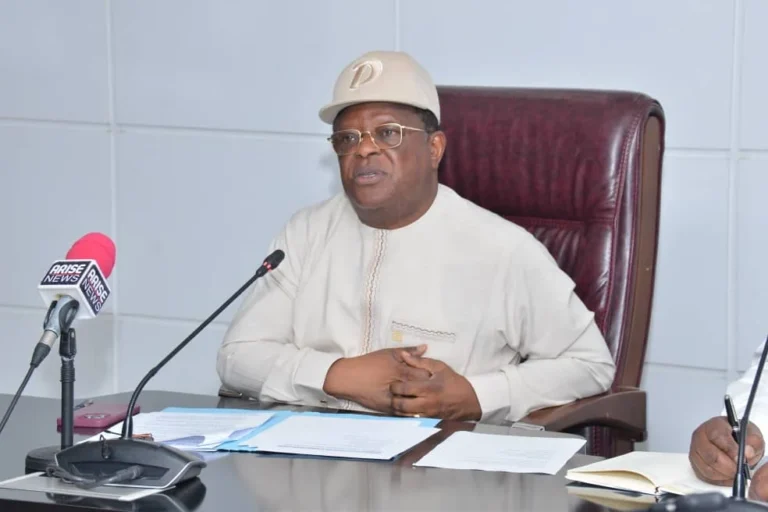
President Bola Ahmed Tinubu has extended heartfelt congratulations to Engineer David Umahi, the incumbent Minister of Works, on the occasion of his birthday on July 25th. The felicitation, conveyed directly from the nation’s highest office, served not only as a personal tribute but also as a powerful affirmation of the Minister’s performance and a clear directive for the accelerated delivery of critical road infrastructure across Nigeria. President Tinubu’s commendation highlighted Umahi’s "passion, dedication to duty, and deep sense of patriotism," recognizing his sustained efforts in ensuring the delivery of durable road networks, a cornerstone of the administration’s Renewed Hope Agenda. The President specifically lauded Umahi as "one of my outstanding, hardworking ministers," emphasizing his hands-on approach to monitoring construction projects nationwide.
Background: A Career Steeped in Infrastructure Development
David Umahi’s political trajectory and professional background have consistently underscored a strong commitment to infrastructure, particularly road construction. Before his current appointment as the Minister of Works in August 2023, Umahi had built a formidable reputation as a leader with a Midas touch for development. His journey began in the private sector, where he honed his engineering skills and business acumen, eventually transitioning into public service. He served as the Deputy Governor of Ebonyi State from 2011 to 2015, a period that provided him with intricate knowledge of state governance and developmental challenges.
His tenure as the Executive Governor of Ebonyi State, spanning two terms from May 2015 to May 2023, is widely cited as a testament to his infrastructural prowess. During these eight years, Ebonyi State, often considered one of Nigeria’s less developed states, underwent a remarkable transformation. Umahi’s administration initiated and completed numerous landmark projects, predominantly focusing on concrete road construction, multiple flyovers, and other urban renewal initiatives. These projects, characterized by their perceived durability and quality, earned him the moniker "Mr. Projects" within the state and beyond. The choice of concrete over asphalt for many of these roads was a deliberate policy aimed at ensuring longevity and reducing maintenance costs, a philosophy he appears to have carried into his federal portfolio.
Following his successful governorship, Umahi was elected as the Senator representing Ebonyi South District in the 10th National Assembly in 2023, a position he briefly held before being tapped by President Tinubu for the crucial role of Minister of Works. His appointment was widely seen as a strategic move by the President to bring a proven performer with a strong track record in infrastructure delivery into a sector vital for national economic revitalization.
The Renewed Hope Agenda and Infrastructure as a Catalyst
President Tinubu’s Renewed Hope Agenda places robust infrastructure development at its core, recognizing it as a fundamental enabler of economic growth, job creation, and improved quality of life for citizens. Nigeria, with its vast geographical expanse and diverse economic activities, relies heavily on an efficient transportation network. However, for decades, the nation’s road infrastructure has faced significant challenges, including inadequate funding, poor construction quality, lack of regular maintenance, and security concerns in certain regions. These issues have led to dilapidated roads, increased travel times, higher logistics costs, damage to vehicles, and tragic accidents, all of which impede economic progress and human development.
The Renewed Hope Agenda aims to reverse this trend by prioritizing the construction, rehabilitation, and maintenance of federal roads and bridges. The objective is multifaceted: to enhance connectivity between states, facilitate the movement of goods and services, support agricultural value chains, boost internal trade, attract foreign investment, and ultimately, improve the overall ease of doing business in Nigeria. The President’s directive to Minister Umahi to "accelerate road construction, rehabilitation, and delivery" is a direct reflection of this agenda’s urgency and importance. The emphasis on "improving citizens’ quality of life and boosting economic activity" underscores the human-centric approach to infrastructure development envisioned by the administration.
A Minister on the Move: Tinubu’s Endorsement of Umahi’s Work Ethic
A striking aspect of President Tinubu’s congratulatory message was his detailed praise for Minister Umahi’s hands-on approach to his duties. The President remarked, "As a minister, he does not just sit in his office or rely on reports from subordinates; he is constantly on the road, personally monitoring construction work nationwide to ensure compliance with specifications and approvals." This observation highlights a significant shift from a purely administrative role to one characterized by active oversight and direct engagement.
Umahi’s frequent site visits have become a hallmark of his ministerial tenure. From the critical Lagos-Calabar Coastal Highway project to various arterial roads and bridges across the country, photographic and video evidence often depicts the Minister clad in safety gear, interacting directly with engineers, contractors, and site workers. This approach is not merely symbolic; it serves several practical purposes:
- Quality Assurance: Direct monitoring helps ensure that contractors adhere strictly to design specifications, material quality, and construction standards, mitigating the risk of shoddy work that has plagued past projects.
- Problem Identification and Resolution: On-site presence allows for immediate identification of challenges, whether technical, logistical, or community-related, facilitating quicker resolution and preventing project delays.
- Accountability: The Minister’s direct involvement sends a clear message to all stakeholders about the government’s commitment to timely and quality project delivery, fostering greater accountability among contractors.
- Morale Boosting: Such visits can also serve to boost the morale of site workers and local communities, demonstrating the government’s investment and care.
This direct supervision aligns with the Renewed Hope Agenda’s focus on tangible results and efficient execution. The President’s acknowledgment of this work ethic underscores its value in driving the ambitious infrastructure goals of the administration.
Supporting Data and Current Initiatives
Nigeria’s federal road network spans approximately 35,000 kilometers, with a significant portion requiring rehabilitation or reconstruction. The Ministry of Works under Umahi has inherited a portfolio of ongoing projects, many of which had faced funding challenges or delays. Since assuming office, the Minister has embarked on a strategic review of these projects, prioritizing those with significant economic impact and those that facilitate critical inter-state connectivity.
One of the most ambitious projects currently under his purview is the 700-kilometer Lagos-Calabar Coastal Highway, a monumental undertaking designed to connect the South-West region to the South-South, unlocking immense economic potential along the coastal corridor. This project, which has generated considerable public discourse regarding its funding and execution model (Public-Private Partnership), exemplifies the scale of ambition within the Ministry. Umahi has been at the forefront of defending the project’s viability and strategic importance, emphasizing its long-term benefits for trade, tourism, and regional integration.
Other key projects include the ongoing rehabilitation of the Abuja-Kaduna-Kano expressway, a vital artery for northern Nigeria; the Second Niger Bridge, now commissioned but requiring robust access road infrastructure; and numerous inter-state road projects aimed at enhancing agricultural supply chains and facilitating market access for rural communities. The 2024 national budget allocated significant resources to the Ministry of Works, reflecting the administration’s commitment to infrastructure development. While specific figures can fluctuate with supplementary budgets and funding models, the consistent allocation signifies a strategic pivot towards addressing the country’s infrastructural deficit.
Inferred Reactions and Stakeholder Perspectives
President Tinubu’s public commendation of Minister Umahi is likely to elicit various reactions from different stakeholders.
- Ministry of Works Officials and Staff: Within the Ministry, the President’s praise would undoubtedly serve as a significant morale booster. It reinforces the leadership’s direction and validates the intensive work being carried out. A statement from the Ministry’s Permanent Secretary or other senior officials might follow, reiterating their commitment to supporting the Minister in achieving the Renewed Hope Agenda’s infrastructure goals and expressing gratitude for the President’s recognition.
- Contractors and Construction Firms: For contractors engaged in federal road projects, the President’s emphasis on quality and direct oversight from the Minister would reinforce the need for strict adherence to specifications and timely delivery. It signals that lax standards will not be tolerated, potentially leading to more rigorous quality control measures from their end.
- Infrastructure Experts and Civil Society Organizations: Experts in infrastructure development might view the President’s statement as a positive sign of the administration’s seriousness about infrastructure. They might commend Umahi’s hands-on approach as a best practice, especially given the historical challenges of project abandonment and substandard work. However, some might also call for greater transparency in project costs, procurement processes, and environmental impact assessments, particularly for mega-projects.
- The General Public: Nigerians, who bear the brunt of poor road infrastructure, would likely welcome the President’s commitment to durable roads. The emphasis on "century-long" roads resonates with public aspirations for lasting solutions rather than temporary fixes. While the President’s words offer hope, citizens will ultimately judge the administration by the tangible improvements they experience on the ground – smoother commutes, reduced travel times, and safer journeys. Social media platforms would likely see discussions ranging from appreciation for the focus on infrastructure to calls for specific roads in their localities to be prioritized.
- Political Analysts: Political observers would interpret the commendation as a strategic move by President Tinubu to consolidate confidence in his cabinet. By publicly praising Umahi, Tinubu is not only acknowledging performance but also setting a benchmark for other ministers, signaling that hard work and tangible results will be recognized and rewarded. It also reinforces the narrative that the administration is actively working to fulfill its campaign promises.
Broader Impact and Implications
The renewed focus on durable road infrastructure under Minister Umahi, backed by presidential endorsement, carries several significant implications for Nigeria’s development trajectory.
- Economic Revitalization: Improved road networks are crucial for stimulating economic activity. They reduce transportation costs, making goods cheaper for consumers and increasing profitability for businesses. This is particularly vital for the agricultural sector, allowing farmers to transport produce to markets efficiently, reducing post-harvest losses, and boosting rural incomes. Better connectivity also supports industrialization by facilitating the movement of raw materials and finished products, and it can unlock potential in tourism by making attractions more accessible. The "century-long" durability goal, if achieved, means sustained economic benefits without the recurrent high costs of frequent repairs.
- Enhanced National Integration and Security: A robust road network fosters better connectivity between different regions, strengthening national unity. It also plays a critical role in national security by enabling quicker deployment of security forces to troubled areas and facilitating intelligence gathering.
- Social Development: Access to quality roads means better access to essential services such as healthcare and education for remote communities. It improves the quality of life by reducing travel fatigue, enhancing safety, and promoting social interaction.
- Investment Climate: A country with reliable infrastructure is more attractive to both local and foreign investors. It signals a stable and growth-oriented environment, crucial for drawing in capital that can create jobs and further stimulate the economy.
- Sustainability and Long-term Vision: The emphasis on durability and quality reflects a shift towards a more sustainable approach to infrastructure development. Investing in roads that are built to last for a century reduces the lifecycle costs associated with constant maintenance and reconstruction, freeing up resources for other critical sectors. This long-term vision is essential for building a resilient national infrastructure.
- Benchmarking Performance: Umahi’s example of active monitoring and dedication sets a high standard for ministerial performance within the Tinubu administration. It suggests that ministers are expected to be hands-on, accountable, and result-oriented, fostering a culture of performance across the federal executive council.
Challenges Ahead
Despite the President’s commendation and the Minister’s evident commitment, the task ahead remains monumental. Nigeria’s infrastructural deficit is vast, and challenges persist. These include:
- Funding: While allocations have increased, the sheer scale of required investment often outstrips budgetary provisions, necessitating innovative funding models like Public-Private Partnerships (PPPs) and concessioning.
- Security: In some parts of the country, insecurity poses significant threats to construction workers and equipment, leading to project delays and increased costs.
- Environmental and Social Impact: Large-scale road projects often have environmental implications and require careful management of land acquisition and community resettlement to avoid conflicts and ensure sustainable development.
- Maintenance Culture: Beyond construction, a robust and consistent maintenance culture is crucial to ensure the longevity of new roads.
- Capacity Building: Ensuring a steady supply of skilled local engineers and construction workers to execute and maintain projects to high standards is also vital.
As Engineer David Umahi celebrates his birthday, the President’s message serves as both a congratulation and a re-affirmation of the critical mandate placed upon him. The expectation is clear: to leverage his proven expertise and unwavering dedication to accelerate the delivery of a resilient and expansive road network that will underpin Nigeria’s economic revival and enhance the well-being of its citizens for generations to come, truly embodying the spirit of the Renewed Hope Agenda. The nation watches with keen interest as the Minister continues his "on-the-road" leadership, striving to build the "century-long" infrastructure envisioned by President Tinubu.