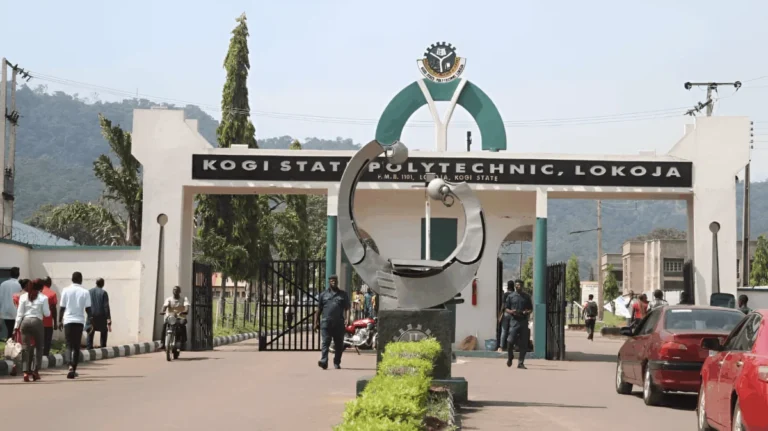
The Academic Board of Kogi State Polytechnic, Lokoja, has officially sanctioned the withdrawal of 229 students across various departments and levels following a comprehensive review of their academic performance for the first semester of the 2025/2026 academic session. This significant administrative decision was reached during the board’s emergency meeting held on Tuesday at the institution’s main campus in Lokoja, the Kogi State capital. The session, which was presided over by the Rector of the Polytechnic, Professor Salihu Avidime, involved a rigorous assessment of student records to ensure that the institution maintains its reputation for academic excellence and technical proficiency.
According to a formal statement released on Friday by John Onimisi, the institution’s Acting Coordinator of Public Relations and Protocols, the decision to ask the affected students to leave was not taken lightly but was necessary to safeguard the integrity of the certificates issued by the polytechnic. The meeting was attended by principal officers of the institution, including deans of various schools, heads of academic departments, and other high-ranking members of the Academic Board. The primary agenda was the consideration and approval of results for the first semester of the 2025/2026 academic year, a process that ultimately led to the identification of students who failed to meet the minimum academic requirements stipulated in the school’s handbook.
Rigorous Verification and the Role of the Central Committee
The withdrawal of such a substantial number of students follows a detailed and transparent verification exercise conducted by the Academic Board Central Results Verification Committee. This committee was tasked with the responsibility of scrutinizing the grade sheets and performance metrics submitted by every department within the polytechnic. The objective of this committee is to act as a fail-safe against errors, ensuring that every student’s performance is evaluated with the utmost accuracy, fairness, and strict adherence to the institution’s established academic regulations.
The verification process involved cross-referencing examination attendance sheets, continuous assessment scores, and final examination marks. By implementing this multi-layered vetting system, the management of Kogi State Polytechnic aims to eliminate any possibility of victimization or clerical errors that could unfairly impact a student’s academic standing. The committee’s report, which was presented to the board on Tuesday, highlighted that the 229 students in question had consistently fallen below the Grade Point Average (GPA) threshold required to remain in their respective programs.
Breakdown of Affected Programs and Academic Levels
The impact of the board’s decision is felt across several key departments, cutting across both the National Diploma (ND) and Higher National Diploma (HND) levels. The polytechnic confirmed that the 229 affected individuals include students from both the first and second years of their respective tiers (ND 1, ND 2, HND 1, and HND 2). This indicates that the academic struggle was not limited to new intakes but also affected returning students who failed to sustain the required academic momentum.
Among the departments most affected by the withdrawals are Accountancy, Business Administration, Computer Science, and Mass Communication. These programs are traditionally among the most populated at the institution, reflecting the high demand for professional and technical education in Kogi State. Other affected departments include Public Administration, Science Laboratory Technology (SLT), and Building Technology. The diversity of the affected programs underscores the institution’s uniform application of academic standards, regardless of the field of study. Following the board’s approval, the full list of withdrawn students was published through the institution’s official channels, providing clarity to the student body and the general public.
Leadership Perspective: Professor Salihu Avidime on Academic Integrity
During the board meeting, Professor Salihu Avidime, the Rector of Kogi State Polytechnic, took the opportunity to commend the Central Results Verification Committee for its diligence and professionalism. Since assuming leadership of the institution, Professor Avidime has been a vocal advocate for "quality over quantity," emphasizing that the value of a diploma lies in the competence and knowledge of the holder. He noted that the committee’s meticulous work had significantly strengthened the polytechnic’s academic integrity.
"The primary goal of this institution is to produce graduates who can compete effectively in the global labor market and contribute meaningfully to national development," the Rector stated. He further explained that allowing students who consistently underperform to remain in the system would be a disservice to the students themselves, the institution, and the employers who rely on the polytechnic’s certification. According to the Rector, the decision to withdraw the students is in the overall interest of sustaining academic excellence and ensuring that only those who demonstrate the necessary commitment and aptitude are allowed to progress.
Chronology and Context of the 2025/2026 Academic Session
The withdrawal of the 229 students marks a pivotal point in the 2025/2026 academic calendar. The first semester of this session began with high expectations and a renewed focus on digital learning and practical technical training. Throughout the semester, the management provided various academic support systems, including remedial consultations and expanded library resources, to assist students in their studies.

The examination period, which took place several weeks prior to the board meeting, was conducted under strict supervision to prevent academic malpractice. Following the conclusion of the exams, lecturers were given a specific window to grade scripts and upload results into the central system. The subsequent weeks were dedicated to the verification process, where the Academic Board Central Results Verification Committee checked for discrepancies. The culmination of this timeline was the Tuesday meeting where the final decision was ratified, leading to the public announcement on Friday.
Analysis of Implications for Students and the Institution
The withdrawal of 229 students has broad implications for the educational landscape in Kogi State and Nigeria at large. For the affected students, the withdrawal serves as a significant setback, necessitating a re-evaluation of their career paths. While the institution’s regulations typically allow for students to re-apply for admission into different programs or start afresh after a certain period, the immediate loss of time and financial resources remains a heavy burden for the families involved.
From an institutional perspective, this move signals a zero-tolerance policy toward academic lethargy. In many Nigerian tertiary institutions, there has been a growing concern regarding the "dilution" of academic standards to accommodate higher graduation rates. By taking this firm stance, Kogi State Polytechnic distinguishes itself as an institution that prioritizes the meritocratic nature of technical education. This is likely to boost the confidence of industrial partners and employers who hire the polytechnic’s graduates, knowing that the "Kogi Poly" certificate is a true reflection of academic and technical capability.
Furthermore, the decision is expected to serve as a wake-up call for the remaining student population. The management noted that the measure was intended to encourage discipline, seriousness, and improved academic commitment. In an era where distractions for young students are numerous, the enforcement of strict academic thresholds serves as a necessary deterrent against complacency.
Stakeholder Reactions and Broader Educational Impact
While the official statement focuses on the board’s decision, the news has sparked discussions among various stakeholders, including the Student Union Government (SUG) and parents. While the SUG generally advocates for student welfare, student leaders have often acknowledged that academic standards must be upheld to maintain the value of their degrees. Inferred reactions suggest that while there is sympathy for the affected individuals, there is also a consensus that the polytechnic must adhere to the National Board for Technical Education (NBTE) guidelines, which mandate certain minimum CGPA requirements for graduation and promotion.

Education analysts in Nigeria have frequently pointed out that the country’s polytechnics face a unique challenge: they must provide rigorous technical training while often dealing with students who may have entered with varying levels of foundational knowledge. The action taken by Kogi State Polytechnic highlights the ongoing struggle to bridge this gap. By removing those who cannot keep up, the institution can focus its resources—such as laboratory equipment, classroom space, and faculty time—on students who are performing well, thereby improving the teacher-to-student ratio and the overall quality of instruction.
Conclusion and Future Outlook
The management of Kogi State Polytechnic has reiterated its commitment to providing a conducive learning environment and the necessary tools for academic success. However, it maintains that the responsibility for academic achievement ultimately rests with the students. The institution has signaled that it will continue to monitor performance closely in the second semester of the 2025/2026 session, with similar reviews expected at the end of every academic term.
As the 229 students exit the institution, the focus remains on the thousands of others who continue their studies. The polytechnic plans to introduce more robust academic advising and mentoring programs to help at-risk students improve their performance before they reach the point of withdrawal. This proactive approach, combined with the firm enforcement of standards demonstrated this week, aims to solidify Kogi State Polytechnic’s position as a leading center for technical excellence in Northern Nigeria. The publication of the withdrawal list serves as a final administrative step in a process designed to ensure that the institution’s motto of "Knowledge and Skill" remains a lived reality for every graduate.