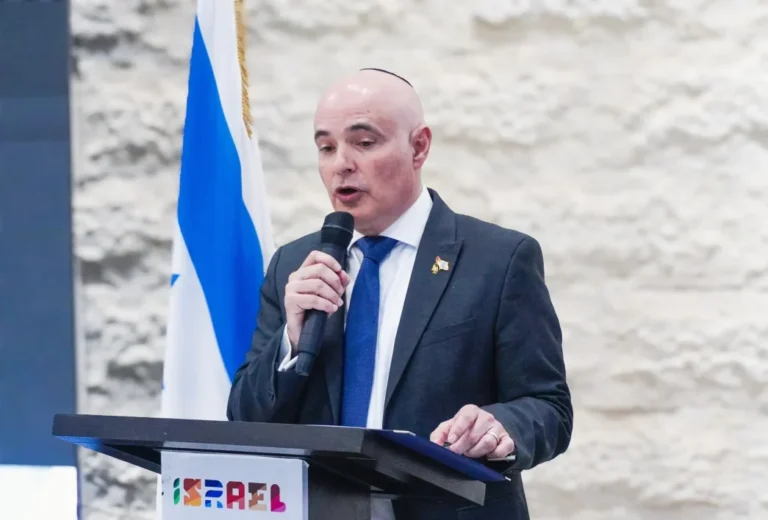
Abuja, Nigeria – Israel has officially announced the secured funding for the fifth iteration of its prestigious Innovation Fellowship for Aspiring Inventors and Researchers (iFAIR) program. This significant development, revealed on Saturday in Abuja during the closing ceremony and innovation showcase of the fourth iFAIR cohort, signals a continued commitment to nurturing and propelling Nigerian innovation. The program, slated to commence in October, aims to provide a robust platform for Nigerian innovators, researchers, and early-stage entrepreneurs to transform their groundbreaking ideas into sustainable and impactful businesses.
The announcement was made by His Excellency Michael Freeman, the Ambassador of Israel to Nigeria, a key figure in fostering bilateral cooperation and technological exchange between the two nations. The iFAIR fellowship, a nine-month intensive program, is a collaborative effort between the Embassy of Israel in Nigeria, the Tertiary Education Trust Fund (TETFund), and Innov8 Hub. Its core mission revolves around offering comprehensive mentorship, vital technical support, and crucial investment opportunities, thereby bridging the gap between nascent innovative concepts and their realization as viable commercial ventures. This initiative directly addresses a critical challenge within Nigeria’s burgeoning innovation ecosystem: the often-difficult transition of academic research from the laboratory to the marketplace.
iFAIR: A Nigerian-Led Initiative with Israeli Expertise
Ambassador Freeman articulated a clear philosophy behind the iFAIR program, emphasizing its nature as a "Nigerian-led initiative supported by Israeli expertise." He stressed that this distinction is not merely semantic but forms the bedrock of the program’s design and implementation. Unlike an imposition of foreign solutions, iFAIR is conceptualized to leverage Nigeria’s inherent innovative potential and empower local talent with globally recognized methodologies and support structures. This approach ensures that the innovations fostered are not only technologically advanced but also deeply rooted in the specific needs and contexts of the Nigerian market and beyond.
The fellowship’s curriculum is meticulously designed to equip participants with a holistic understanding of the innovation lifecycle. This includes rigorous training in product development, market research, business strategy, intellectual property management, and fundraising. Participants are paired with experienced mentors, both local and international, who provide personalized guidance and share invaluable insights gleaned from their own entrepreneurial journeys. Furthermore, the program facilitates access to cutting-edge technological resources and co-working spaces, fostering an environment conducive to rapid prototyping and iterative development. The emphasis on "sustainable businesses" underscores the program’s long-term vision, aiming to create ventures that are not only profitable but also contribute positively to economic growth and societal development in Nigeria.
Addressing Nigeria’s Innovation-to-Market Gap
The Tertiary Education Trust Fund (TETFund), a pivotal institution in supporting tertiary education and research in Nigeria, plays an instrumental role in the iFAIR program. Sonny Echono, the Executive Secretary of TETFund, highlighted that iFAIR directly tackles one of Nigeria’s most persistent innovation challenges: the disconnect between academic research and its translation into commercially viable products and businesses. This "valley of death" in the innovation pipeline has historically hindered the country from fully capitalizing on its intellectual capital.
"We recognize that a significant hurdle for Nigerian researchers and entrepreneurs is the practical application of their discoveries," stated Echono. "Many brilliant ideas remain confined to academic papers or laboratory settings due to a lack of resources, mentorship, and market access. iFAIR provides precisely the bridge needed to overcome this obstacle, transforming academic excellence into tangible economic impact."
To further bolster this effort, TETFund is actively engaged in establishing innovation centers across more than 60 tertiary institutions nationwide. These centers are envisioned as hubs that will provide students and researchers with the necessary infrastructure, equipment, and collaborative environments to develop innovative solutions while still within their academic institutions. This proactive measure aims to cultivate an entrepreneurial mindset from an early stage and ensure that promising research can be nurtured and developed into potential businesses before graduates enter the broader job market. The synergy between iFAIR and TETFund’s infrastructure development initiatives is expected to create a more robust and supportive ecosystem for innovation in Nigeria.
A Growing National Focus on Innovation Infrastructure
The announcement of secured funding for the fifth iFAIR cohort arrives at a crucial juncture for Nigeria, a nation increasingly prioritizing the development of its domestic innovation infrastructure. This strategic focus is driven by a recognition of the transformative power of innovation in driving economic diversification, creating employment opportunities, and enhancing global competitiveness.
This commitment to building a vibrant innovation landscape is evident in various ongoing initiatives. For instance, just last month, Nairametrics reported on a significant partnership between the National Information Technology Development Agency (NITDA) and TikTok. This collaboration aims to establish a Digital Commerce Lab in Lagos, specifically designed to support Small and Medium-sized Enterprises (SMEs). The pilot phase of this initiative includes a substantial "$20,000 ‘Train-the-Trainer’ programme," underscoring the focus on capacity building and knowledge transfer.
NITDA’s stated objective for the TikTok partnership is to expand digital skills training to entrepreneurs in remote and underserved communities across Nigeria. By equipping these individuals with the necessary digital competencies, the initiative seeks to facilitate greater participation of businesses in the burgeoning digital economy, thereby fostering inclusivity and broadening economic opportunities. Such initiatives, alongside iFAIR, paint a picture of a nation actively investing in its future by cultivating its innovative spirit and providing the foundational elements for technological advancement and entrepreneurial success.
Broader Implications and Future Prospects
The continued investment in the iFAIR program by the Israeli government, in collaboration with Nigerian institutions, carries significant implications for both nations and the broader African continent. For Nigeria, it represents an opportunity to further unlock its vast potential in fields such as technology, agriculture, healthcare, and renewable energy. The program’s emphasis on market-driven innovation and sustainable business models is critical for ensuring that these advancements translate into tangible economic and social benefits.
The success of iFAIR in previous cohorts has demonstrated its efficacy in identifying and nurturing promising talent. Graduates of the program have gone on to secure further funding, establish successful startups, and contribute to job creation. The ongoing support for iFAIR reinforces Nigeria’s position as a growing hub for innovation in Africa, attracting international partnerships and investment.
From Israel’s perspective, the iFAIR program exemplifies its strategy of leveraging its expertise in innovation and entrepreneurship to foster mutually beneficial relationships with developing nations. This approach not only strengthens diplomatic ties but also opens up new avenues for collaboration and knowledge sharing. By investing in Nigerian innovators, Israel contributes to the growth of a dynamic ecosystem that could, in turn, foster future collaborative ventures.
The chronological progression of iFAIR, from its inception to its fifth edition, highlights a sustained effort to build and refine a model that effectively addresses the unique challenges of innovation in the Nigerian context. The program’s evolution, incorporating lessons learned from previous cohorts and adapting to emerging technological trends, is a testament to its commitment to long-term impact.
The partnership with TETFund, with its extensive reach across Nigerian tertiary institutions, ensures that the iFAIR program can tap into a wide pool of academic talent. The establishment of innovation centers within these institutions further strengthens this pipeline, creating a continuous flow of ideas and potential participants. This integrated approach, from early-stage research to market-ready businesses, is essential for a comprehensive innovation strategy.
As the fifth iFAIR cohort prepares to embark on its journey in October, the anticipation is palpable. The program’s continued success will be measured not only by the number of innovative ideas it fosters but also by the tangible impact these innovations have on Nigeria’s economic landscape and the lives of its citizens. The sustained commitment from the Embassy of Israel, TETFund, and Innov8 Hub underscores a shared vision for a future where Nigerian ingenuity thrives, powered by robust support and a conducive environment for innovation. This enduring partnership is a beacon of hope, illuminating the path towards a more prosperous and technologically advanced Nigeria. The long-term implications of such collaborations extend beyond economic gains, fostering a culture of problem-solving and empowering a new generation of African innovators to tackle global challenges.