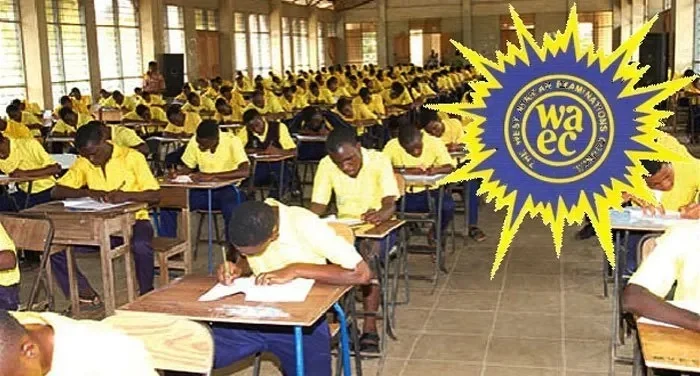
The landscape of educational assessment in West Africa has faced a turbulent period following the release of the 2026 West African Senior School Certificate Examination (WASSCE) results. What began as widespread public commentary and digital murmurs regarding unexpected outcomes on social media has now escalated into a formal legal confrontation. The Initiative for School Excellence and Education Foundation has stepped forward as a champion for distressed candidates, issuing a strict 14-day ultimatum to the West African Examinations Council (WAEC). Legal representatives for the foundation demand immediate transparency, the preservation of digital audit trails, and an independent verification of the newly deployed computer-based testing (CBT) platform. This unfolding crisis places the region’s premier examination board under intense public and legal scrutiny, forcing a national conversation about the reliability of digital educational infrastructure.
Legal Action and Core Demands from the Advocacy Coalition
The legal battle commenced publicly when Alex Onyia, Chief Executive Officer of EDU Care, published documentation from the advocacy group’s legal team on the social media platform X. Onyia, who had been among the prominent voices questioning the validity of the scores immediately following their publication, confirmed that the foundation’s patience had worn thin. Consequently, a formal legal notice dated 14 August 2026 was dispatched to the Head of WAEC’s Nigeria National Office in Yaba, Lagos. The document bears the signature of Chinwe Onubogu, Principal Partner at Zuriel Law Practice.
The foundation is not merely asking for a superficial review; rather, its demands are sweeping, technical, and legally binding. The primary objective is to safeguard digital evidence before any system purging or routine data management can obscure potential technological failures. Specifically, the legal notice commands WAEC to freeze and meticulously preserve all electronic and documentary records tied to the administration, processing, scoring, and release of the 2026 CB-WASSCE.
This preservation order encompasses a wide array of technical artifacts: candidate response databases, individual examination-session records, system audit trails, server and application logs, scoring databases, and comprehensive result-generation logs. Furthermore, the foundation is demanding exhaustive reporting on any technical incidents, system errors, or platform interruptions that occurred during the testing windows. In addition to preserving backend data, the advocacy group insists that affected candidates must be granted unhindered access to their specific electronic examination files. This includes recorded responses, granular raw scores, and analytical documentation detailing how final grades were computed. Crucially, the demand extends to logs of any manual interventions, administrative corrections, or algorithmic adjustments that might have altered a candidate’s original score.
Chronology of Events and the Escalation of Controversy
To fully understand the gravity of the current impasse, it is necessary to examine the timeline of events that led to the legal ultimatum. The 2026 WASSCE was administered during a prolonged testing window, running from 24 April through 19 June 2026. This year’s examination cycle was particularly significant due to the deeper integration of computer-based testing methodologies, a transition intended to modernize the assessment process and curb examination malpractices.
Following the conclusion of the exams, anticipation built among millions of students, parents, and educators. On 5 August 2026, WAEC officially released the results during a high-profile press briefing in Lagos, hosted by the Head of the Nigeria National Office, Amos Dangut. While initial summaries highlighted broad performance metrics, the euphoria of release quickly soured for a substantial segment of the candidate pool.
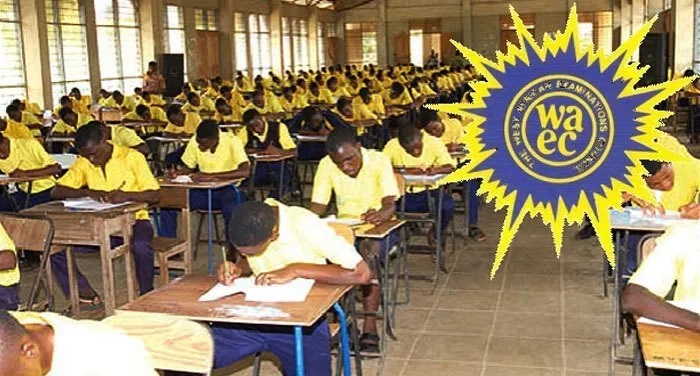
Within hours of the portal opening, social media platforms—particularly X and Facebook—were flooded with grievances from students and parents. Many reported bizarre score discrepancies, unexpected failures in core subjects, and jarring contrasts between expected performance and final grades. Critics specifically pointed toward potential glitches, latency issues, and software instability experienced during the computer-based examination sessions as the root cause of the anomalies.
As public outcry mounted, WAEC moved swiftly to defend its institutional integrity. On Thursday, 13 August 2026—just one day before the legal letter was formally issued—the examination body released an official statement addressing the wave of public commentary. WAEC asserted that the 2026 results were unimpeachable, having been produced through rigorous, multi-tiered marking, moderation, and auditing processes overseen by vetted subject-matter experts. The council cautioned the public against relying on unverified claims and directed aggrieved parties to utilize official administrative channels for redress. Unconvinced by these generalized assurances and fueled by direct representations from thousands of affected students, the Initiative for School Excellence and Education Foundation bypassed administrative appeals and initiated formal legal proceedings on Friday, 14 August.
Comprehensive Statistical Breakdown of the 2026 WASSCE
The scale of the controversy must be viewed against the massive operational footprint of the 2026 WASSCE administration. Statistical data provided by WAEC during the August 5 briefing highlights the immense logistical undertaking involved in conducting the examinations across Nigeria and the challenges inherent in processing millions of records digitally.
A total of 1,959,668 candidates, drawn from 24,207 secondary schools across the country, registered for the 2026 examination cycle. Out of this registered pool, 1,950,726 candidates ultimately sat for the tests within the April-to-June window. WAEC’s operational efficiency was initially praised when it announced that 1,834,695 candidates—representing 94.05 per cent of those who sat the exam—had their results fully processed and released concurrently.
However, administrative backlogs were evident from the outset, with the results of 116,031 candidates (5.95 per cent) remaining stuck in processing queues at the time of the initial announcement. Regarding academic performance benchmarks, the data revealed that 1,687,378 candidates (86.50 per cent) successfully obtained credits in at least five subjects, ignoring the mandatory requirements for English Language and Mathematics. When applying the traditional matriculation standard—credits in at least five subjects including both English and Mathematics—the figure dropped to 1,200,514 candidates, translating to a national pass rate of 61.54 per cent.
Simultaneously, the council cracked down on alleged misconduct, withholding the results of 167,486 candidates (8.59 per cent of the test-taking population) due to suspected examination malpractices. It is within this massive matrix of processed, delayed, and penalized scores that the petitioners argue anomalies could easily hide, drowned out by broad macro-level pass rates that fail to reflect individual system failures.
The Call for Independent Verification and Technical Audits
Rather than challenging WAEC’s core academic authority or demanding the wholesale cancellation of the results, the foundation’s legal strategy centers on technological and administrative accountability. The core of their proposal is the establishment of an independent verification panel comprising recognized experts in educational assessment and information technology.

According to the legal correspondence, the purpose of this independent review is not to supplant WAEC’s professional judgment regarding grading standards. Instead, it is designed to conduct a forensic audit of the technological infrastructure. The panel would determine whether the 2026 computer-based examination platform and its backend result-processing algorithms operated with the requisite accuracy, consistency, and reliability.
The foundation is demanding that WAEC provide a transparent technical framework governing the digital architecture used this year. They seek clear documentation on how technical incidents, server downtimes, or user-interface freezing issues were tracked, evaluated, and mitigated during the live testing phases. Without such independent verification, the advocacy group argues, the results cannot be deemed resilient to meaningful challenge, leaving thousands of students facing compromised academic and professional futures due to potential software errors rather than academic shortcomings.
Broader Implications for Educational Technology and Policy in West Africa
The legal confrontation between the Initiative for School Excellence and Education Foundation and the West African Examinations Council carries profound implications for the future of digital education and assessment across Nigeria and the broader West African sub-region. For years, educational stakeholders have pushed for the digitization of public examinations to eliminate physical paper leaks, reduce logistical bottlenecks, and align with global testing standards.
However, the rapid transition to computer-based testing requires robust digital infrastructure, uninterrupted power supply, high-bandwidth server capacity, and fail-safe redundancy protocols. When technological failures occur in high-stakes environments like the WASSCE—which serves as the primary gateway to tertiary education and professional life—the human and social costs are catastrophic.
If the advocacy group successfully forces an independent technical audit, it could set a groundbreaking legal precedent in West Africa. It would legally establish that public examining bodies are not infallible when deploying digital infrastructure and that candidates possess enforceable rights to transparent digital logs and verifiable grading mechanics. Conversely, if WAEC successfully defends its systems through the 14-day legal window or subsequent litigation, it will reinforce the council’s institutional autonomy while intensifying the pressure on educational advocates to better understand the complex interplay between digital platforms and student performance.
As the 14-day countdown ticks away, all eyes remain fixed on Yaba, Lagos. Whether WAEC chooses to open its digital books to independent technical experts or digs in its heels to defend the absolute finality of its automated grading systems, the outcome of this dispute will permanently alter how national examinations are administered, audited, and trusted in the digital age.