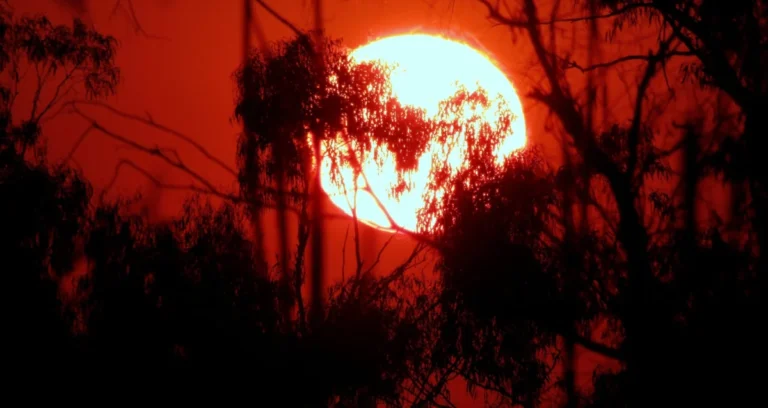
The global climate crisis reached yet another alarming milestone in late summer, as new data from the European Union’s Copernicus Earth Observation programme revealed that August 2026 tied with July 2023 as the warmest month ever recorded in human history. This unprecedented thermal peak marks the first time since November 2025 that global average surface temperatures surpassed pre-industrial levels by a staggering 1.65°C.
The persistent breach of the critical 1.5°C threshold—a baseline target established under the landmark Paris Agreement to stave off the worst catastrophes of global warming—highlights the accelerating pace of climate change. Climate scientists attribute this ongoing atmospheric anomaly to a dangerous synergy between relentless fossil fuel emissions and powerful, persistent El Niño conditions that continue to disrupt global weather patterns across both land and sea.
Main Facts and Climate Metrics
According to the latest ERA5 dataset compiled by the European Centre for Medium-Range Weather Forecasts (ECMWF), August 2026 shattered numerous historical records. Average global surface air temperatures were 1.65°C above the estimated 1850–1900 pre-industrial baseline. Furthermore, average sea surface temperatures reached unprecedented highs over extra-polar ocean basins—the massive water belts immediately adjacent to the Arctic and Antarctic regions.
This sustained marine and atmospheric heating means that the Northern Hemisphere summer spanning from June to August 2026 tied as the warmest three-month period globally, matching the blistering records set during the summer of 2024. Samantha Burgess, Strategic Lead for Climate at the ECMWF, emphasized the gravity of these findings.

"August 2026 was a remarkable month in the global climate record. It was both the warmest August and the warmest month ever recorded, with global temperatures reaching 1.65°C above pre-industrial levels, marking the return of global temperatures above 1.5°C," Burgess stated. "Combined with record global sea surface temperatures and the warmest summer on record for Western Europe, these observations show how climate change is driving extremes across both the atmosphere and the oceans. The impacts of these conditions are increasingly being felt by communities, economies, and ecosystems across the world."
Chronology of Recent Thermal Records
To understand the trajectory of the 2026 climate crisis, climatologists look back at a rapid succession of broken records over recent years. The upward trajectory began in earnest during the 2023–2024 El Niño cycle, which supercharged an already warming planet fueled by atmospheric greenhouse gases.
- July 2023: Previously set the gold standard for global heat, a record that stood alone until recently.
- 2024: Brought intense, widespread heatwaves across the Northern Hemisphere, culminating in a joint-record summer season alongside 2026.
- November 2025: Marked the final month in a prior stretch where global temperatures hovered above the 1.6°C anomaly mark before a brief, relative stabilization.
- August 2026: Witnessed a dramatic return to extreme territory, pushing monthly anomalies back up to 1.65°C and tying the historic high set three years prior.
Western Europe Endures Its Warmest Summer on Record
While the heat was a global phenomenon, Western Europe bore a particularly brutal brunt during the summer of 2026. The region surpassed the long-standing, deadly thermal records set during the historic European heatwave of 2003. The 2026 season was characterized by a relentless succession of early, persistent, and intense heatwaves that blanketed the continent.
Across Europe as a whole, the average land temperature for August 2026 reached 20.26°C—sitting 1.10°C above the standard 1991–2020 reference period average. This made it the fourth-warmest August on record for the continent, while the broader June-to-August summer period ranked as the third-warmest overall, trailing only the summers of 2024 and 2022.

The human toll of these recurring extreme summers remains catastrophic. Data released by the World Health Organization (WHO) indicates that heatwaves have claimed more than 200,000 lives across Europe over the past four years alone, with health authorities emphasizing that nearly all of these deaths were entirely preventable through adequate public health interventions and infrastructure adaptation.
Drought and Deluge: Regional Impacts Across Europe
The extreme temperatures were accompanied by severe hydrological imbalances. Much of Western Europe, alongside large swathes of Central and Eastern Europe, suffered from prolonged and severe drought conditions throughout August. In countries such as France, the United Kingdom, Hungary, Romania, and Serbia, dry soils and depleted water reservoirs persisted—in some cases—dating back to wet-season deficits established as early as May.
Conversely, hydrological extremes manifested as excessive rainfall and localized flooding in other parts of the continent. Western Iberia, the Alpine region, northeastern Europe, eastern Türkiye, and surrounding areas experienced wetter-than-average conditions, triggering destructive flash floods and straining local infrastructure.
Official Responses and Political Reactions
The relentless string of climate-driven disasters has intensified political pressure on international policymakers to move away from partisan debates and commit to rapid decarbonization. Addressing the European Parliament Committee, UN Climate Change Executive Secretary Simon Stiell delivered a blunt assessment of the situation.

"Climate is sometimes seen as a partisan issue: as territory in the culture wars. That is palpably false. And we’ve just seen why: Europe’s summer has been hot as hell. This is the price of global fossil fuel addiction hitting home," Stiell declared.
Stiell also connected the climate crisis to regional economic and security concerns, urging European leaders to view the green transition not as a burden, but as a lifeline. "Understandably, Europe wants affordability, economic stability, energy security, and policy-making autonomy. Clean energy is the surest path to deliver, cheaply and safely," he added.
Global Patterns of Extreme Weather
Beyond Europe, the climatic disturbances of August 2026 painted a fractured, volatile picture across both hemispheres.
In the polar regions, sea ice depletion continued to track at concerning levels. Arctic sea ice extent plummeted to the 12th lowest level on record for August, driven by exceptionally low ice cover in the Russian Arctic sector, specifically north of Franz Josef Land and Severnaya Zemlya. In the Southern Hemisphere, Antarctic sea ice extent ranked as the fourth lowest for the month, with the most pronounced deficits observed in the Amundsen Sea and the Indian Ocean sector.
Terrestrial precipitation anomalies varied wildly by geography. Drier-than-average conditions dominated vast territories, including:

- The southern United States and northern Mexico
- Parts of Canada and the Maghreb region
- Portions of the Horn of Africa and Siberia
- Large swaths of Central Asia, China, South America, South Africa, and northern Australia
Meanwhile, excessive precipitation and wet anomalies provided relief to—or overwhelmed—other areas, including the eastern United States and Canada, Alaska, pockets of western and eastern Russia, the northern Indian subcontinent, Chile, southeastern Brazil, and easternmost parts of Asia such as eastern China, Taiwan, and Japan.
Broader Implications and Analysis
The reality that global temperatures have repeatedly breached the 1.5°C ceiling underscores the narrowing window for effective climate mitigation. While the Paris Agreement aimed to hold warming to 1.5°C above pre-industrial levels "to significantly reduce the risks and impacts of climate change," transient and creeping long-term breaches indicate that the global community is entering an uncharted and dangerous era of climate volatility.
Public health experts, economists, and climate scientists warn that if current emissions trajectories continue alongside unmitigated cyclical phenomena like El Niño, societies will face compounding crises. These include systemic agricultural failures, economic losses in labor productivity due to extreme heat, escalating healthcare costs, and mass displacement of vulnerable populations.
The data from August 2026 serves as a stark reminder that climate change is no longer a distant theoretical projection for the late 21st century. It is a present-day reality reshaping economies, ecosystems, and human lives in real-time, demanding immediate, coordinated global action to transition away from fossil fuels and build resilient infrastructure worldwide.




