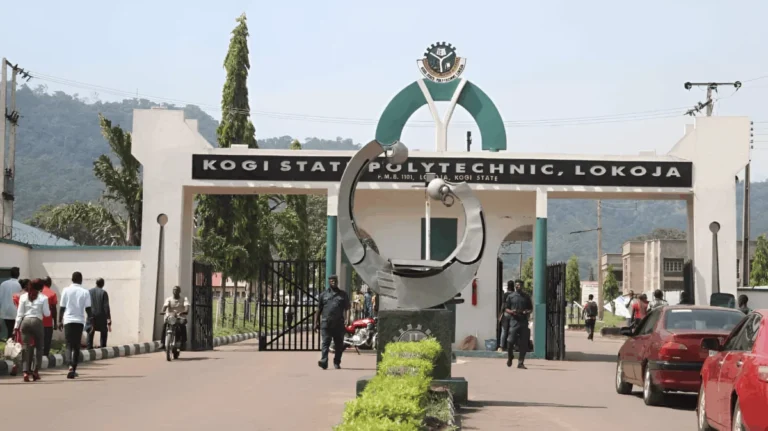
The Academic Board of Kogi State Polytechnic, Lokoja, has officially announced the withdrawal of 229 students across various departments due to unsatisfactory academic performance. The sweeping decision, which affects both National Diploma (ND) and Higher National Diploma (HND) candidates, was finalized during the board’s strategic meeting held on Tuesday and made public through a formal statement released by the institution on Friday.
The extensive review of academic standing marks a decisive moment for the tertiary institution as it moves to enforce strict educational benchmarks. Chaired by the Rector of the polytechnic, Professor Salihu Avidime, the high-level meeting brought together principal officers, school deans, department heads, and key board stakeholders to appraise the overarching academic health of the institution. The primary agenda centered on the comprehensive evaluation and approval of the first-semester examination results for the 2025/2026 academic session. Following rigorous screening procedures, the board concluded that a total of 229 students failed to meet the minimum cumulative grade point requirements mandated by the institution’s academic regulations, necessitating their immediate withdrawal from their respective programmes of study.
Rigorous Verification Process Precedes Sweeping Action
Behind the mass withdrawal is a meticulous verification architecture designed to protect the integrity of the institution’s evaluation systems. According to the administration, the newly approved semester results underwent extensive scrutiny by the Academic Board Central Results Verification Committee prior to the final board decision.
John Onimisi, the Acting Coordinator of Public Relations and Protocols for Kogi State Polytechnic, elaborated on the precision of the vetting process in the official communication released to the public. He emphasized that the committee went through submissions from every department and school with a fine-toothed comb. Their mandate was explicitly to guarantee absolute accuracy, fairness, strict compliance with institutional guidelines, and alignment with national polytechnic educational standards.
The meticulousness of this clearance procedure underscores the administration’s intolerance for administrative errors or grade inflation. By subjecting every departmental submission to a centralized, independent verification committee, the polytechnic leadership aimed to insulate the grading process from anomalies, ensuring that every student retained or dismissed fell strictly within established metric boundaries. Once the committee presented its findings to the wider Academic Board, the governing body ratified the recommendations, leading to the public release of the full manifest containing the names and registration details of the 229 affected students.
Broad Spectrum of Affected Departments and Programmes
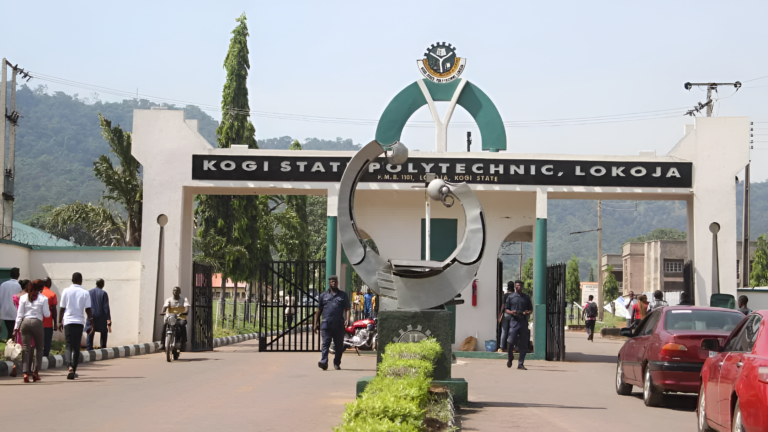
The fallout from the academic audit is not restricted to a single faculty or course of study; rather, it cuts across a wide spectrum of disciplines taught at the institution. The affected students span across both tiers of the polytechnic’s academic structure: National Diploma levels 1 and 2, as well as Higher National Diploma levels 1 and 2.
A breakdown of the institutional data reveals that the purge affects foundational and professional courses alike. Prominent departments housing casualties of the academic benchmark enforcement include Accountancy, Business Administration, Computer Science, and Mass Communication. Furthermore, students enrolled in technical, scientific, and administrative disciplines—such as Public Administration, Science Laboratory Technology, and Building Technology—also feature prominently on the withdrawal list.
The diverse distribution of the withdrawals highlights a systemic challenge regarding academic retention rather than an isolated issue within a single department. Educational analysts note that professional and technical courses often demand high analytical rigor and continuous practical engagement, areas where struggling students frequently encounter hurdles if they fail to adapt to the rigorous pace of tertiary education.
Leadership Commends Committee and Defends Institutional Standards
In the wake of the announcement, Rector Salihu Avidime addressed the academic community, offering high praise for the diligence, professionalism, and unyielding commitment demonstrated by the Central Results Verification Committee. Professor Avidime noted that the painstaking work executed by the panel has fundamentally fortified the polytechnic’s academic integrity.
The rector emphasized that the institution’s credibility relies heavily on the unflinching quality of the certificates it awards to graduates. According to the administration, conferring diplomas to candidates who have not successfully navigated the academic curriculum ultimately devalues the worth of the qualifications and harms the reputation of the polytechnic within the broader Nigerian labor market.
Echoing the rector’s sentiments, the Academic Board framed the drastic measure as an essential step taken in the overall interest of sustaining excellence. The board’s official statement noted that while parting ways with 229 students is a severe administrative action, it remains a necessary instrument for upholding institutional standards. The policy is explicitly designed to send a clear message to the wider student body: academic complacency will not be tolerated, and sustained commitment is a non-negotiable prerequisite for remaining enrolled in the institution.
Chronology of Events Leading to the Policy Implementation

The journey toward the recent mass withdrawal is rooted in a structured academic calendar and institutional oversight mechanisms that span several months. Understanding the timeline provides essential context regarding how the polytechnic monitors student progress:
- Completion of First-Semester Lectures and Examinations: The academic journey for the 2025/2026 session commenced with the delivery of course outlines, continuous assessments, and the eventual writing of first-semester examinations across all departments.
- Departmental Grading and Compilation: Following the conclusion of examinations, individual departments embarked on marking scripts, collating continuous assessment scores, and compiling raw grade point averages for all registered students.
- Central Verification Phase: Instead of immediate Senate or Board approval, raw results were channeled to the Academic Board Central Results Verification Committee. This body spent weeks cross-checking computations, reviewing attendance logs, and ensuring compliance with departmental prerequisite structures.
- Academic Board Review and Ratification: On Tuesday, the Academic Board convened under the leadership of Rector Salihu Avidime to review the verified submissions. It was during this session that the performance thresholds were applied, identifying students who had fallen below the mandatory academic standing.
- Official Public Disclosure: On Friday, following the conclusion of administrative protocols, the Public Relations and Protocols unit, through John Onimisi, published the comprehensive statement and made the list of the 229 withdrawn students accessible to the public and university community.
Implications for Student Retention and Academic Culture
The decision by Kogi State Polytechnic to weed out underperforming students carries profound implications for the institution’s internal culture and its external standing. In the short term, the departure of nearly 230 students will undoubtedly cause distress among the affected individuals and their sponsors, sparking conversations about the financial and emotional toll of academic setbacks in Nigeria’s tertiary education sector.
However, from an institutional governance perspective, the move signals a paradigm shift toward accountability and performance-driven education. Across Nigeria, polytechnics and universities face mounting pressure from regulatory bodies, such as the National Board for Technical Education (NBTE) and the National Universities Commission (NUC), to prioritize quality assurance over mere student volume. Institutions that fail to weed out non-performing candidates risk accreditation downgrades and a general erosion of trust in the validity of their transcripts and certificates.
Furthermore, this policy is expected to induce a psychological ripple effect across the remaining student population. Knowing that the institution actively monitors academic progress and enforces statutory withdrawal thresholds, students are likely to recalibrate their study habits, seek academic counseling earlier, and take continuous assessment components more seriously. Educational psychologists and student affairs officers often argue that strict academic policies, when paired with robust remedial or counseling frameworks, ultimately foster a culture of resilience and diligence.
Broader Context Within Nigerian Tertiary Education
The situation at Kogi State Polytechnic mirrors a broader nationwide trend where higher education institutions are increasingly tightening their academic belts. In recent years, several universities and polytechnics across the country have implemented similar policy measures, citing the need to rid their systems of " ghost students," persistent absentees, and those chronically unable to cope with academic demands.
Tertiary institutions are grappling with economic realities that affect both school management and student welfare. Inflation, rising costs of living, and financial pressures often force students to juggle academic pursuits with part-time economic survival strategies, sometimes to the detriment of their studies. While the polytechnic’s administration did not explicitly tie the withdrawals to socioeconomic factors, education researchers note that financial stress and lack of study materials frequently contribute to declining academic performance.

Despite these external pressures, the stance of Kogi State Polytechnic remains unequivocal: institutional survival and the preservation of academic standards take precedence. By drawing a hard line on performance, the institution positions itself as a bastion of meritocracy where progression must be earned through intellectual engagement and academic output.
Looking Ahead: Remediation and Future Outlook
As the dust settles on the announcement, questions naturally arise regarding the future of the affected students. While some institutional frameworks permit academic probation or conditional carryovers, the threshold for outright withdrawal typically indicates a cumulative grade point average that has dipped critically below the minimum pass mark over consecutive semesters or within a foundational period without the possibility of immediate redemption through standard remedial channels.
For those whose academic journeys at Kogi State Polytechnic have come to an abrupt close, options may include seeking admission into alternative institutions, enrolling in professional certification programs, or exploring vocational training pathways tailored to their individual strengths.
Meanwhile, the administration at Lokoja is expected to pivot its focus toward the commencement and smooth running of the remaining academic calendar for the 2025/2026 session. With the results verification hurdle successfully cleared and academic standards forcefully reasserted, the leadership under Professor Avidime aims to steer the polytechnic toward enhanced stability, academic rigor, and sustained national prominence.