The Argentine Football Association (AFA) confirmed on Tuesday that the national squad will convene in late September for an international window that marks the official commencement of life after the most decorated player in the country’s history. The schedule includes a fixture against Bolivia in Cordoba on September 30, followed by a double-header against Burkina Faso and Benin at the iconic Monumental Stadium in Buenos Aires on October 3 and 6, respectively. These matches serve as a pivotal testing ground for head coach Lionel Scaloni as he navigates the tactical and emotional vacuum left by the departure of the eight-time Ballon d’Or winner.
The Curtain Falls on an Illustrious Career
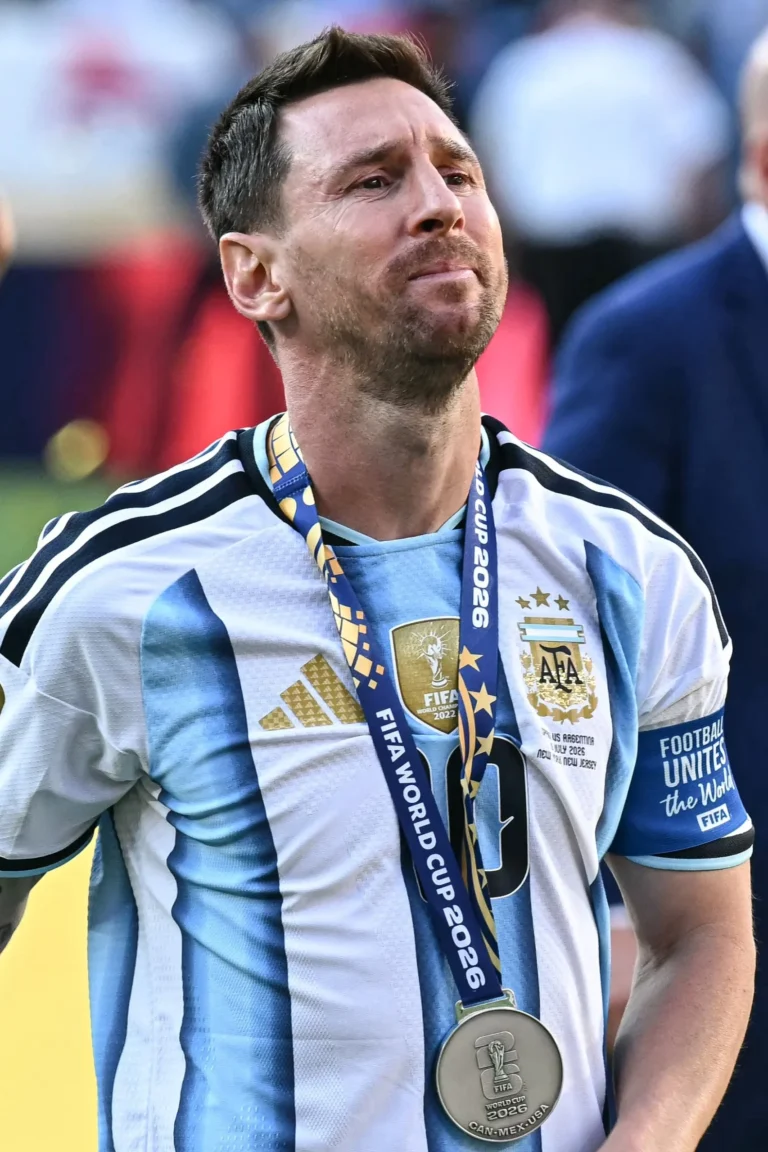
The transition follows a period of immense turbulence for Argentine football. On August 31, shortly after a heartbreaking defeat to Spain in the 2026 World Cup final, Lionel Messi announced his retirement from international football. In a statement that resonated globally, the 39-year-old icon remarked, "I have nothing more to give," effectively closing the door on a two-decade career that saw him redefine the sport.
Messi’s international tenure was defined by a late-career surge of glory, including the historic 2022 World Cup triumph in Qatar, as well as back-to-back Copa America titles in 2021 and 2024. His departure leaves the team in a state of flux, forcing a squad that had become synonymous with his playstyle to reinvent its identity. The upcoming friendlies are not merely exhibitions; they are survival exercises for a team that has relied heavily on the mercurial genius of their captain to bail them out of high-pressure situations for over fifteen years.
Disciplinary Challenges and FIFA Sanctions
The preparation for these friendlies is further complicated by significant disciplinary hurdles imposed by FIFA. The global governing body has mandated that Argentina operate at 50 percent capacity for its next home match, a direct response to breaches of the FIFA disciplinary code.
The sanction stems from a controversial incident following Argentina’s 2-1 semi-final victory over England in July. During the post-match celebrations, several members of the squad displayed a banner reading, "The Falklands are Argentine." FIFA’s disciplinary committee ruled this an unauthorized demonstration of a non-sporting nature, citing the organization’s strict regulations regarding the politicization of football matches.
Beyond the capacity restrictions, the team must also manage a depleted roster due to heavy suspensions handed down in the wake of the World Cup final loss to Spain. The match, which ended in acrimony, saw three key players sanctioned:
- Leandro Paredes: A 10-match ban for his involvement in post-match confrontations.
- Nahuel Molina: A 7-match suspension for aggressive conduct.
- Thiago Almada: A 1-match suspension.
The AFA has confirmed that these friendly matches against Bolivia and the African sides will count toward the fulfillment of these suspensions, meaning Scaloni will be forced to experiment with depth players and emerging youth prospects far sooner than he might have originally planned.
Chronology of Recent Events
- July 2026: Argentina defeats England 2-1 in the World Cup semi-final, marred by the display of a controversial political banner.
- Late July 2026: Argentina loses the World Cup final to Spain, triggering on-pitch incidents that lead to long-term suspensions for key personnel.
- August 31, 2026: Lionel Messi officially announces his retirement from international football, citing physical and mental exhaustion.
- September 30, 2026: First post-Messi friendly scheduled against Bolivia in Cordoba.
- October 3 & 6, 2026: Matches against Burkina Faso and Benin at the Monumental Stadium.
Tactical Implications of the Transition
For head coach Lionel Scaloni, the departure of Messi is more than the loss of a goal-scorer; it is the loss of a tactical focal point. Over the last four years, Argentina’s system was predicated on the "Messi-centric" model—a formation that allowed the team to remain compact defensively while granting Messi the freedom to operate in the final third.

Without the safety net of his vision and precision, the team is expected to shift toward a more collective, high-pressing style. Analysts suggest that the introduction of younger players like Almada and others in the pipeline will necessitate a faster, more direct transition game. The matches against Burkina Faso and Benin offer an opportunity to evaluate whether the team can maintain its defensive stability against physically imposing, counter-attacking opponents from the African continent.
Official Responses and Public Sentiment
The atmosphere in Buenos Aires remains one of melancholy mixed with anticipation. The AFA has been careful to frame these upcoming matches as a tribute to the team’s ongoing evolution rather than a mourning period.
"The national team is bigger than any single individual," an AFA spokesperson noted during Tuesday’s press conference. "While the void left by Lionel is impossible to fill, the cycle of football continues. Our focus is on the youth talent emerging from the domestic league and our European-based players who are ready to step into leadership roles."
However, the mood among the fans is complex. With the capacity restriction at the Monumental Stadium, the demand for tickets is expected to be even higher, as the public clamors for one final look at a squad that, while missing its talisman, remains the defending Copa America champions.
Broader Impact on South American Football
The exit of Messi from the international stage marks the end of an era for CONMEBOL. Argentina’s dominance over the last half-decade has set the bar for the continent, and the team’s ability to maintain that level of performance will directly influence the seeding and competitiveness of the 2030 World Cup qualifiers.
Furthermore, the disciplinary actions taken by FIFA against Argentina highlight an ongoing struggle between national identity and the neutral, apolitical image that the federation seeks to project. The "Falklands" banner incident serves as a reminder of the historical sensitivities that still permeate international matches, particularly those involving nations with complex geopolitical relationships.
Looking Ahead
As the squad prepares for the arrival of Bolivia, the team remains under the microscope. The October window will not only serve as a test of tactical viability but also as a litmus test for the team’s discipline. With key veterans serving bans, the youth movement will be under immense pressure to prove that Argentina’s recent success was the result of a cohesive unit rather than the brilliance of a single player.
The challenge ahead for the Argentine FA is to manage public expectations. The supporters, accustomed to the highs of 2021, 2022, and 2024, will have to adjust to a period of potential instability. Whether the national team can sustain its competitive edge in the absence of its greatest export remains the defining question of the next two years.
The upcoming matches will provide the first data points in this new era. While the scoreboard will reflect the results, the true measurement of success for Scaloni will be the integration of the next generation and the restoration of a disciplinary record that has been tarnished by the frustrations of the recent World Cup campaign. Argentina stands at a crossroads, looking to honor the legacy of the past while desperately trying to secure the future of its footballing dynasty.