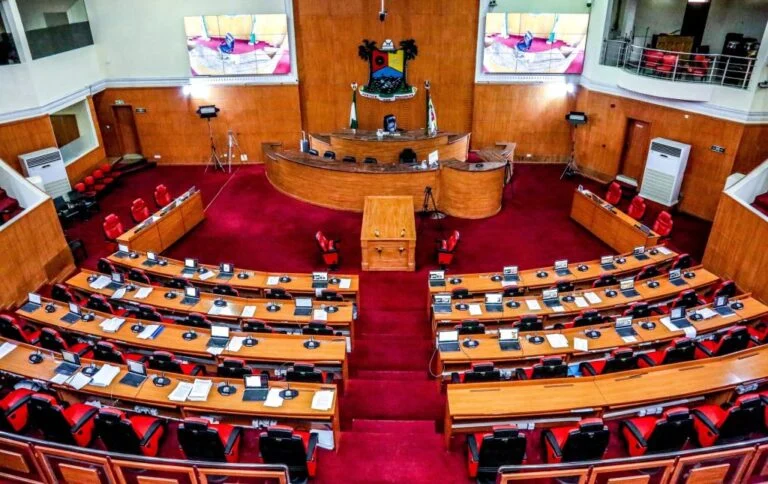
The Lagos State House of Assembly has officially passed the 2026 Appropriation (Amendment) Bill into law, marking a pivotal shift in the fiscal strategy of Nigeria’s commercial nerve center. This legislative milestone follows a formal request from Governor Babajide Sanwo-Olu aimed at reordering budgetary priorities to optimize capital expenditure and fast-track the delivery of critical infrastructure. The decision underscores the state government’s commitment to adapting its financial frameworks to current economic realities while meeting the escalating infrastructure and social demands of its rapidly growing population.
Legislative Process and Committee Review
The legislative journey of the amendment bill commenced when a formal communication from Governor Sanwo-Olu was presented to the floor of the House. The letter, detailing the necessity for a strategic realignment of funds, was read by the Clerk of the House, Mrs. Adenike Oshinowo. Demonstrating legislative urgency, the Speaker of the House, Mr. Mudashiru Obasa, swiftly referred the executive communication to the Committee on Economic Planning and Budget.
The committee, chaired by Mr. Lukmon Olumoh, immediately initiated a comprehensive review of the state’s fiscal performance for the ongoing financial year. During the committee’s evaluation, lawmakers scrutinized the execution rate of various capital projects and evaluated the impact of prevailing macroeconomic conditions on government revenues and expenditures.
Presenting the committee’s comprehensive report to the full House, Mr. Olumoh explained that the prevailing level of budget performance necessitated a pragmatic reassessment of the state’s implementation strategy. He noted that the administration needed to adopt a more focused, high-impact approach to capital investments for the remaining months of the fiscal year.
"The reordering of priorities will accelerate project execution and improve the overall performance of capital expenditure, while responding to current demands and emerging needs across the state," Olumoh stated during his presentation to the assembly. A cornerstone of this budgetary adjustment is the proposed upward review of the state’s bond issuance framework, scaling the target from N150 billion to N200 billion to inject robust financial liquidity into critical infrastructure and development portfolios.
Targeted Infrastructure and Priority Sectors
The newly passed 2026 Appropriation (Amendment) Law carves out clear financial pathways for several flagship projects designed to transform transportation, healthcare, environmental management, and urban renewal across Lagos State. By redirecting funds toward high-priority sectors, the state aims to maximize public utility and stimulate economic activity.
In the transportation sector, a major beneficiary is Phase II of the Blue Line Rail Project, which will extend mass transit connectivity from Mile 2 to the Trade Fair Station. This expansion is critical to alleviating traffic congestion along the densely populated Badagry Expressway corridor and integrating the state’s multi-modal transport network.
The healthcare sector also receives substantial capital allocation under the reordered budget. Key health infrastructure projects prioritized include the completion, furnishing, and equipping of the new Massey Street Children’s Hospital, a premier pediatric facility expected to drastically improve maternal and child healthcare delivery. Additionally, the funds will drive the completion of the 280-bed General Hospital in Ojo and the construction of the Ketu Ejirin Psychiatric Hospital, expanding specialized healthcare access to underserved communities.
Environmental management and urban resilience form another critical pillar of the amended budget. The allocation covers the completion of the Omu Creek project, massive deployment of drainage systems across flood-prone areas, and sustained environmental sanitation and maintenance programs along the newly constructed Coastal Road. Furthermore, the budget provides for the re-fleeting of operational vehicles dedicated to waste and traffic management, enhancement of landfill infrastructure, and the scaling up of security and emergency response equipment. Urban aesthetic and motorability will also receive a boost through sustained funding for the "Zero Tolerance for Potholes" road maintenance initiative, alongside strategic investments in state-backed housing units.
Legislative Oversight and Accountability
Following the presentation of the committee report, members of the House engaged in rigorous debates regarding the execution and monitoring of the amended budget. Mr. Aro Moshood, a prominent contributor to the debate, underscored the indispensable role of effective legislative oversight in ensuring that public funds are utilized judiciously.
Moshood reminded his colleagues that the passage of laws must be seamlessly matched by active, continuous monitoring of executive implementation. He urged lawmakers to exercise their oversight responsibilities with heightened diligence, stressing that the executive arm must strictly adhere to the provisions outlined in the newly passed amendment law.
"Funds must be applied strictly to the approved priorities to ensure effective implementation of the amended budget," Moshood asserted, echoing the sentiment of the assembly that fiscal discipline remains paramount in achieving sustainable development.
Upon the conclusion of the deliberations, the House officially adopted the committee’s report and proceeded to pass the bill into law through a voice vote. Concluding the session, Speaker Mudashiru Obasa directed the Clerk of the House to prepare a clean copy of the amended legislation and forward it promptly to Governor Babajide Sanwo-Olu for his formal assent, setting the stage for the immediate rollout of the recalibrated fiscal agenda.
Economic Implications and Broader Impact
The passage of the 2026 Appropriation (Amendment) Bill carries significant implications for the economic landscape of Lagos State. By proactively recalibrating budget allocations mid-cycle, the Lagos State Government demonstrates financial agility, ensuring that public resources are not tied down in underperforming sectors but are instead funneled into projects with direct, measurable impacts on citizens’ daily lives.
From a macroeconomic perspective, the decision to raise the bond issuance ceiling to N200 billion reflects sustained investor confidence in the sub-national government’s creditworthiness and financial management capabilities. Lagos State has historically maintained a robust debt-to-GDP ratio, leveraging capital markets transparently to fund high-value infrastructure that generates long-term economic dividends. Analysts point out that infrastructure-led growth is essential for maintaining Lagos’ status as Africa’s fifth-largest economy, attracting foreign and domestic investments, and creating thousands of direct and indirect jobs in construction, logistics, and allied services.
Furthermore, the emphasis on healthcare infrastructure—such as the Massey Street Children’s Hospital and the Ojo General Hospital—addresses critical gaps in social service delivery. In a megacity with an estimated population exceeding 20 million, expanding public health capacity is not only a humanitarian necessity but also a vital component of human capital development.
Similarly, the focus on environmental resilience—highlighted by extensive drainage construction, coastal road maintenance, and advanced waste management solutions—directly combats the ecological vulnerabilities associated with coastal urbanization and climate change. As Lagos continues to grapple with seasonal flooding and waste management challenges, the targeted funding secured through this budget amendment provides the necessary impetus for sustained urban renewal.
Ultimately, the successful execution of the 2026 Appropriation (Amendment) Law will depend on the synergy between the executive branch’s implementation machinery and the legislature’s rigorous oversight framework. With the legal architecture now fully established, residents and stakeholders across the state look forward to the rapid delivery of the promised infrastructural dividends.