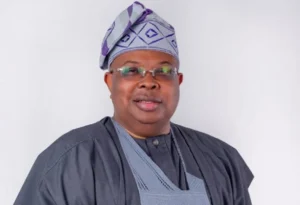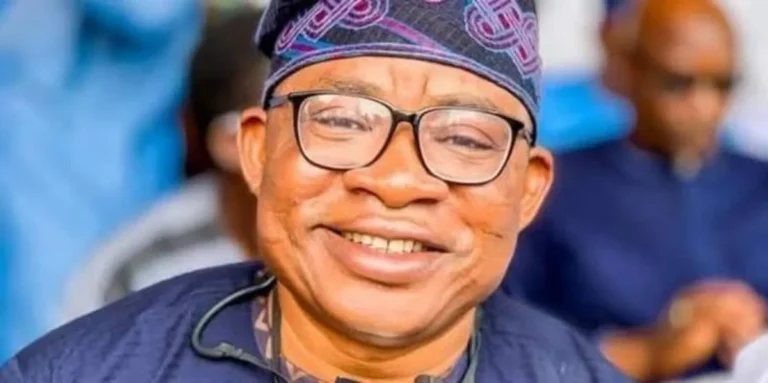
The political landscape in Oyo State has entered a phase of heightened strategic planning as the African Democratic Congress (ADC) governorship candidate, Olooye Adegboyega Taofeek Adegoke, intensifies his engagement with rural constituencies. During a recent campaign visit to Igbo-Ora, the administrative heart of the Ibarapa zone, Adegoke articulated a comprehensive development blueprint centered on energy independence, agricultural modernization, and decentralized governance. The visit, which covered both Ibarapa Central and Ibarapa North, served as a platform for the candidate to address long-standing infrastructural deficits that have historically hampered the socio-economic trajectory of the region.
The Energy Crisis: A Pivot to Solar Solutions
The cornerstone of Adegoke’s development strategy for the Ibarapa region is the proposed deployment of a localized solar power project. For decades, the zone has grappled with erratic electricity supply, often tethered to the failures of the national grid, which has stymied industrial growth and stunted small-scale commercial activities.
Adegoke’s proposal aims to decouple Ibarapa’s power infrastructure from the national grid, transitioning the area toward a decentralized renewable energy model. By establishing a dedicated solar farm, the candidate intends to provide a consistent, reliable power supply that serves not only as a domestic utility but as a catalyst for economic stimulation. The broader objective is to enable local manufacturing, enhance cold-chain storage for agricultural produce, and foster an environment where micro-enterprises can operate beyond daylight hours.
The security implications of this initiative are equally significant. Adegoke noted that the illumination of public spaces through reliable electricity is a proactive measure in crime prevention. By reducing the "dark zones" that often provide cover for criminal elements, the solar project is framed as an essential component of the regional security architecture.
Agricultural Expertise and Economic Empowerment
As a trained agricultural economist with an academic foundation from the Obafemi Awolowo University, Ile-Ife, Adegoke brings a technical perspective to the state’s most vital sector. Agriculture remains the primary occupation for a vast majority of the residents in the Ibarapa axis, yet productivity remains constrained by traditional farming methods, poor access to modern equipment, and a lack of high-yield agricultural inputs.
Adegoke’s platform promises a shift from subsistence-based farming to an industrialized, technology-driven model. This includes the provision of subsidized modern equipment, the distribution of improved-yield seedlings, and the facilitation of low-interest loan schemes channeled through local cooperative societies. By leveraging his professional background, Adegoke aims to bridge the gap between policy formulation and on-the-ground implementation, ensuring that farmers receive the logistical and financial support necessary to scale their operations.
Strengthening Grassroots Governance
A central pillar of the Adegoke campaign is the aggressive advocacy for local government autonomy. The ADC candidate contends that the current centralized governance model often neglects the nuances of rural areas, leading to a disconnect between the state administration and the local populace.
By empowering local councils, Adegoke intends to create a more responsive governance structure. This includes a robust partnership with traditional rulers, whom he identifies as the bedrock of community intelligence and conflict resolution. In the context of Ibarapa, which has faced periodic security challenges, the candidate argues that a localized security strategy—backed by autonomous local government funding—will provide a more immediate and effective response to threats than a top-down approach.
Chronology of the 2027 Gubernatorial Campaign
The trajectory of Adegoke’s candidacy reflects a structured approach to party politics and electoral compliance. The progression of his bid is summarized as follows:
- May 2026: Adegoke secures a decisive mandate during the ADC governorship primary, polling 16,051 votes to emerge as the party’s flagbearer.
- Late 2026: The ADC formally submits Adegoke’s candidacy to the Independent National Electoral Commission (INEC), marking his official entry into the 2027 gubernatorial race.
- Early 2027: Adegoke commences a series of "thank-you" and consultative visits to local government areas, beginning with the Ibarapa zone, to consolidate support and refine his manifesto based on constituent feedback.
- Current Phase: The campaign is currently focused on regional stakeholder engagement, mapping out specific infrastructural needs in various zones across Oyo State.
Stakeholder Perspectives and Youth Expectations
The reception of Adegoke’s proposals in Igbo-Ora was characterized by a blend of cautious optimism and clear demands for accountability. Mr. Ayodele Olanlere, the ADC Youth Leader in Ibarapa Central, underscored the urgency of the situation, noting that the youth population in the region is particularly vulnerable to the current economic stagnation.
Olanlere’s appeal highlighted three critical areas of concern: stable electricity, healthcare accessibility, and free, quality education. The demand for "service-oriented" governance reflects a growing sentiment among the electorate that the 2027 elections must focus on tangible outcomes rather than abstract political promises. The youth wing of the party has signaled that they will measure the success of any administration by the reduction in unemployment rates and the accessibility of social services.
Analysis: Implications for the 2027 Oyo Election
The electoral battle for Oyo State is expected to be fiercely contested, with candidates positioning themselves to capture both urban and rural demographics. Adegoke’s focus on the Ibarapa zone is a calculated strategic move. By addressing the "pain points" of rural residents—namely power, security, and agricultural support—he is attempting to build a reliable constituency that feels neglected by mainstream political narratives.
However, the feasibility of the solar power project remains a subject for technical scrutiny. The transition to decentralized power requires substantial capital investment, legal navigation of the national electricity regulatory framework, and long-term maintenance capacity. While the proposal is ambitious, analysts suggest that the success of such a project would depend heavily on the candidate’s ability to secure public-private partnerships (PPPs) and navigate the complex legislative hurdles associated with independent power generation in Nigeria.
Furthermore, the emphasis on local government autonomy is a recurring theme in Nigerian politics. While legally sound, its implementation often faces significant resistance from state-level actors who prefer to retain control over local government funds. Adegoke’s success in this area would require a strong legislative majority and the political capital to challenge the status quo regarding the State-Local Government Joint Account.
Broader Impact on Oyo State Development
Should Adegoke’s proposals come to fruition, the impact on Oyo State’s internal revenue and food security could be profound. Ibarapa, often referred to as a "food basket," has the potential to contribute significantly more to the state’s GDP if its agricultural supply chain is modernized. Reliable electricity would allow for processing industries to be established closer to the farm gates, thereby reducing post-harvest losses and increasing the value-add of agricultural exports.
The alignment of Adegoke’s economic background with his policy platform suggests a move toward technocratic governance. As the campaign progresses, voters will likely scrutinize the financial modeling behind these promises. The 2027 election cycle in Oyo State is shaping up to be a referendum on infrastructure and rural development, with candidates like Adegoke setting a high bar for what constitutes a comprehensive governance agenda.
In conclusion, the visit to Igbo-Ora marks a significant milestone in the ADC’s 2027 campaign strategy. By addressing the nexus of energy, security, and agriculture, Adegoke is positioning himself as a candidate who understands the structural requirements for regional development. As the election approaches, the ability to articulate these plans in a way that resonates with the practical needs of the electorate will be the ultimate test of his political durability and his potential to transform the socio-economic landscape of Oyo State.