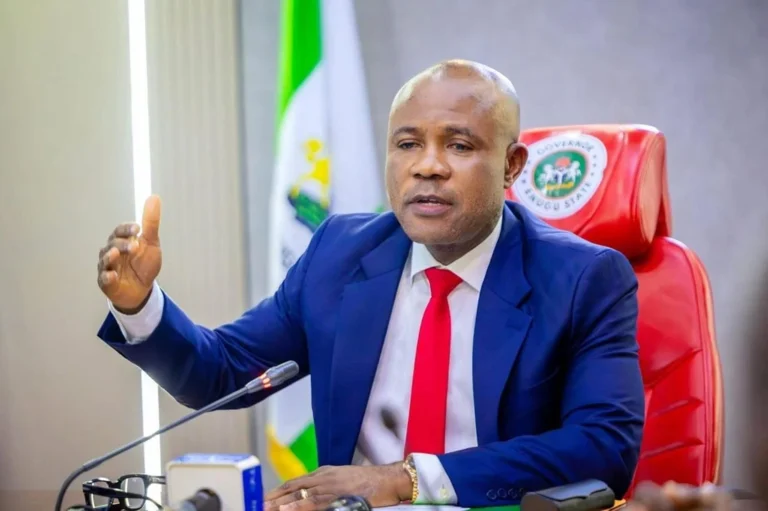
The administration of Enugu State, under the leadership of Governor Peter Mbah, has taken a decisive step toward the social and economic rehabilitation of its indigenes who were recently displaced by the wave of xenophobic violence in South Africa. In a formal ceremony held at the International Conference Centre in Enugu, the state government disbursed a total of N77 million to 77 families, comprising 112 individuals, who were forced to abandon their livelihoods and return to Nigeria under duress. This initiative represents a departure from traditional humanitarian aid, as the state government frames the financial assistance as a "seed fund" intended to catalyze the professional and entrepreneurial reintegration of the returnees into the local economy.
A Chronology of the Crisis and Repatriation
The current displacement is the latest chapter in a protracted history of tension between migrant communities and local populations in parts of South Africa. Over the past decade, Nigeria has seen periodic waves of violence, often characterized by the looting of foreign-owned businesses and physical assaults on African migrants. These episodes of unrest have historically necessitated the intervention of the Nigerian federal government and the Nigerians in Diaspora Commission (NIDCOM).
In this specific instance, the logistical coordination for the returnees was spearheaded by the Ministry of Foreign Affairs, led by Ambassador Bianca Odumegwu-Ojukwu, in collaboration with the NIDCOM leadership under Abike Dabiri-Erewa. The process involved identifying Enugu indigenes among the displaced, verifying their status, and ensuring their safe transit back to Nigeria. Following their arrival, the Enugu State government initiated a profiling exercise to understand the demographics and skill sets of the returnees. While the initial 77 families have been processed and supported, the state government confirmed that an additional 42 families are currently undergoing verification to determine their eligibility for similar support packages.
Economic Reintegration as a Strategic Priority
During the handover event, Governor Mbah, represented by the Secretary to the State Government (SSG), Prof. Chidiebere Onyia, emphasized that the N1 million grant per family is not merely a compensatory payment for lost assets. Rather, it is designed as a foundational investment. The administration posits that the returnees possess significant human capital, including international business experience, exposure to diverse technological workflows, and cross-cultural networking skills that could be leveraged for the development of Enugu State.
The policy shift from "charity" to "reinvestment" aligns with the current administration’s "Enugu Rising" agenda, which seeks to transform the state into a premier destination for investment and industrial activity. By providing seed capital, the government intends to lower the barrier to entry for returnees who might otherwise face severe financial hardship upon arriving in a volatile local economic climate.
Data and Financial Context of the Intervention
The allocation of N77 million represents a significant budgetary commitment for the state, especially considering the current inflationary pressures in Nigeria. For a displaced family, the sum of N1 million acts as a bridge for short-term liquidity, allowing for the securing of basic housing and the procurement of essential supplies before transitioning into long-term commercial activities.
Comparative data suggests that returnees often face a "re-entry shock," where the social capital built abroad is not immediately transferable to the home environment. By acknowledging this, the Enugu State government is attempting to mitigate the potential for long-term unemployment among this demographic. Furthermore, the state government is currently reviewing its database of the returnees to match their skill sets—ranging from retail management and hospitality to technical trades—with existing gaps in the local labor market and upcoming state-sponsored industrial projects.
Official Statements and Stakeholder Reactions
The reception event featured poignant testimonials from the beneficiaries, who expressed a mixture of relief and cautious optimism. Chidimma Ogbonna, speaking on behalf of the returnees, highlighted the psychological impact of being welcomed back with dignity, noting that the gesture fostered a sense of belonging that was sorely lacking during their time in South Africa. Similarly, Cosmas Okwor lauded the government’s efforts to make them feel "accepted" rather than treated as a burden on the state’s resources.
The Chairman of the Enugu State Council of Traditional Rulers, HRH Igwe Samuel Ikechukwu Asadu, provided the traditional blessing for the initiative, urging the returnees to view their displacement as a temporary setback rather than a definitive end to their professional aspirations. From a policy standpoint, the Special Adviser to the Governor on Diaspora, Barr. Olangwa Ezekwu, underscored the importance of inter-agency cooperation. She credited the synergy between federal authorities and the state government as the primary reason for the successful repatriation and subsequent support effort.
Broader Implications for State-Level Governance
The intervention by the Enugu State government signals a maturing approach to the "diaspora question" in Nigeria. Historically, the burden of managing the return of citizens has rested almost exclusively on the federal government. However, as states increasingly seek to attract investment and foster internal growth, the proactive reintegration of returnees is being recognized as an essential component of human capital development.
There are, however, broader challenges that this policy must address to be truly sustainable. First, the success of the seed fund will depend on the existence of a conducive business environment. Governor Mbah noted that the state is currently expanding its infrastructure, improving connectivity, and strengthening the healthcare sector. Without these macro-level improvements, individual financial support risks being consumed by basic living expenses rather than being invested in sustainable enterprise.
Second, the psychological aspect of reintegration remains a critical, albeit less discussed, factor. Many returnees have experienced significant trauma, loss of property, and the dissolution of established community networks. While financial aid is a necessary first step, long-term success may require psychosocial support services and business mentorship programs to ensure that the "seed" of the N1 million grant is planted in fertile ground.
Conclusion: A New Conversation on Development
The decision by the Enugu State government to prioritize the welfare of its returnees sets a precedent for how sub-national governments in Nigeria can respond to crises affecting their citizens abroad. By reframing the narrative from one of "victimhood" to one of "reintegration and opportunity," the administration is attempting to turn a humanitarian crisis into a source of potential human resource acquisition.
As the government proceeds with the profiling of the remaining 42 families, the effectiveness of this pilot program will likely be measured by the rate at which these families transition into self-sustaining economic units. If successful, the initiative could serve as a template for other states, demonstrating that the most effective way to welcome back those who have faced hardship abroad is to provide them with the tools to participate in the local, state-driven economic expansion. The challenge now remains for the government to maintain this momentum and ensure that the infrastructure and policies promised are sufficient to support not only the returnees but the broader populace in the pursuit of a more prosperous and stable Enugu.