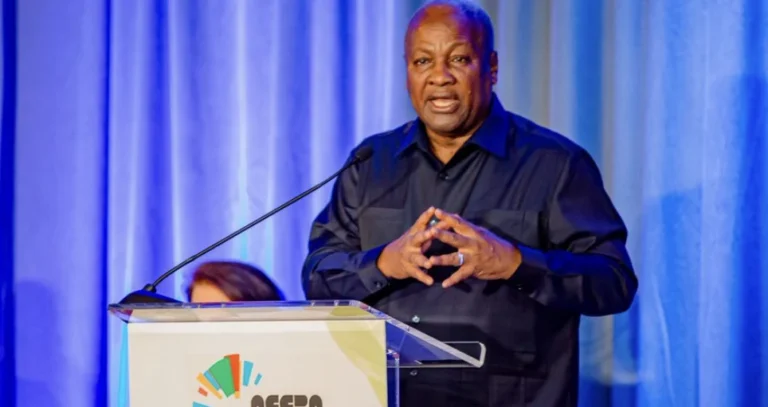
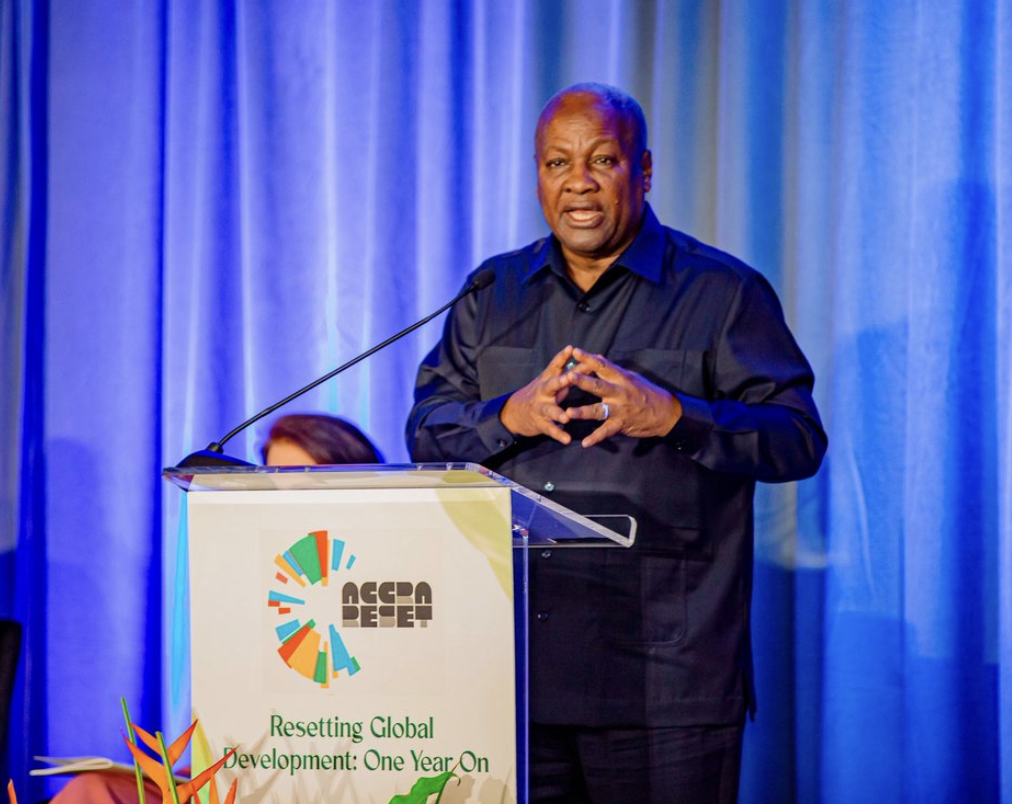
The international architecture governing global health aid faces a profound structural reckoning following the release of a landmark blueprint presented on the sidelines of the United Nations General Assembly in New York. Spearheaded by Ghanaian President John Mahama, the initiative—known as the Accra Reset—unveiled a comprehensive strategy designed to empower nations in the Global South to permanently end their financial and operational dependence on traditional health aid. The report, titled A Sovereign Future For Health, arrives at a critical juncture for developing economies grappling with severe contractions in external donor financing, shifting geopolitical priorities, and a fragmented international aid ecosystem.
The launch event marked the one-year anniversary of the Accra Reset platform, which was originally convened by President Mahama in response to sudden, dramatic cuts to health aid implemented by the United States administration under President Donald Trump. Over the past twelve months, the initiative has evolved from a regional African response into a global movement advocating for the fundamental restructuring of international health institutions. According to the newly published blueprint, external financing for health across the African continent experienced a catastrophic decline of nearly 70 percent between 2021 and 2025. This steep drop exposed deep structural vulnerabilities, forcing low- and middle-income countries to confront fiscal shocks that their domestic revenue systems were entirely unprepared to absorb in the short term.
Addressing global leaders, diplomats, and health experts in New York, President Mahama emphasized that achieving sustainable health independence requires a simultaneous dual approach. He asserted that domestic policy reforms cannot succeed in a vacuum if the overarching global governance framework remains dysfunctional and unequal. A national reset without a global reset leaves countries building on shifting sand, Mahama stated, adding that a global reset without strict domestic governance and financial discipline is equally unfeasible, as the two concepts represent inseparable sides of the same coin. Furthermore, the Ghanaian leader cautioned that true national sovereignty demands accountable domestic governance and robust institutional capacity, rather than a mere administrative transfer of decision-making authority from international bureaucrats to national ministries.
Chronology and Evolution of the Accra Reset Movement
The genesis of the Accra Reset can be traced back to late 2025 and early 2026, when African heads of state and ministers of health met in Ghana’s capital to strategize against mounting financial pressures from traditional donor nations. As major donor governments slashed foreign assistance budgets to redirect funds toward domestic priorities and defense, health systems across the Global South faced immediate shortages of life-saving commodities, antiretrovirals, vaccines, and operational funding. Recognizing that traditional aid models were permanently broken, President Mahama catalyzed a coalition of regional leaders, researchers, and policymakers to rethink international development cooperation.
Throughout 2026, the initiative expanded its scope, establishing a 23-member High-Level Panel on the Reform of the Global Health Architecture and Governance. This distinguished panel is co-chaired by prominent global health figures: Budi Gunadi Sadikin, Minister of Health for Indonesia; Dr. Elhadj As Sy of the Kofi Annan Foundation; Dr. Peter Piot, professor and former director of the London School of Hygiene & Tropical Medicine; and Dr. Priscila Ferraz from Brazil’s esteemed Fundação Oswaldo Cruz (Fiocruz). By bridging perspectives from Africa, Asia, Latin America, and Europe, the panel formulated the actionable recommendations detailed in the A Sovereign Future For Health report, culminating in its formal unveiling at the United Nations General Assembly in September 2026.

Strategic Reform and the 4Cs Framework for the Big Five
One of the most provocative and transformative proposals within the Accra Reset report is the immediate, strategic restructuring of major international global health organizations. The blueprint specifically targets institutions whose primary operational model involves funneling money, commodities, and medical products down to national governments—processes that the report criticizes for generating administrative burdens, bureaucratic duplication, and fragmented national planning at the country level.
To govern this massive institutional transition, the report introduces the 4Cs framework: Commit, Collaborate, Consolidate, and Close. Under this framework, international bodies are categorized for deep rationalization, merger, or outright time-bound closure. The primary focus centers on the so-called "Big Five" global health funding institutions, which command the largest flows of capital and commodities worldwide:
- Gavi, the Vaccine Alliance
- The Global Fund to Fight AIDS, Tuberculosis and Malaria
- The World Bank’s Global Financing Facility
- The Pandemic Fund (also hosted at the World Bank)
- Unitaid
In addition to these major financing mechanisms, the report places numerous disease-specific partnerships and product development partnerships (PDPs) under intense scrutiny. It argues that the separate maintenance of vertical disease programs—such as UNAIDS, Roll Back Malaria, Stop TB, and the Global Polio Eradication Initiative (GPEI)—is increasingly difficult to justify in an era focused on integrated primary health care and domestic resilience. Similarly, product development initiatives including Medicines for Malaria Venture, the Drugs for Neglected Diseases Initiative (DNDi), the TB Alliance, the International Vaccine Institute, and the Coalition for Epidemic Preparedness Innovations (CEPI) are flagged for rationalization, potential mergers, or planned sunsetting.
Despite the radical nature of these proposals, leadership from some of the targeted institutions expressed willingness to adapt to the changing global landscape. Speaking at the launch event, Dr. Sania Nishtar, Chief Executive Officer of Gavi, highlighted that her organization’s ongoing reform strategy, known as Gavi Leap, aligns closely with the principles of country sovereignty and regional leadership. Nishtar pointed to Gavi’s substantial investments in the African Vaccine Manufacturing Accelerator as a tangible step toward helping regional blocks achieve long-term manufacturing and supply chain independence.
Similarly, Peter Sands, Executive Director of the Global Fund, welcomed the report while emphasizing the enduring necessity of international solidarity. Sands noted that accelerating the pathway to health sovereignty should never be misinterpreted as a retreat from global cooperation. Instead, he framed the transition as the evolution of a new form of equal partnership, asserting that the ultimate measure of success must be evaluated by the tangible improvements delivered to the health and well-being of everyday people.
Five-Step Blueprint for Country-Led Transformation
To guide low- and middle-income countries away from systemic aid dependency, the Accra Reset report outlines a structured, five-step transition methodology designed to be implemented over the next decade.
- Practical Sovereignty: Nations must take full ownership of their policy decisions, domestic financing frameworks, and health data architectures. The report explicitly warns against countries merely acting as rubber-stamp bodies that endorse externally financed and donor-driven programs without alignment to national priorities.
- Comprehensive National Health Plans (NHPs): Within a year of adopting the framework, governments are expected to develop robust NHPs that incorporate multi-year health investment strategies. These plans must accurately map domestic revenue streams against external resources, transparently identify financing gaps, and establish realistic pathways toward fiscal self-sufficiency.
- Domestic-Centric Resource Allocation: Under this step, domestic tax revenues and national budgets will form the permanent foundation for core public health responsibilities. Meanwhile, external financing will be systematically redirected toward managed transitions, institutional capacity development, fragile and conflict-affected settings, regional health security functions, and global public goods.
- One-Stop Country Compacts: Countries will establish unified coordination mechanisms jointly led by national Ministries of Health, Ministries of Finance, and Ministries of Planning. These compacts will integrate local civil society stakeholders alongside restructured, streamlined international partners to eliminate overlapping programs and bureaucratic red tape.
- Orderly, Time-Bound Institutional Wind-Downs: For international organizations slated for closure, the report mandates a predictable, managed transition horizon spanning five to ten years. This timeline ensures that all institutional functions, normative responsibilities, and administrative duties are systematically transferred to regional or national entities without disrupting ongoing patient care or health service delivery.
Importantly, the report carves out essential exceptions for normative and public-good institutions. Global entities charged with establishing universal normative guidance and technical standards—most notably the World Health Organization (WHO)—alongside agencies providing vital humanitarian support and managing global public health emergencies, must be preserved and adequately funded to safeguard global health security.
Broader Economic and Geopolitical Implications
The release of the Accra Reset report reflects a profound ideological and financial shift in international development. For decades, the global health architecture operated under a traditional donor-recipient paradigm characterized by vertical disease programming, top-down priority setting, and heavy reliance on philanthropic foundations and wealthy governments. However, intersecting global crises—including post-pandemic economic sluggishness, sovereign debt distress across the Global South, shifting political landscapes in major donor nations, and competing demands for climate change financing—have rendered this legacy model financially unsustainable.
Experts note that while the vision of total aid independence and the closure of major global health institutions is ambitious, it addresses deep-seated frustrations regarding donor conditionality, administrative bloat, and the distortion of national health priorities. By demanding that domestic financial discipline match international institutional reform, the Accra Reset attempts to rebalance global power dynamics, ensuring that sovereign states retain agency over their public health destinies.
As governments, international organizations, and civil society digest the implications of the A Sovereign Future For Health report, the debate over the future of global health governance is expected to intensify across multilateral forums. Whether the international community can successfully navigate the complex transition from aid dependency to sustainable, locally led sovereignty will depend heavily on the political will of both Southern governments and traditional northern donors over the critical decade ahead.