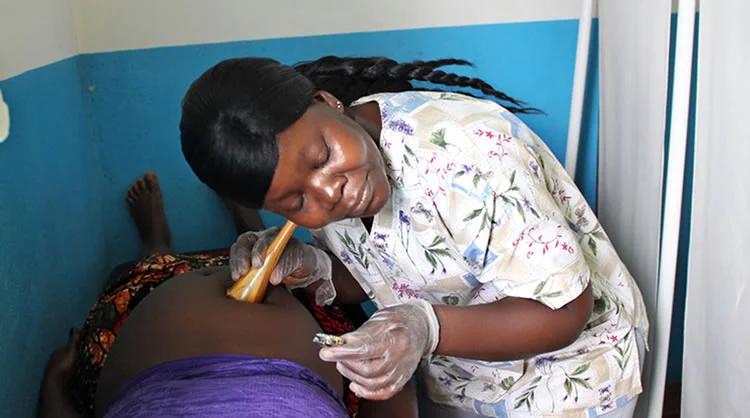
The landscape of maternal healthcare in Nigeria is poised for a major technological evolution following the launch of a pioneering artificial intelligence initiative by the MTN Group Foundation and the Bill & Melinda Gates Foundation. Unveiled on the sidelines of the 81st session of the United Nations General Assembly in New York, during Semafor’s Next Three Billion event, the multi-million-dollar partnership aims to tackle one of the most persistent public health crises in sub-Saharan Africa. Designated as the Nigeria Maternal Health Multiplier, the programme represents a strategic convergence of telecommunications infrastructure, artificial intelligence, and primary healthcare delivery. With an initial joint investment of approximately $25 million spanning from 2026 to 2030, the initiative seeks to leverage advanced mobile technology and digital connectivity to protect the lives of expectant mothers and reduce preventable childbirth complications across the country.
The Scale of the Crisis and the Rationale for Selection
Nigeria was deliberately chosen as the inaugural market for the Maternal Health Multiplier due to the sheer magnitude of its maternal mortality burden. While global statistics indicate a 40 percent decline in maternal deaths since the year 2000, progress has plateaued in many developing regions. The disparity in maternal health outcomes between developed and developing nations remains stark; sub-Saharan Africa continues to bear a disproportionate share of the global burden, where a woman’s risk of dying from pregnancy-related causes is approximately 250 times higher than it is in Western Europe.
Within the regional context, Nigeria stands out as a focal point of concern. The West African nation currently accounts for nearly 30 percent of all maternal deaths worldwide. Public health experts point out that a significant proportion of these fatalities are entirely preventable. However, systemic barriers severely obstruct timely medical intervention. Data shows that only 59 percent of pregnant Nigerian women complete the recommended minimum of four antenatal care visits. Consequently, critical warning signs often go undetected by under-resourced medical personnel until conditions reach an advanced, life-threatening stage. By deploying targeted digital innovations, the MTN-Gates Foundation partnership intends to bridge this diagnostic gap and ensure that pregnant women receive continuous, proactive clinical guidance from conception through the postnatal period.
Operational Framework: How the Maternal Health Multiplier Works
The core mechanics of the Maternal Health Multiplier are structured around a comprehensive three-pronged intervention model designed to reinforce existing primary healthcare systems rather than bypass them. Scheduled for full implementation leading up to 2030, the programme targets three critical pillars: human resource enablement, technological asset distribution, and digital infrastructure enhancement.
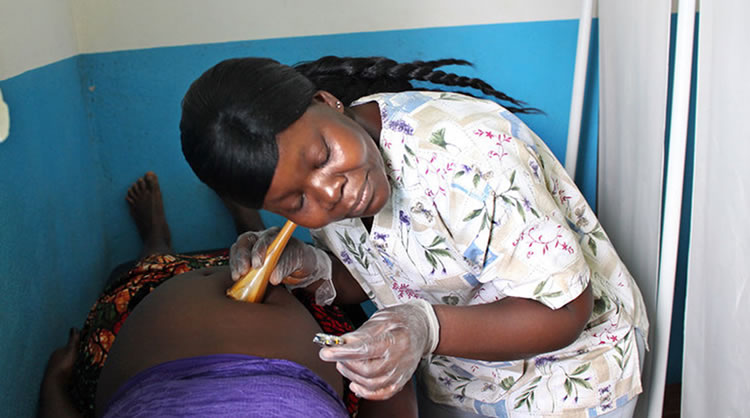
First, the initiative will equip 5,000 frontline health workers with advanced, phone-based, AI-enabled decision-support tools. These tools are engineered to assist nurses, midwives, and community health extension workers in identifying early warning signs of pregnancy and childbirth complications with higher accuracy and speed. By processing clinical symptoms against vast medical databases locally contextualized for Nigerian patients, the AI systems can suggest timely clinical interventions and referrals.
Second, the programme will address the digital divide by distributing affordable smartphones bundled with mobile data directly to marginalized pregnant women. This ensures that beneficiaries are not merely passive recipients of care, but active participants who have direct, continuous access to trusted maternal health information, localized educational content, and remote consultations in their native languages.
Third, the initiative will upgrade internet connectivity across 500 primary healthcare facilities. Reliable broadband infrastructure is essential for synchronizing patient records, facilitating telehealth consultations, and ensuring that rural clinics remain digitally integrated with regional medical hubs. Through these combined efforts, the partnership aims to reach 500,000 women directly by the end of the decade, stabilizing healthcare delivery at the grassroots level where it is needed most.
Alignment with National Health Reforms
The launch of the Maternal Health Multiplier does not operate in a vacuum; rather, it is designed to synergize with existing federal healthcare frameworks. The programme deliberately builds upon the Nigerian federal government’s Maternal and Neonatal Mortality Reduction Innovation Initiative (MAMII). The MAMII framework itself is a key component of the Federal Ministry of Health and Social Welfare’s broader Sector-Wide Approach, which seeks to harmonize donor funding, state-level execution, and federal policy into a cohesive national strategy.
Coordinating Minister of Health and Social Welfare Muhammad Pate emphasized the importance of integration during the announcement of the partnership. According to Mr. Pate, interventions that respect and reinforce existing institutional structures are vital for long-term sustainability. He noted that partnerships working with the national health system, rather than around it, are precisely what is required to capture mothers who otherwise fall through the cracks of a fragmented medical landscape.
Similarly, the Minister of Communications, Innovation and Digital Economy, Bosun Tijani, underscored the broader macroeconomic and developmental implications of the project. Mr. Tijani pointed out that Nigeria’s historical challenge in service delivery—whether in health, agriculture, or education—has rarely been a shortage of innovative ideas. Instead, the bottleneck has consistently been a lack of institutional focus on the foundational systems required to drive widespread technological adoption. The collaboration with MTN and the Gates Foundation represents a deliberate effort to lay down that foundational digital architecture within the public health sector.
Leadership Perspectives and Strategic Vision
The leadership of both founding organizations has articulated a clear vision centered on equity, accessibility, and localized relevance. MTN Group President and Chief Executive Officer Ralph Mupita stressed that the evolution of artificial intelligence opens unprecedented avenues for personalized public health delivery. By utilizing AI algorithms capable of processing regional languages and cultural nuances, the programme aims to put actionable, trusted health insights directly into the hands of mothers and healthcare professionals. According to Mr.upita, technology must be tailored to the unique socio-economic realities of the end-users to achieve meaningful impact.
Echoing this sentiment, Bill & Melinda Gates Foundation Chief Executive Officer Mark Suzman highlighted that the transformative potential of artificial intelligence is entirely contingent upon its equitable distribution. Mr. Suzman cautioned that advanced technologies risk exacerbating existing inequalities if they remain exclusive to affluent populations. The true measure of AI’s success, he argued, lies in its ability to reach the most vulnerable demographics—individuals who stand to gain the most from modern medical breakthroughs but are historically the hardest to reach.
Chronology and Implementation Timeline
The announcement at the United Nations General Assembly in September marks the formal genesis of a multi-year mobilization and deployment phase. While the official implementation window is slated for 2026 through 2030, preparatory activities involving stakeholder consultations, software localization, hardware procurement, and institutional capacity assessments are scheduled to take place immediately.
- September 2025: Formal announcement of the four-year partnership at Semafor’s Next Three Billion event on the sidelines of the 81st UN General Assembly in New York.
- Late 2025 – Throughout 2026: Collaborative planning phase involving the Federal Ministry of Health and Social Welfare, state health boards, MTN Nigeria, and Gates Foundation technical teams. Localization of AI diagnostic tools, language adaptation, and selection criteria finalization for target health facilities.
- 2026 – 2027: Rollout of initial infrastructure upgrades. Deployment of improved internet connectivity across the first cohort of primary healthcare facilities. Commencement of smartphone distribution and digital literacy training for pregnant women.
- 2027 – 2028: Training and equipping of the first wave of frontline health workers with AI-enabled decision-support tools. Integration of data-sharing protocols with the federal MAMII framework.
- 2028 – 2030: Scale-up phase targeting the full operational capacity of 500 health facilities, 5,000 trained health workers, and direct outreach to 500,000 pregnant women nationwide. Comprehensive evaluation of health outcome metrics, maternal mortality rates, and antenatal visit completion percentages.
Broader Implications for Digital Health in Africa
The MTN-Gates Foundation initiative serves as a potential blueprint for public-private partnerships (PPPs) addressing systemic health deficiencies across developing economies. By pooling the financial resources, telecommunications footprint, and logistical prowess of a multinational corporation with the philanthropic capital and global health expertise of a major foundation, the project demonstrates how non-state actors can catalyze state-level transformation.
If successful, the Nigeria Maternal Health Multiplier could establish scalable benchmarks for the integration of artificial intelligence into primary healthcare systems throughout sub-Saharan Africa. The integration of mobile money ecosystems, telecommunications infrastructure, and clinical diagnostics points toward an interconnected future where digital tools actively mitigate infrastructural deficits. However, analysts note that the ultimate test of the initiative will rest on long-term institutional ownership, data privacy safeguards, and the uninterrupted maintenance of digital assets once the initial four-year funding cycle concludes. For now, the collaborative effort offers renewed optimism that targeted technological innovation can fundamentally alter the trajectory of maternal survival in Nigeria.