In a significant push toward grassroots economic rejuvenation, the First Lady of Anambra State, Dr. Nonye Soludo, has concluded a massive empowerment drive that provided essential working tools and financial grants to 5,000 residents across the state. The initiative, held at the Light House in Awka, represents a calculated strategy by the state government to combat poverty by directly equipping vulnerable populations with the resources necessary for vocational productivity and entrepreneurship.
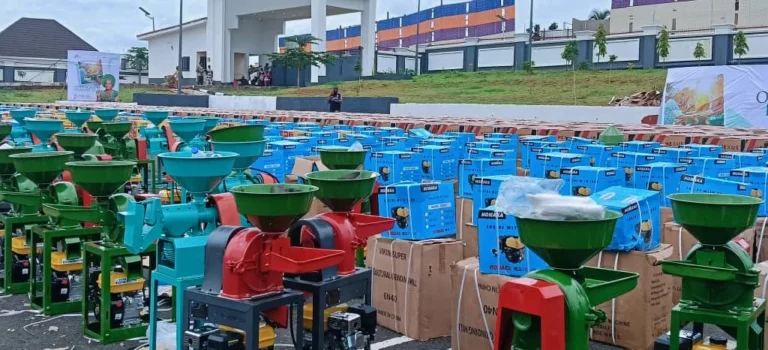
The event, which served as a continuation of a broader social welfare campaign launched earlier in September, saw a diverse group of beneficiaries—ranging from youth seeking entry into the labor market to elderly residents aiming for financial stability—receive a wide array of industrial and domestic equipment. These included professional-grade sewing machines, hair dryers, baking equipment, grinding machines, and electricity-generating sets, supplemented by direct cash infusions intended to serve as seed capital for micro-enterprises.

A Strategy Rooted in Community Solidarity
The intervention is anchored in the Igbo philosophical concept of "Onye Aghana Nwanne Ya," which translates to "Be your brother’s keeper." According to Dr. Soludo, this theme is not merely a slogan but a foundational principle for the current administration’s approach to human capital development. The initiative is designed to move beyond traditional welfare models, which often provide temporary relief, toward a sustainable framework of economic inclusion.
"When we invest in people, we are effectively investing in the future of the state," Dr. Soludo stated during the distribution exercise. She emphasized that the primary goal of the program is to ensure that no resident is left behind in the broader quest for regional prosperity. By providing the means of production, the government aims to catalyze a ripple effect where empowered individuals eventually become employers and mentors themselves, thereby amplifying the impact of the initial state investment.
Chronology and Implementation Context
The path to this empowerment exercise began earlier this year, with a rigorous screening process conducted across all 21 Local Government Areas (LGAs) of Anambra State. With 376 wards represented, the logistics of identifying the most deserving candidates were significant. The selection process was designed to filter applicants based on genuine need, technical aptitude, and the potential for business growth.

The current exercise is an extension of an initial phase that commenced on September 10, during a high-profile visit by the First Lady of Nigeria. Due to the sheer volume of beneficiaries and the extensive logistical requirements, the program could not be completed in a single session. This recent gathering at the Light House was, therefore, the definitive phase of the project, ensuring that the target of 5,000 individuals was fully met.
Socio-Economic Data and the Poverty Alleviation Landscape
The economic climate in Nigeria has remained challenging, with inflation and rising costs of raw materials affecting small-scale artisans and traders disproportionately. In this context, the provision of equipment acts as a critical hedge against the rising cost of business startup.
For many in the informal sector, the "barrier to entry"—the cost of acquiring basic machinery—is the primary obstacle to self-employment. Data from the Small and Medium Enterprises Development Agency of Nigeria (SMEDAN) consistently highlights that access to tools and credit is the most significant determinant of success for micro-enterprises. By distributing items such as mannequins, grills, and specialized machinery, the Anambra State government is effectively removing these barriers for 5,000 households, potentially injecting millions of naira in value into the local micro-economy.

Institutional Oversight and Accountability
One of the most notable features of this initiative is the emphasis on accountability. Recognizing that empowerment programs often fail when beneficiaries sell off distributed equipment for immediate cash, Dr. Soludo’s office has instituted a decentralized monitoring mechanism. Ward-level committees have been established to track the progress of beneficiaries.
"We have set up a monitoring system to ensure that these items are put to productive use," the First Lady explained. She issued a stern directive to recipients, urging them to resist the urge to liquidate their equipment. Instead, she encouraged a model of "train-the-trainer," where beneficiaries are expected to pass on their skills to others in their communities. This requirement for knowledge transfer is intended to create a sustainable cycle of skill acquisition that persists long after the government’s intervention ends.
Beneficiary Perspectives: From Aspiration to Reality
For the recipients, the impact of the gesture is immediate and transformative. Blessing Azuka, a resident of Dunukofia LGA, shared her experience as a recent graduate of a tailoring apprenticeship. Like many of her peers, she had the technical skill but lacked the capital to purchase a sewing machine.

"I finished my training in February, but I have been sitting idle because I could not afford my own machine," Azuka noted. "This is a life-changing opportunity. I can now start my business from home, save my earnings, and eventually open a proper shop."
Similarly, Mr. Stanley Ezerindu, who received a washing machine for his laundry business, highlighted how the equipment will optimize his workflow. "The cost of living has made it difficult to save for heavy equipment while also meeting family needs. This machine will allow me to take on more volume, increase my daily income, and secure my family’s future," he said.
Broader Implications for Anambra State
The success of this program carries broader implications for the governance of Anambra State. By focusing on the "Onye Aghana Nwanne Ya" model, the administration is signaling a shift toward community-driven development. This approach relies on the assumption that if local artisans and small-scale entrepreneurs are strengthened, the local economy becomes more resilient to national economic shocks.

From an analytical standpoint, the success of such initiatives rests on the sustainability of the monitoring phase. While the distribution of tools is a necessary first step, the long-term viability of these 5,000 new businesses will depend on access to stable electricity, market demand, and perhaps further business advisory services.
However, the scale of this initiative—reaching 5,000 individuals across 21 LGAs—demonstrates a high level of administrative coordination. It positions the Office of the First Lady as a key driver of social safety nets, moving beyond ceremonial roles to become a vital pillar in the state’s economic development strategy.
As these 5,000 beneficiaries return to their respective communities, the eyes of the public and policymakers will be on the efficacy of the ward-level monitoring teams. If the model succeeds in maintaining high rates of business activity among recipients, it could serve as a template for similar state-level interventions across Nigeria, proving that direct, targeted support for the informal sector remains one of the most effective ways to foster inclusive growth.

Ultimately, the event at the Light House serves as a reminder that the health of a state is measured not just by its infrastructure, but by the economic independence of its citizens. By investing in the tools that turn labor into value, the Anambra State government is laying the groundwork for a more self-reliant populace, one artisan at a time.