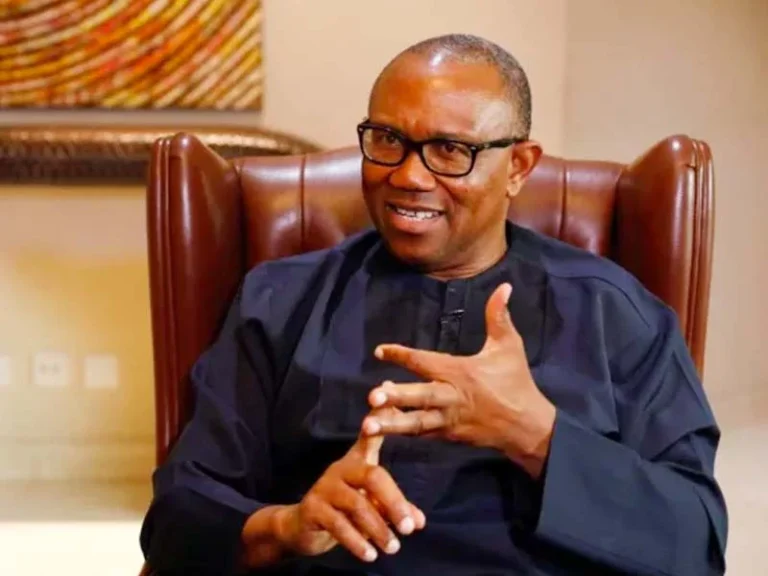
In a bold declaration regarding the future of Nigerian electoral integrity, former Anambra State Governor and presidential aspirant Peter Obi has vowed to implement a zero-tolerance policy against electoral malpractice should he assume the presidency in 2027. During a high-profile interview on Arise Television’s Prime Time on Thursday, September 24, the Labour Party stalwart underscored his commitment to strengthening democratic institutions, emphasizing that the sanctity of the ballot is non-negotiable. Obi’s remarks come at a critical juncture in Nigeria’s political development, as the nation continues to grapple with the challenges of conducting transparent and credible elections that reflect the genuine will of the electorate.
The Commitment to Electoral Reform
Obi’s promise to incarcerate those involved in rigging is not merely a populist soundbite but a reflection of his broader governance philosophy. "I’ve said it, and I’ll say it again: if I am the serving president of this country, whoever rigs elections will be in jail. Even for one vote, you will be in jail," he stated emphatically. This rhetoric aligns with international standards for democratic oversight, where the subversion of the electoral process is treated as a high crime against the state.
Historically, electoral offenders in Nigeria have rarely faced the full weight of the law, a situation that critics argue has emboldened political actors to engage in voter intimidation, ballot box snatching, and the manipulation of results. By proposing a punitive approach, Obi aims to deter the systemic irregularities that have frequently plagued Nigerian polls since the return to civil rule in 1999.
Contextualizing Nigeria’s Electoral Landscape
To understand the gravity of Obi’s proposal, one must consider the historical context of Nigeria’s electoral cycles. Since 1999, the Independent National Electoral Commission (INEC) has conducted several general elections, each characterized by varying degrees of controversy. The 2023 presidential election, in particular, was heavily scrutinized by both domestic and international observers, including the European Union and the International Republican Institute. While INEC maintained that the technological innovations, such as the Bimodal Voter Accreditation System (BVAS) and the IReV portal, improved the process, widespread technical failures and allegations of result manipulation led to significant litigation.
The 2023 election cycle was marked by a high volume of election petitions, with the judiciary becoming the final arbiter of political contests. This reliance on the courts to determine winners, rather than the ballot box, has been a major point of contention for civil society organizations. Obi’s proposal seeks to shift the focus back to the electoral process itself, suggesting that if the integrity of the vote is protected by the threat of criminal prosecution, the need for exhaustive judicial intervention would be significantly reduced.
Chronology of Electoral Challenges
The struggle for electoral reform in Nigeria has been a multi-decade endeavor.
- 1999–2003: The early years of the Fourth Republic were defined by "landslide" victories that were widely criticized for lacking transparency.
- 2007: The late President Umaru Yar’Adua famously acknowledged that the election that brought him to power was flawed, leading to the establishment of the Justice Muhammadu Uwais Electoral Reform Committee.
- 2010–2015: The introduction of the Permanent Voter Card (PVC) and smart card readers marked a shift toward biometric authentication.
- 2022: The passage of the Electoral Act 2022, which empowered INEC to transmit results electronically, was hailed as a landmark achievement.
- 2023–Present: The focus has shifted from the legality of the electoral framework to the enforcement of electoral laws and the conduct of officials during the transmission of results.
Promoting Opposition Inclusivity
Beyond his stance on electoral crime, Obi introduced a novel approach to governance that contrasts sharply with the traditional "winner-takes-all" model common in Nigerian politics. He expressed a commitment to creating an environment where opposition parties are not only free from state-sponsored harassment but are also actively engaged in the decision-making process.
"Political parties, including opposition parties, will not be harassed under my administration," Obi assured. He went on to propose a collaborative model, stating that he would invite members of the opposition to participate in policy discussions, particularly when he travels outside the country on national business. This approach is intended to foster a sense of national unity and ensure that the government represents a broader cross-section of the Nigerian populace.
Political analysts have noted that this proposal mimics aspects of the "government of national unity" models often seen in parliamentary systems, though it remains to be seen how such a structure would function within Nigeria’s presidential system, where the executive holds significant, centralized power.

Criticisms of Campaign Restrictions
A significant portion of Obi’s interview was dedicated to the difficulties faced by political candidates during campaign cycles. He lamented the "restrictions" placed on his campaign activities in various states, noting that the ability to campaign freely is a fundamental tenet of any democratic society.
In many states across Nigeria, political candidates have reported being denied access to public venues, facing exorbitant fees for campaign infrastructure, or experiencing intimidation from state-aligned security outfits. These actions have often been used as tools to stifle competition and prevent smaller or opposition parties from reaching their constituents. Obi argued that for Nigeria to progress, candidates must be granted equal access to the public sphere, regardless of their political affiliation or the incumbent party’s preference.
Fact-Based Analysis of Implications
The feasibility of Obi’s proposals hinges on the independence of the judiciary and the integrity of the security apparatus. For a president to effectively jail election riggers, the Nigerian Police Force and the Office of the Attorney General must operate with absolute impartiality. Currently, the Attorney General is a political appointee of the president, a fact that has led to concerns regarding the potential for selective justice.
Furthermore, the judiciary remains the only body empowered to prosecute election-related criminal offenses. While the Electoral Act provides for the establishment of an Electoral Offences Commission, such a body has yet to be fully operationalized. Should an administration seek to enforce these laws, it would require a massive restructuring of the current justice system to ensure that the investigation and prosecution of electoral offenders are not influenced by the executive.
The economic implications of electoral stability cannot be overstated. Investors and international partners often view the stability of a nation’s democratic process as a barometer for the safety of their capital. A nation that can guarantee the peaceful and transparent transfer of power is inherently more attractive to foreign direct investment (FDI). Therefore, Obi’s focus on electoral integrity could be interpreted as a strategic economic move aimed at boosting Nigeria’s global standing.
Reactions from the Political Class
While the ruling party and other opposition figures have not yet released an official response to these specific comments, political insiders suggest that such a hardline stance on electoral malpractice would face significant resistance from the political establishment. Many within the current system view the existing electoral processes as sufficient, arguing that the focus should be on the administration of the law rather than the introduction of more punitive measures.
Conversely, civil society groups and pro-democracy activists have largely welcomed the sentiment. Groups such as the Transition Monitoring Group (TMG) and Yiaga Africa have long advocated for the creation of a specialized tribunal to handle electoral crimes. They argue that without severe consequences for rigging, the Nigerian political class will continue to treat elections as a "do-or-die" affair, undermining the long-term stability of the country.
Looking Ahead to 2027
As the 2027 presidential election approaches, the discourse surrounding electoral reform will likely intensify. Obi’s statements serve as a challenge to the status quo and set a benchmark for other candidates. Whether this rhetoric translates into concrete policy changes will depend on the strength of the political will displayed by the eventual winner.
The promise to reform the electoral landscape is one that resonates with a significant portion of the Nigerian youth demographic, who have become increasingly disillusioned with the perceived lack of accountability in the political system. By linking the integrity of the ballot to the rule of law, Obi has positioned himself as a candidate focused on systemic institutional reform.
In conclusion, the debate initiated by Peter Obi regarding electoral malpractice highlights the deep-seated anxieties and hopes surrounding Nigeria’s democratic future. As the nation prepares for the next electoral cycle, the focus on electoral integrity, opposition inclusivity, and the removal of campaign barriers will likely remain at the forefront of the national conversation. Whether these promises can be realized remains a complex question of constitutional law, political will, and the continued vigilance of the Nigerian citizenry.