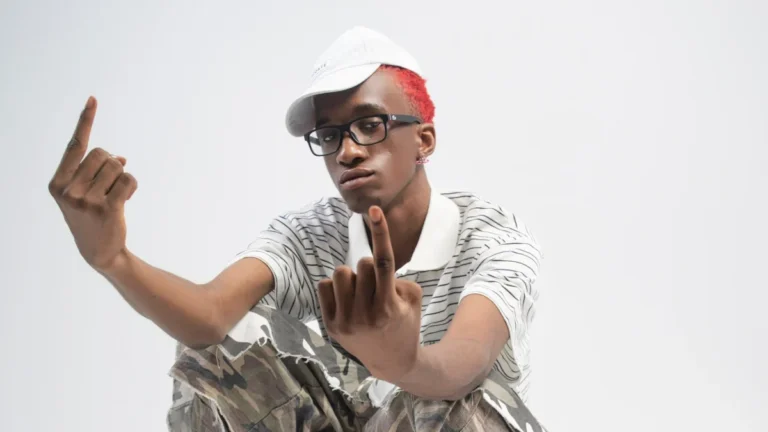
The digital landscape of the Nigerian music industry was recently shaken by a wave of resurfaced social media commentary involving emerging artist Mavo. As the singer continues to carve out his professional niche in a highly competitive market, a series of archived tweets from his early university years—characterized by sharp, often caustic critiques of established industry titans—have been unearthed by netizens. These posts, which specifically targeted high-profile figures such as Davido and Ayra Starr, have prompted a public reckoning for the artist, leading to a formal apology issued across his official social media channels.
The discourse surrounding Mavo’s past comments highlights a growing trend in the entertainment industry where the permanency of social media data poses significant challenges for rising stars. As artists transition from private citizens or aspiring musicians to public figures, their digital footprints often become subject to intense scrutiny. This phenomenon serves as a case study for the complexities of growth, maturity, and the often-volatile relationship between fandoms and emerging talents.
A Chronology of the Digital Fallout
The events leading to the current controversy began in late September 2026, when social media users—specifically on the platform X (formerly Twitter)—began circulating screenshots of tweets authored by Mavo several years prior. During his undergraduate years, Mavo had cultivated a persona as an outspoken "entertainment critic." At the time, his commentary was noted for its abrasive tone and willingness to challenge the artistic output and personal conduct of Nigeria’s musical elite.
As these posts gained traction, they drew immediate ire from the fanbases of the artists mentioned. The criticism was not merely about the content of the tweets, but the perceived hypocrisy of a musician who, having since entered the industry himself, had once been a vocal detractor of the very peers he now works alongside. By September 24, 2026, the volume of discourse reached a critical threshold, compelling Mavo to address the situation directly. His response was marked by a shift away from his previous confrontational style, opting instead for a message of accountability and personal growth.
Contextualizing the Culture of Online Criticism
To understand the weight of the backlash, one must consider the environment of the Nigerian music scene on social media. Platforms like X serve as the primary battleground for fan engagement, where "stan culture" often dictates the narrative. For many young, aspiring artists, the temptation to participate in viral debates is high, as it offers a shortcut to visibility. However, as the industry professionalizes, the stakes for such engagement have shifted.
Data from social media sentiment analysis tools suggest that in the Nigerian entertainment sector, artists who maintain a neutral or positive public profile are more likely to secure corporate endorsements and international collaborations. Conversely, history of inflammatory discourse can be viewed as a liability by labels and brand partners. Mavo’s realization—that his time was better spent focusing on his own creative output rather than critiquing others—reflects a broader industry evolution where the "celebrity brand" is increasingly curated for long-term sustainability rather than short-term engagement.
The Anatomy of the Apology
Mavo’s statement, released on September 24, served as a pivot point in the narrative. In his address, he admitted that his younger self viewed the music industry through a cynical lens, fundamentally misunderstanding the nature of fame and the reality of the people behind the personas. He wrote, "I was a bad entertainment critic when I started uni until I realized superstars don’t really care about Twitter."
The apology was structured in three parts: an admission of the behavior, an acknowledgment of the harm caused, and a reflection on his personal transformation. Crucially, Mavo did not attempt to justify the tweets as "satire" or "freedom of expression." Instead, he took ownership of the impact his words had on others. By stating, "I have met most of these people and they actually turn out to be amazing people," Mavo provided a human element to the apology, suggesting that real-world interactions had effectively dismantled the caricatures he had built in his head as an online commentator.
Implications for the Nigerian Music Industry
The incident involving Mavo is symptomatic of a larger shift in how the industry handles the transition from digital anonymity to stardom. Several key implications arise from this situation:
1. The "Digital Audit" Phenomenon
As artists ascend to greater prominence, they face what can be termed a "digital audit." PR agencies and management firms now routinely scrub the social media histories of their clients to avoid exactly this type of fallout. The fact that Mavo’s tweets were not deleted suggests either a lack of early professional management or an oversight that has now become a standard cautionary tale for other rising stars.
2. The Professionalization of Artist Branding
The transition from being a fan/critic to a colleague requires a significant shift in communication strategy. In the Nigerian music ecosystem, where the "brotherhood" of artists is often touted as a pillar of the "Afrobeats to the World" movement, public infighting is increasingly viewed as a regressive behavior. Mavo’s move to align himself with the industry’s collaborative spirit—"Let love lead"—is indicative of the expectation that artists must project unity to maintain their standing in the global market.
3. The Role of Accountability
The incident has sparked a debate on whether individuals should be held accountable for comments made in their youth. While some fans were quick to forgive, citing the age and maturity level of the singer at the time, others argued that the comments were malicious and required a more substantial penance than a simple tweet. This tension highlights the ongoing societal struggle regarding the statute of limitations on online behavior.
Broader Impact on Mavo’s Career
In the immediate aftermath of the apology, the response from the public has been mixed but largely leaning toward acceptance. By proactively addressing the issue before it escalated into a full-scale PR crisis, Mavo has likely mitigated long-term damage to his brand. In the industry, the ability to pivot and demonstrate maturity is a highly valued trait.
However, the event will likely serve as a permanent footnote in his career profile. Journalists and industry observers will inevitably monitor his future interactions with his peers to see if the apology translates into consistent, professional behavior. For Mavo, the path forward is clear: the success of his music must now outweigh the noise of his past. The focus has transitioned from what he said about the industry to what he can contribute to it.
Conclusion
The case of Mavo serves as a poignant reminder that in the digital age, the internet never forgets. Every opinion, critique, and outburst, no matter how insignificant it may seem at the time, becomes a permanent record that can be retrieved at any moment. For the singer, the experience has been a catalyst for professional maturation. He has recognized that the power of his voice as a musician far exceeds his power as an online critic.
As Mavo continues to develop his sound and navigate the complexities of the Nigerian music industry, this episode stands as a transformative moment. By choosing transparency and humility over deflection, he has demonstrated a level of self-awareness that is essential for long-term survival in the entertainment business. The industry, and his fans, will now be watching to see how he continues to evolve, with the hope that his future headlines are driven by his musical achievements rather than the ghosts of his digital past. The focus, as he noted in his final sentiment, must remain on the music and the collective growth of the Nigerian creative sector. Through this experience, Mavo has provided a template for how emerging artists can navigate the minefield of their own histories: with accountability, reflection, and a steadfast commitment to their craft.