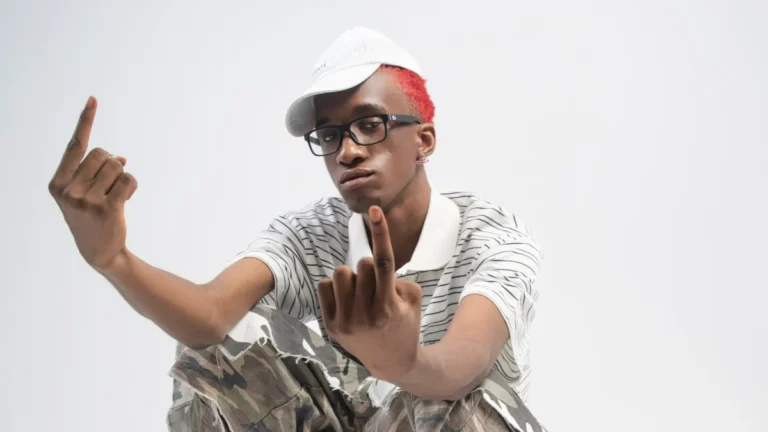
The emergence of these controversial digital footprints has sparked a broader conversation within the Nigerian entertainment industry regarding the longevity of online commentary and the evolution of artists as they transition from amateur observers to professional figures. The controversy, which gained significant traction on social media platforms in late September 2026, serves as a poignant reminder of the digital age’s permanence and the potential for past amateur opinions to complicate a burgeoning professional trajectory.
The Genesis of the Controversy
The digital discourse centered on a series of tweets authored by Mavo during his formative years as a university student. At the time, the artist was an active participant in the "Twitter NG" entertainment commentary culture, a space where fans and aspiring industry enthusiasts often engage in high-octane debates regarding the output, personal lives, and professional strategies of established music icons.
Among the high-profile figures Mavo targeted in his earlier commentary were global superstars Davido and Ayra Starr. In these past posts, Mavo frequently critiqued the production choices, lyrical content, and branding strategies of these artists. While such commentary is common among casual fans, the elevation of Mavo to a professional artist status has reframed these old opinions as "attacks" or "uninformed criticisms," leading many fans to hold him to a standard commensurate with his current professional standing.
Chronology of the Digital Reckoning
The timeline of this incident began in mid-September 2026, when social media users—commonly referred to as "archaeologists" of the internet—began cross-referencing Mavo’s current content with his historic activity on the platform. By September 24, 2026, the volume of resurfaced posts reached a critical mass, creating a significant PR challenge for the singer.
The public reaction was swift and polarized. Critics of the singer argued that the comments were not merely "opinions" but reflections of a toxic culture of disparaging hard-working professionals. Supporters, however, pointed out the clear chronological divide between the student who wrote the tweets and the musician who stands before them today. Recognizing the potential for this narrative to overshadow his recent musical output, Mavo issued a formal apology via his official X account.
Official Response and Self-Reflection
Mavo’s statement, released on September 24, 2026, was a candid admission of his previous immaturity. He categorized his past behavior as that of a "bad entertainment critic," acknowledging that his transition into the music industry provided him with the necessary perspective to understand the challenges of the craft.
"I was a bad entertainment critic when I started uni until I realized superstars don’t really care about Twitter," he noted. This acknowledgment highlights a common realization among emerging artists: the detachment between the performative nature of social media debates and the actual realities of the music industry. By shifting his focus from external criticism to internal artistic development, Mavo claims to have entered a phase of personal and professional "bliss."
Furthermore, his apology touched on the human element of his past remarks. He admitted that while he did not set out to inflict harm, his words had the consequence of doing so. "My criticism sadly, unfortunately, and unintentionally hurt quite a number of people, and I’m honestly sorry," he stated. His follow-up comments suggested a shift in philosophy: "I have met most of these people and they actually turn out to be amazing people. I’m sorry for my misjudgment. Let love lead."
Contextualizing the "Twitter NG" Phenomenon
To understand the significance of this event, one must consider the environment of the Nigerian music industry. The industry is characterized by a highly engaged, often hyper-critical fanbase. Data from social media analytics platforms indicate that music-related conversations are among the most active segments of Nigerian internet traffic. In this ecosystem, "stan culture"—the obsessive devotion to specific artists—often leads to the systematic tearing down of rival acts.
Mavo’s experience is not isolated. Many emerging artists in the digital era find that their past interactions on social media platforms remain accessible, creating a "permanent record" that can be scrutinized once they reach fame. This phenomenon has created a new standard for professional development: media training now often includes a "digital audit" of an artist’s past, as brands and collaborators seek to minimize the risk of associating with individuals who have a history of public controversy.
Fact-Based Analysis: The Cost of Commentary
From a public relations perspective, Mavo’s decision to own his past mistakes rather than delete them or engage in a defensive posture is a strategic move that typically mitigates long-term damage. By providing context—that he was a student, that his perspective has shifted, and that he has since formed personal relationships with those he once criticized—he has successfully reframed the narrative from "malice" to "growth."
However, the implications of this incident extend beyond the individual. It raises questions about the responsibility of digital platforms to facilitate growth. If every opinion expressed by a teenager or university student is treated as a binding indictment of their character years later, the barrier to entry for the music industry becomes significantly more punitive. Conversely, the industry’s reliance on public sentiment means that artists must be increasingly aware that their digital footprint is a living document.
Impact on Professional Relationships
Industry insiders note that public apologies of this nature are rarely just for the public; they are often intended to preserve professional relationships with labels, stakeholders, and the artists mentioned. When Mavo mentioned that he had met many of the people he previously criticized and found them to be "amazing," he was effectively signaling to the industry that he is ready for collaboration and integration into the existing musical establishment.
The reaction from the industry has been largely muted, which, in professional terms, is a positive outcome. A lack of public rebuttal from the artists mentioned in the resurfaced posts suggests that they either view the issue as trivial or have accepted his apology privately.
Moving Forward: The Evolution of an Artist
As Mavo continues to navigate his career, this episode will likely serve as a foundational lesson in the responsibilities of public figures. The transition from "consumer" to "creator" is often fraught with friction, and the realization that words carry weight in the professional sphere is a critical developmental milestone.
Moving forward, Mavo’s focus is expected to remain firmly on his discography. By pivoting toward his own music, he has signaled a maturity that aligns with his stated desire to move past the culture of "bad criticism." The incident, while momentarily distracting, has allowed the artist to define his own narrative of growth and professional accountability.
In the broader context of the Nigerian music scene, the incident serves as a benchmark for how similar controversies might be handled in the future. The expectation of accountability is rising, but so too is the expectation of nuance. As the digital landscape evolves, the industry will continue to navigate the intersection of past opinions and present realities, with artists like Mavo leading the way in demonstrating that one’s digital past does not necessarily dictate one’s professional future.
The story remains a case study in the power of social media to both amplify criticism and facilitate public redemption. For Mavo, the path forward appears clear: continue to focus on the music, maintain a professional demeanor, and allow his current output to serve as the primary measure of his character and talent. As he concludes his reflection on the matter, "Let love lead" remains a guiding principle for the artist as he moves beyond the digital friction of his early career and into the next chapter of his musical journey.