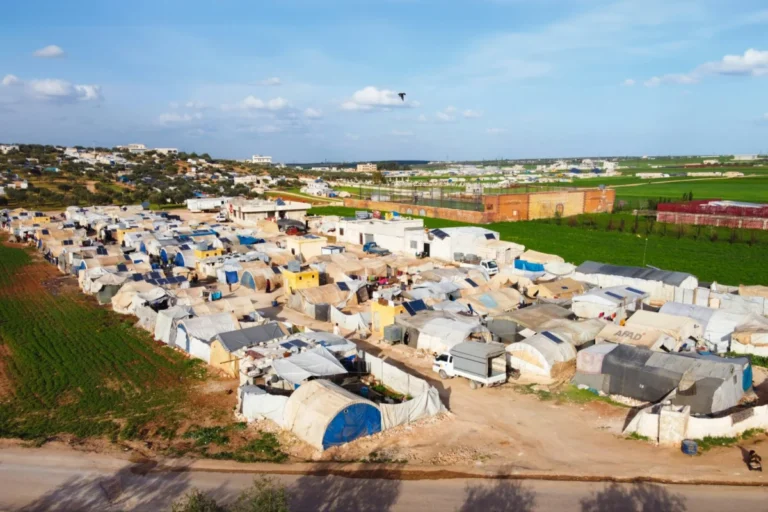
The global humanitarian architecture is facing an existential strain as severe, compounding financial deficits threaten to sever lifelines for millions of the world’s most vulnerable populations. The United Nations High Commissioner for Refugees (UNHCR) issued a stark and urgent warning, revealing that approximately 8.3 million refugees, internally displaced persons (IDPs), and stateless individuals are now at imminent risk of losing access to vital protection services and basic humanitarian assistance. This alarming development underscores a widening chasm between escalating global displacement crises and the shrinking pool of resources available to manage them.
According to institutional reports released by the agency, the UNHCR’s operational capacity has been severely compromised by a sustained and worsening funding shortfall. While the total number of people mandated to receive protection from the agency remains near historically unprecedented levels, the actual financial backing provided by the international donor community has sharply contracted. Available funding plummeted from $5.2 billion in 2024 to $3.9 billion in 2025, triggering operational bottlenecks that are now pushing core protection services toward total collapse.
The magnitude of the deficit is staggering. For the current fiscal cycle, the UNHCR estimated a baseline requirement of $8.5 billion to adequately safeguard and assist displaced populations worldwide. However, by the end of July, the agency had secured only 32 percent of that target—a meager $2.7 billion. Consequently, internal austerity measures, prioritization frameworks, and administrative reforms designed to shield critical life-saving operations have failed to insulate the most essential programs. The persistent and profound resource gap means that even top-tier priorities, including child protection, gender-based violence response, and legal documentation, are directly in the line of fire.
A Chronology of Declining Support and Compounding Crises
To understand the current crisis, one must trace the convergence of expanding global displacement figures and diminishing donor contributions over recent years.
By the close of 2024, global forced displacement reached a staggering milestone, with approximately 123.2 million individuals uprooted from their homes due to conflict, persecution, and human rights violations. Although this figure saw a slight downward adjustment to 117.8 million people by the end of 2025, the overall caseload remains among the highest recorded in modern human history.
Despite this sustained mass displacement, international funding mechanisms began to show signs of critical fatigue. Major donor governments, increasingly pressured by domestic fiscal constraints, geopolitical shifts, and competing foreign policy priorities, began scaling back overseas development and humanitarian assistance budgets.
In response, international financial institutions and specialized UN agencies attempted to bridge the gap through targeted interventions. In August 2025, the World Bank stepped in with a significant $300 million loan designed to strengthen resilience and expand access to essential services for internally displaced persons and their host communities, specifically targeting volatile regions in Northern Nigeria.
However, bilateral and multilateral safety nets have proven insufficient against the backdrop of systemic shortfalls. By mid-2026, the ripple effects of funding constraints had permeated operational hubs across multiple continents. In July 2026, the World Food Programme (WFP) issued its own desperate appeal, requesting $89 million over a six-month window to sustain basic food and nutrition assistance across northern Nigeria. That region alone was grappling with an acute hunger crisis affecting more than 17 million people, driven by a toxic mix of persistent insecurity, localized displacement, and collapsing humanitarian pipelines.
Regional Devastation: From the Sahel to the Horn of Africa
The real-world consequences of the UNHCR’s funding crisis are starkly visible in the field, where front-line humanitarian workers are forced to make agonizing decisions about which populations to abandon. The agency has highlighted several severe operational disruptions across major displacement corridors in Africa:
In Chad, which hosts hundreds of thousands of refugees fleeing regional instability, approximately 319,000 individuals have faced crippling registration delays. Without formal documentation, these refugees are systematically locked out of basic public services, employment opportunities, and legal protections. Furthermore, an estimated 233,000 children in the country are at immediate risk of losing access to dedicated child protection programs.
In Ethiopia, the degradation of resources has been even more dramatic. Child protection coverage in targeted operational areas has plummeted by as much as 85 percent, leaving unaccompanied minors, orphans, and vulnerable youth completely exposed to exploitation, trafficking, and psychological trauma.
Meanwhile, in Sudan—a nation mired in one of the most catastrophic civil conflicts of the modern era—the UNHCR has issued explicit warnings regarding the safety of survivors of sexual violence and children facing severe protection risks. The lack of funding threatens to shutter safe spaces, medical referral pathways, and psycho-social support networks precisely when the demand for these interventions is at an all-time high.
The crisis extends profoundly into West Africa. Nigeria continues to navigate a protracted and complex humanitarian emergency, particularly across its northern territories. According to data compiled by UNHCR Africa, the number of forcibly displaced individuals within Nigerian borders reached 3.7 million as of April 2025. This massive population relies heavily on humanitarian actors for shelter, protection monitoring, and basic livelihood support—services that are now severely imperiled by the broader global funding contraction.
Institutional Responses and Strategic Dilemmas
Faced with an unprecedented fiscal squeeze, UNHCR leadership has defended the difficult choices made in the field, emphasizing that the agency has exhausted all internal optimization strategies. Administrative overhead has been slashed, non-essential travel suspended, and structural redundancies eliminated. Yet, these measures represent mere drops in the bucket when confronted with a multi-billion-dollar structural deficit.
Humanitarian analysts and policy experts point out that these funding cuts do more than merely reduce the immediate quality of life for refugees; they actively undermine the foundational objective of modern humanitarian work: building self-reliance and transitioning displaced populations away from long-term aid dependency. When livelihood programs, vocational training, and community-based resilience initiatives are defunded, populations that might otherwise have achieved economic independence are cast back into chronic vulnerability.
Furthermore, the failure to secure adequate funding creates severe secondary risks for host countries, many of which are developing nations with fragile economies and strained public infrastructure. Without international support to manage displacement crises, host governments are left to shoulder disproportionate financial and social burdens, potentially escalating local tensions, straining community relations, and sparking secondary migration flows toward neighboring regions and Europe.
Broader Implications for Global Stability
The unfolding crisis at the UNHCR serves as a sobering indicator of the limits of the current international humanitarian consensus. As geopolitical fragmentation deepens and donor fatigue sets in, the traditional funding model—reliant on voluntary contributions from a handful of wealthy member states—is proving increasingly unviable in the face of compounding, protracted global conflicts.
Without an immediate and substantial injection of capital from traditional donors, alongside the mobilization of innovative financing mechanisms and non-traditional funding partnerships, the UN refugee agency warns that the baseline standard of international protection will erode significantly. For the 8.3 million individuals currently staring down the prospect of abandoned camps, shuttered protection desks, and vanished assistance, the funding gap is not merely an institutional accounting failure—it is a direct and present threat to their safety, dignity, and survival.