Federal lawmaker Bello El-Rufai has publicly expressed profound gratitude to former Anambra State Governor Peter Obi for his persistent solidarity during the ongoing detention of his father, former Kaduna State Governor Nasir El-Rufai. The younger El-Rufai, who represents Kaduna North in the House of Representatives, revealed that Obi’s repeated telephone calls to check on the family served as a humbling and transformative personal lesson, especially given their past political friction.
The remarks were made during a wide-ranging interview with media personality Ibrahim Ismaila Ahmed. Recorded earlier, the interview was uploaded to digital platforms on a Monday and rapidly went viral by Tuesday, drawing intense reactions across Nigeria’s political landscape. Nasir El-Rufai has been held in the custody of the Independent Corrupt Practices and Other Related Offences Commission (ICPC) since February 18, 2026, stemming from an intensive, ongoing investigation into his tenure as governor and subsequent federal assignments.
The public expression of appreciation highlights a rare moment of bipartisan solidarity in Nigeria’s fiercely polarized political climate. It also casts a fresh spotlight on the legal battles facing prominent political figures, the shifting dynamics of opposition politics, and the personal relationships that often transcend electoral contests.
A Bipartisan Outpouring of Support Amid Custodial Isolation
During the interview, Bello El-Rufai took time to acknowledge various prominent Nigerian political figures across party lines who reached out to his family following his father’s apprehension by anti-graft authorities. He mentioned several heavyweights, including former Vice President Atiku Abubakar (Waziri Adamawa), former Rivers State Governor Rotimi Amaechi, former Kano State Governor Rabiu Musa Kwankwaso, and senior members of the ruling All Progressives Congress (APC) leadership.
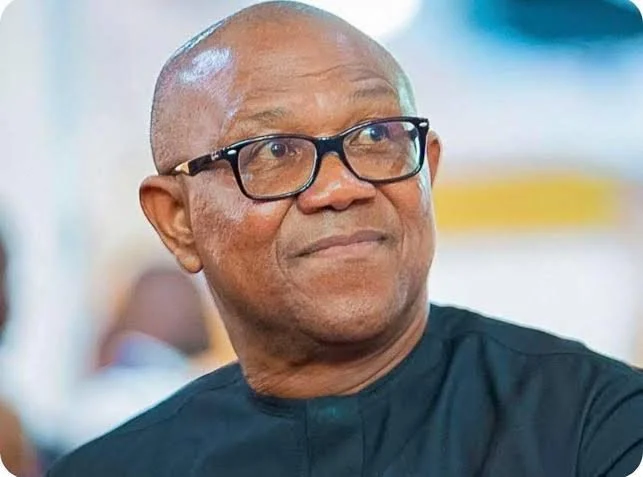
However, the federal lawmaker singled out Peter Obi—the 2023 presidential candidate of the Labour Party and former governor—for special commendation. According to Bello, Obi’s consistent outreach went beyond perfunctory pleasantries; the opposition figure checked on the family regularly simply to offer moral support.
“Particularly Governor Peter Obi, you know, he kept calling, you know, like he would just call me just to see how… You know, and for me at 38 years old, it’s a lesson in life,” Bello stated during the interview. He candidly admitted that his relationship with the former Anambra governor was previously marked by political antagonism, noting, “In the case of Governor Peter Obi, I used to be critical of him, but, you know… So it’s a lesson.”
Obi had earlier broken ranks with certain political actors to openly condemn the prolonged detention of the former Kaduna governor. The Labour Party chieftain characterized the ongoing legal and administrative ordeal as an instance of political persecution, arguing that due process must be respected and that administrative inquiries should not devolve into punitive measures or prolonged extra-judicial detentions without prompt judicial resolution.
Background Context of the Investigation and Detention
The legal and investigative troubles facing Nasir El-Rufai represent one of the most high-profile anti-corruption probes in Nigeria’s recent history. A towering figure in Nigerian politics, El-Rufai served two terms as the governor of Kaduna State from 2015 to 2023, earning a reputation as a polarizing reformer. Prior to that, he served as the Director-General of the Bureau of Public Enterprises (BPE) and as the Minister of the Federal Capital Territory (FCT) under the administration of President Olusegun Obasanjo, where he was similarly known for aggressive urban renewal programs and controversial land reforms.
Speculation regarding his probe intensified following the transition of power in May 2023. Although El-Rufai was initially nominated for a ministerial position in President Bola Ahmed Tinubu’s cabinet, his confirmation was abruptly stalled in the Senate following security screenings and intense political lobbying. Since then, various federal anti-corruption agencies, including the Economic and Financial Crimes Commission (EFCC) and the ICPC, have scrutinized financial transactions, infrastructural contracts, and public-private partnerships executed during his tenure in Kaduna State.
The culmination of these investigations occurred on February 18, 2026, when the ICPC formally took Nasir El-Rufai into custody. Anti-corruption officials stated that his detention was necessary to facilitate comprehensive interrogations regarding alleged financial improprieties, diversion of public funds, and abuse of office. Legal teams representing the former governor have repeatedly challenged the legality of his continued confinement, filing multiple fundamental rights enforcement suits in federal courts while arguing that the anti-corruption agency is overstepping its statutory bounds.
Conditions in Custody and Reflection
While addressing public concerns regarding his father’s health and state of mind, Bello El-Rufai offered an inside look at how the former governor is coping with isolation. Rather than succumbing to despair, the younger El-Rufai noted that his father has treated the detention period as an enforced sabbatical, dedicating his time to intellectual pursuits, spiritual reflection, and personal introspection.
“As for Malam, he’s using the time to finish books, catch up, read the Qur’an, which is always, for his, you know, for 10 years he’s been working non-stop,” Bello explained.
The former governor, known for his relentless and often abrasive work ethic, governed Kaduna State during a turbulent period marked by severe security challenges, labor disputes, and sweeping civil service reforms. Bello suggested that the enforced pause has provided his father with a rare opportunity to recalibrate.
“So it’s also a moment for him to, in isolation, to reflect, to plan better, to tone down, and things like that,” the federal lawmaker added. This characterization portrays a reflective elder statesman attempting to find constructive meaning within a restrictive environment, contrasting sharply with the fiery and combative public persona he maintained throughout his active political career.
Broader Political Implications and Public Reactions
The public acknowledgment of Peter Obi’s kindness by an El-Rufai family member has generated considerable debate among political analysts and commentators across Nigeria. The interaction underscores a recurring phenomenon in Nigerian politics: personal empathy frequently bridges ideological and partisan divides, even among fierce political adversaries.
In recent years, the relationship between Nasir El-Rufai and various opposition figures has been complex. Once a founding member of the ruling All Progressives Congress (APC) and a chief architect of its 2015 electoral victory, El-Rufai’s recent alienation from core circles within the party has fueled intense speculation about his political future. Observers note that his current legal predicament has galvanized both supporters and critics, prompting a reevaluation of his legacy.
Civil society organizations and legal bodies have closely monitored the case, balancing the imperative of the fight against corruption with constitutional guarantees regarding the rights of detainees. While the ICPC maintains that its actions are grounded in rigorous investigative necessity, legal experts continue to debate the thresholds of permissible detention without formal charges being brought before a court of law.
Furthermore, the involvement of prominent figures like Peter Obi, Atiku Abubakar, Rotimi Amaechi, and Rabiu Musa Kwankwaso in offering quiet support points to a broader solidarity network among Nigeria’s political elite. For figures who have experienced the transient nature of executive power, legal vulnerabilities often elicit a pragmatic realization of shared exposure to the country’s prosecutorial mechanisms.
Path Forward and Legal Outlook
As the investigation enters its subsequent phases, the legal team representing Nasir El-Rufai continues to press for either an immediate administrative bail or a formal arraignment in a competent court of law, which would allow the defense to test the strength of the ICPC’s evidence through open judicial proceedings. Meanwhile, public interest remains exceptionally high, fueled by regular commentary from political stakeholders, religious leaders, and civil rights advocates.
For Bello El-Rufai, the ordeal has evidently left an indelible mark on his worldview. By publicly acknowledging the humanity shown by a former political rival, the young lawmaker has inadvertently highlighted the human element underlying Nigeria’s turbulent political dramas. As the nation watches to see how the legal battle unfolds, the episode serves as a reminder that political rivalries, however fierce, remain fluid in the face of personal adversity and institutional change.