In a landmark move that promises to reshape the energy landscape of East Africa, African industrial titan and billionaire Aliko Dangote has officially partnered with U.S.-based multinational Honeywell UOP to drive the development of a massive new petroleum refinery in Kenya. Valued at an estimated $300 million, the contract will see Honeywell provide critical technology, engineering solutions, and catalytic processes for the gargantuan 700,000-barrel-per-day refining facility. The partnership marks a significant escalation in industrial cooperation between African private capital and American technological prowess, signaling a new chapter in the continent’s quest for energy independence and refined product security.
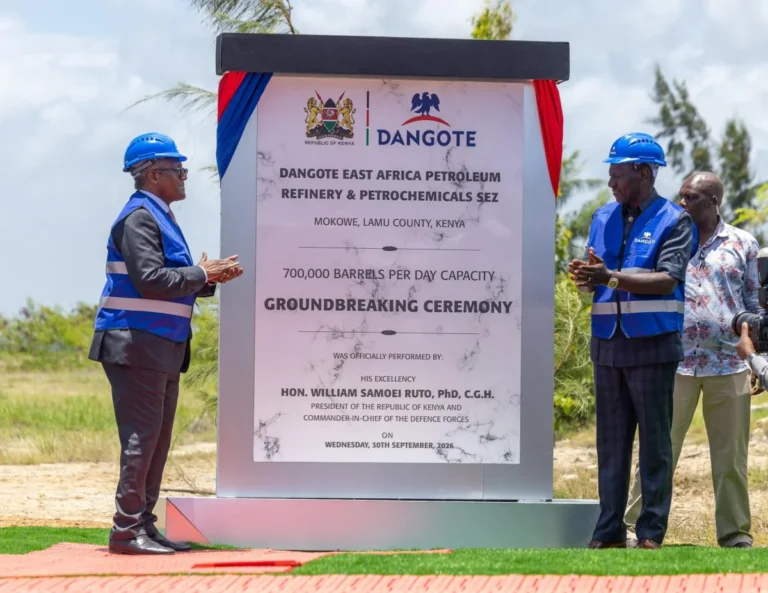
The high-stakes venture was formally unveiled in Lamu County, Kenya, where Dangote joined Kenyan President William Ruto to break ground on the ambitious project. While the industrial undertaking promises immense economic rewards and enhanced regional energy integration, it has already encountered notable friction. The project’s rollout has been met with legal challenges spearheaded by local landowners concerned about displacement and property rights, alongside vehement criticism from environmental conservationists who warn of severe ecological repercussions in the sensitive coastal ecosystems of Lamu.
Despite these early hurdles, the backing of Africa’s most prominent industrialist and the Kenyan head of state underscores the sheer strategic weight of the refinery. For years, East Africa has relied heavily on the importation of refined petroleum products, rendering its economies vulnerable to global supply chain shocks, currency fluctuations, and volatile international oil prices. The Lamu refinery aims to fundamentally alter this dynamic, ensuring that crude oil processed within the region is transformed locally into high-demand fuels for both domestic consumption and export.
Leveraging Proven Success: The Nigerian Blueprint
A cornerstone of the newly minted deal is Honeywell’s prior and ongoing relationship with Dangote Industries. Honeywell has previously worked closely with Dangote on his monumental refinery project in Nigeria—widely recognized as the largest single-train refinery in the world. According to representatives from Honeywell, the engineering designs, operational frameworks, and technological blueprints successfully implemented at the Nigerian complex will be directly leveraged for the Kenyan venture.
This technological synergy is expected to yield unprecedented efficiencies, most notably by slashing the Kenyan refinery’s development schedule by nearly two years. In the capital-intensive and time-sensitive world of mega-refinery construction, shaving 24 months off the timeline translates to hundreds of millions of dollars in saved interest, reduced overhead, and earlier revenue generation.
Furthermore, Honeywell is concurrently collaborating with Dangote on extensive upgrades to the Nigerian refinery, initiatives designed to eventually push its processing capacity to a staggering 1.4 million barrels per day. The expertise gained from scaling and optimizing that facility will be seamlessly integrated into the planning and construction phases in Lamu, minimizing engineering bottlenecks and technical missteps.
Supplying East Africa and Ensuring Strategic Flexibility
Designed as a regional powerhouse, the Kenyan refinery will focus heavily on the production of essential transport fuels, including premium motor spirit (petrol), automotive gas oil (diesel), and aviation turbine fuel (jet fuel). While a significant portion of the output will be earmarked to stabilize and secure Kenya’s domestic energy supply, excess capacity will be exported to neighboring nations across the East African Community (EAC) and broader Horn of Africa region.
Crucially, the facility is being engineered with advanced feedstock flexibility. Unlike older, rigid refineries that are tethered to specific grades of crude oil, the Lamu plant will possess the technological capability to process a diverse range of crude oils sourced from multiple international and potentially emerging domestic fields. This adaptability shields the refinery from localized supply disruptions and allows procurement managers to capitalize on global crude price differentials.
In an innovative approach to regional buy-in and economic diplomacy, Dangote has extended an invitation to East African governments to acquire a combined 30% equity stake in the refinery project. This equity-sharing model is designed to foster a sense of shared ownership and mitigate political or regulatory friction across borders.
The Kenyan government has already signaled its intent to secure a significant 10% equity stake in the venture, aligning national interests with the operational success of the facility. Meanwhile, landlocked neighbors Ethiopia and Rwanda—both heavily reliant on imported petroleum routed through coastal ports—have expressed active interest in participating in the project, recognizing the immense strategic value of securing a direct equity foothold in a major regional refinery.
Chronology of the Venture
The path toward the Lamu refinery project has evolved rapidly over recent months, driven by urgent regional energy demands and Dangote’s aggressive expansion strategy outside of West Africa.
Initial exploratory talks regarding a major East African refining facility began to circulate within regional trade and energy forums, highlighting the persistent petroleum deficits faced by countries in the region. By late last year, feasibility studies conducted by industrial consultants identified Lamu County as a prime strategic coastal location, offering deep-water access for crude carriers and logistical connectivity to major inland transport corridors.
The timeline accelerated sharply leading into the official groundbreaking ceremony. Negotiations between Dangote Industries and Honeywell solidified the technical parameters of the $300 million contract, paving the way for proprietary processing technologies to be allocated to the East African project.
The momentum culminated on Wednesday in Lamu County, where President William Ruto and Aliko Dangote officially broke ground, turning the first shovel of earth amidst a high-profile gathering of government officials, industry leaders, and international media. Following the groundbreaking, legal and environmental consultations have intensified, running parallel to the preliminary civil engineering and site-preparation works overseen by the project’s development consortium.
Economic and Environmental Implications
The implications of the Dangote-Honeywell partnership in Kenya extend far beyond corporate balance sheets, touching upon macroeconomic stability, geopolitical alignment, and environmental sustainability.
From an economic perspective, the multi-million-dollar investment promises to generate thousands of direct and indirect jobs during both the construction and operational phases. Local contractors, logistics firms, and service providers stand to benefit from massive capital expenditure inflows. More importantly, by substituting expensive imported refined fuels with locally processed products, East African nations could potentially conserve vital foreign exchange reserves, easing the persistent pressure on local currencies against the U.S. dollar.
However, the project is not without controversy. Environmental groups and local community advocates have voiced deep concerns regarding the ecological footprint of a mega-refinery situated in Lamu County—an area known for its rich marine biodiversity, delicate mangrove ecosystems, and cultural heritage sites. Critics argue that industrialization on this scale threatens local artisanal fishing economies and increases the risk of coastal pollution. In response, project developers and state officials have pledged to implement stringent international environmental safeguards and state-of-the-art emission controls, though civil society groups maintain that rigorous independent oversight will be vital.
As construction gets underway, the success of the Lamu refinery will serve as a definitive litmus test for private-sector-led mega-infrastructure development in East Africa. By marrying American engineering excellence with African entrepreneurial vision, the project has the potential to redefine the continent’s energy security paradigm for decades to come, provided it can successfully navigate the complex interplay of legal, environmental, and geopolitical dynamics ahead.