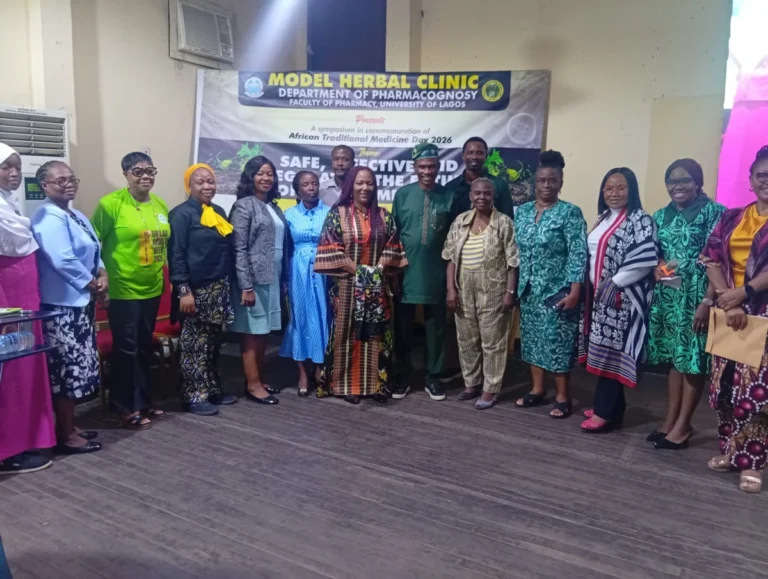
The landscape of African healthcare is currently undergoing a pivotal transformation as researchers and regulators push to bridge the gap between ancestral botanical knowledge and modern pharmacological standards. During the 2026 African Traditional Medicine Day symposium, hosted at the University of Lagos (UNILAG) College of Medicine in Idi-Araba, leading experts from the academic and regulatory sectors issued a clarion call: the future of traditional medicine must be defined by clinical evidence, not just historical usage.
The event, held on September 3, 2026, under the theme "Safe, Effective and Regulated: The Future of Herbal Medicine," served as a platform for critical discourse regarding the integration of herbal products into mainstream national healthcare. As the World Health Organization (WHO) continues to emphasize the importance of traditional medicine in achieving universal health coverage, Nigerian authorities are increasingly focusing on the necessity of standardization, safety profiling, and clinical trial validation.
Historical Context and the Evolution of Traditional Medicine in Nigeria
For centuries, herbal medicine has been the primary healthcare modality for a significant portion of the African population, particularly in rural areas where access to conventional pharmaceutical facilities remains constrained. However, the transition from traditional practice to integrated, evidence-based medicine has been slow.
The Model Herbal Clinic at the University of Lagos, established in 2011 by Professor Olukemi Odukoya and colleagues in the Department of Pharmacognosy, was created specifically to address this gap. The clinic operates on the philosophy of "Bench to Market," attempting to formalize the study of medicinal plants. According to the current chairperson, Dr. Aminat Oyawaluja, the initiative serves as a bridge, transforming raw traditional knowledge into refined, dosage-controlled products such as capsules and standardized teas. This evolution is necessary because while traditional use provides a foundation for ethnobotanical research, it does not constitute the clinical proof required by modern medical regulatory bodies.
The Scientific Imperative: Why Subjective Reporting is Insufficient
A recurring theme during the symposium was the distinction between "perceived effectiveness" and "clinical efficacy." Chief Dr. (Mrs.) Stella Olagbende-Dada, a veteran educator in the Department of Pharmacognosy, highlighted the common misconception that anecdotal success—where a patient feels better after using a herbal preparation—is equivalent to scientific validation.

"Some of our medicinal plants are traditionally used," Dr. Olagbende-Dada noted. "Because we have used them and feel well, we believe they are effective, but they are not actually proven to be effective." She emphasized that the gold standard for validating these treatments remains the Randomized Controlled Trial (RCT). Without RCTs, the therapeutic potential of many indigenous plants remains speculative, preventing their full integration into formal healthcare systems.
The reliance on tradition, while valuable for identifying promising leads, is insufficient for establishing dosage, identifying potential toxicity, or mapping contraindications. By moving toward clinical trials, the scientific community aims to transition herbal medicine from a subjective health choice to a reliable, standard-of-care option.
Regulatory Challenges: The NAFDAC Perspective
The National Agency for Food and Drug Administration and Control (NAFDAC) plays a critical role in this ecosystem. Pharm (Mrs.) Ijeoma Ezeaka, Deputy Director of the Herbal and Nutraceutical Division, provided a sobering reality check regarding the safety of natural products. She directly challenged the "natural equals safe" fallacy, a pervasive belief that often leads to health complications.
Ezeaka detailed the systemic risks involved in the lifecycle of herbal products, including:
- Contamination: Improper harvesting and storage conditions can lead to microbial or heavy metal contamination.
- Identification Errors: The use of incorrect plant species due to misidentification can lead to the consumption of toxic compounds.
- Chemical Variation: Differences in soil, climate, and time of harvest can cause significant fluctuations in the concentration of active ingredients.
- Drug-Herb Interactions: Perhaps the most critical concern is the interaction between herbal supplements and conventional medicines, which can lead to reduced efficacy of life-saving drugs or dangerous side effects.
NAFDAC’s regulatory framework, as outlined by Ezeaka, is designed to mitigate these risks through a comprehensive process involving facility inspections, laboratory testing, and post-market surveillance. She urged manufacturers to prioritize safety studies before seeking registration, warning that "natural does not equal risk-free."
The Strategic Role of the Department of Pharmacognosy
The Department of Pharmacognosy at UNILAG is positioning itself as a central hub for this transition. Dr. Ifeoma Orabueze, the Acting Head of the Department, emphasized that their research is not merely about identifying new drugs, but about formalizing the entire value chain of herbal medicine.

The department’s current strategy focuses on three pillars:
- Standardization: Developing protocols to ensure that every dose of a herbal product contains the same active ingredients.
- Training: Educating the next generation of pharmacists to be adept in both western pharmacognosy and traditional systems.
- Partnership: Collaborating with stakeholders to protect indigenous knowledge while ensuring it meets international regulatory standards.
"We are committed to research, training and partnership that will transform raw herbal knowledge into standardised, evidence-based herbal medicine that the world can show," Dr. Orabueze stated. She also highlighted the need for policymakers to craft frameworks that protect consumers from substandard products without stifling the innovation of local practitioners.
Broader Impact and Global Implications
The global market for herbal medicine is projected to grow significantly over the next decade. For Nigeria, the ability to regulate and standardize these products offers more than just improved public health outcomes; it presents an economic opportunity. By formalizing the industry, Nigeria could transition from a consumer of imported conventional medicines to a producer of scientifically validated, high-quality herbal alternatives.
However, this transition requires a shift in public perception. If the Nigerian public continues to rely on unregulated, street-sold herbal remedies, the potential for public health crises—such as kidney or liver damage from unknown impurities—remains high. The symposium served as a reminder that the responsibility lies with a tripartite structure: researchers must provide the data, regulators must enforce the standards, and the public must demand evidence-based products.
Chronology of Modernization Efforts
- 2011: The Model Herbal Clinic is established at the University of Lagos to bridge traditional knowledge and scientific research.
- 2021–2025: Increased focus by African governments and the WHO on the "Decade of African Traditional Medicine," emphasizing integration into primary healthcare.
- 2026 (September 3): The Symposium on "Safe, Effective and Regulated: The Future of Herbal Medicine" is held, marking a renewed push for Randomized Controlled Trials (RCTs) in Nigerian herbal research.
- Future Outlook: The push for standardized "Contract Manufacturing" for herbalists who lack the resources to build their own sterile facilities is expected to become a key policy focus for NAFDAC in the coming years.
Conclusion
The consensus from the symposium is clear: the future of African traditional medicine is not about abandoning traditional practices, but about elevating them. By adopting the same rigors of scientific validation and regulatory scrutiny applied to conventional pharmaceuticals, African traditional medicine can move from the periphery to the center of the continent’s healthcare strategy.
As Prof. Sunday Adesegun, Dean of the Faculty of Pharmacy at UNILAG, aptly noted, the integration of these practices is essential for achieving universal health coverage. With continued collaboration between academia and regulatory bodies like NAFDAC, the potential to turn indigenous medicinal resources into safe, effective, and globally competitive therapeutic products is significant. The path forward is one of evidence, standardization, and a commitment to patient safety above all else.




