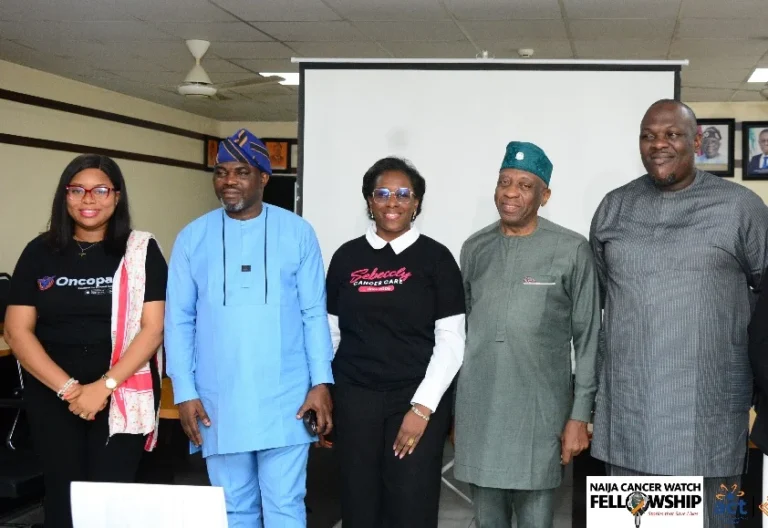
As Nigeria continues to navigate a complex health landscape defined by a persistent surge in infectious diseases and a rising tide of non-communicable conditions, the Provost of the College of Medicine, University of Lagos (CMUL), Professor Ademola Ayodele Oremosu, has issued a strategic call to the Federal Government to institutionalize the "One Health" approach. Speaking during the POWER Conference, organized by Sebeccly Cancer Care, Professor Oremosu emphasized that the traditional siloed approach to medicine is no longer sufficient to secure the nation’s public health future.
The One Health framework, a collaborative, multisectoral, and transdisciplinary approach, recognizes that the health of people is closely connected to the health of animals and our shared environment. By breaking down the barriers between human medicine, veterinary science, and environmental studies, Nigeria could more effectively monitor and mitigate health threats at their point of origin.
The Growing Burden of Disease in Nigeria
The urgency of Professor Oremosu’s call is underscored by recent data from the Nigeria Centre for Disease Control and Prevention (NCDC). The nation remains in a precarious position, with its public health landscape heavily burdened by a "double jeopardy" of disease. On one hand, endemic infectious diseases such as Lassa fever, malaria, cholera, and diphtheria continue to cause significant morbidity and mortality, particularly in rural and underserved urban populations.
Simultaneously, there is an alarming escalation in non-communicable diseases (NCDs). Conditions such as hypertension, diabetes, and various forms of cancer are no longer limited to the aging population; they are appearing with increasing frequency among younger adults. This shift necessitates a paradigm change in how the government allocates health resources, moving from reactive, treatment-based models to proactive, preventative strategies that address environmental factors.
The One Health Mandate: Environmental and Public Health Integration
Professor Oremosu explained that the One Health model is not merely a theoretical framework but a practical tool for governance. He pointed to environmental management as a primary lever for change. For instance, the regulation of vehicle emissions and industrial pollutants does not just benefit the climate; it directly reduces the incidence of respiratory illnesses. Similarly, managing waste to prevent the contamination of water bodies is a vital intervention against the perennial cholera outbreaks that plague Nigeria.
"This will definitely improve the lives of the people, environmental cleanliness, as well as public health," Oremosu stated. He further noted that the burden of NCDs requires a robust social safety net. As the cost of managing chronic conditions like cancer and diabetes continues to rise, the professor urged the government to provide palliatives and subsidies. Without such support, the "out-of-pocket" expenditure model currently dominant in Nigeria will continue to drive patients toward premature abandonment of treatment, leading to preventable deaths.
Addressing the Healthcare Human Resource Crisis
A critical component of the discussion during the conference was the persistent "brain drain" of medical professionals—a phenomenon colloquially known as "Japa." Professor Oremosu acknowledged that while the government often focuses on the numerical output of medical doctors, increasing the volume of graduates is a futile exercise if the system fails to retain them.
He challenged the government to conduct a candid, holistic review of the factors driving young professionals abroad. These factors are multifaceted, ranging from poor remuneration and limited career progression to the lack of a conducive working environment. Oremosu emphasized that for doctors working in the 70 percent of Nigeria that is rural, the challenges are even more profound. He advocated for a structured incentive package that includes specialized hardship allowances, quality accommodation, and reliable internet access—essential tools for any modern physician to remain globally competitive and up-to-date with current medical literature.

The Diaspora Bridge and Technological Integration
In response to the resource gap, the CMUL has initiated the "Diaspora Bridge" program, a visionary project supported by the Minister of Education, Dr. Tunji Alausa. This initiative seeks to leverage the expertise of Nigerian medical professionals living abroad to train, mentor, and provide diagnostic support to local students and consultants.
The program is a sophisticated attempt to use technology to shrink the distance between local medical education and global standards. However, as Professor Oremosu noted, the implementation of such a program is not without hurdles. Epileptic power supply and inconsistent internet infrastructure remain significant barriers to high-stakes, real-time medical consultations. Furthermore, time zone differences between Nigeria and the Global North present logistical challenges.
To circumvent these, the College is increasingly looking toward Artificial Intelligence (AI). By utilizing AI as an intermediary, students and practitioners can access critical diagnostic data even when real-time human interaction is hampered by connectivity or scheduling conflicts. This hybrid model—blending human expertise with digital automation—represents the future of medical education in resource-constrained settings.
Institutional Capacity vs. Proliferation of Schools
The debate over how to address the doctor-to-patient ratio has often centered on the establishment of new medical schools. However, Professor Oremosu offered a word of caution to policymakers: quantity should not supersede quality. The training of a physician is a capital-intensive, human-resource-heavy endeavor. A standard medical school requires between 400 and 600 specialized academic staff, including professors and senior lecturers, alongside advanced laboratory and clinical infrastructure.
"We are therefore appealing that, when political candidates want to establish a medical school in every village, it may be better to strengthen existing institutions so that they can have greater capacity," the Provost argued. He stressed that the Medical and Dental Council of Nigeria (MDCN) sets stringent standards for a reason, and diluting these standards through the rapid, underfunded proliferation of new institutions could compromise the quality of care for generations.
A Call for Collective Responsibility
The conference, which featured stakeholders such as Dr. Adaorah Enyi of Oncopadi Technologies and Dr. Omolola Salako of Sebeccly Cancer Care, served as a reminder that the government cannot bear the burden of healthcare reform in isolation. Dr. Salako’s work in oncology was cited as a benchmark for the kind of dedicated, civil-society-led intervention that is needed to bridge gaps in cancer care.
Professor Oremosu concluded his remarks by urging his colleagues in the medical fraternity to take greater ownership of the sector’s challenges. While systemic reform from the top is essential, the internal culture of mentorship, institutional loyalty, and continuous innovation among practitioners is what will ultimately sustain the Nigerian healthcare system.
Implications for Future Policy
The trajectory for Nigerian healthcare, as outlined at the POWER Conference, points toward three distinct pillars:
- Integrated Governance: Moving toward a One Health model to address the environmental roots of disease.
- Retentive Incentivization: Shifting the focus from merely producing more doctors to creating an environment that incentivizes them to practice domestically, particularly in rural zones.
- Technological Empowerment: Scaling programs like the Diaspora Bridge and integrating AI to bypass infrastructural deficiencies.
As Nigeria approaches the end of the decade, the integration of these strategies will be critical. The success of these initiatives will depend not only on the commitment of academic leaders like Professor Oremosu but on the government’s willingness to prioritize long-term structural investments over short-term political gains. The message from the College of Medicine is clear: the health of the nation is not just a clinical issue—it is an environmental, economic, and social imperative that requires a unified, modern response.




