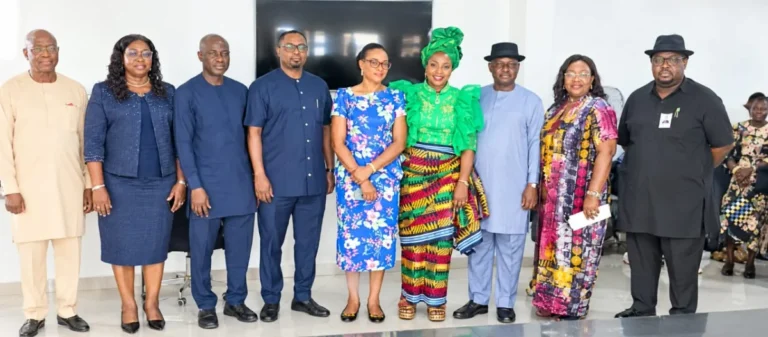
The inauguration of the pioneer management team for the Bayelsa Medical University Teaching Hospital (BMUTH) marks a watershed moment in the trajectory of healthcare infrastructure and medical education in Bayelsa State. Governor Douye Diri, demonstrating a strategic commitment to enhancing the state’s human capital in the health sector, has officially appointed Dr. (Mrs.) Boboye Kenesuomene Ifie-Ombeh to lead the institution. Her appointment for a single five-year tenure is seen as a foundational step toward operationalizing a facility that the state government expects to serve as a hub for advanced medical research, clinical training, and specialized patient care.
Joining Dr. Ifie-Ombeh in this inaugural leadership cohort are Dr. Riemann Biowe, who assumes the role of Chairman of the Medical Advisory Committee (CMAC); Dr. Marie Teibowei, appointed as the Director of Administration; and Mr. Selekowei Seipulou, who takes charge as the Director of Finance and Accounts. This team has been tasked with the arduous responsibility of laying the administrative and clinical groundwork for a teaching hospital that is intrinsically linked to the Bayelsa Medical University (BMU).
Professional Background and Leadership Pedigree
Dr. Boboye Kenesuomene Ifie-Ombeh brings a wealth of clinical and administrative experience to the role of Chief Medical Director. Before her appointment, she distinguished herself as the Director of Medical and Dental Services at the Bayelsa State Hospitals Management Board. Her career, rooted in rigorous clinical practice, includes significant tenure as a consultant at the Bayelsa Specialist Hospital, where she gained a reputation for professional integrity and leadership in paediatric care.
A Fellow of the West African College of Physicians, Dr. Ifie-Ombeh is recognized not only for her diagnostic expertise but also for her commitment to medical pedagogy. Her involvement in the mentorship of undergraduate and postgraduate students aligns perfectly with the mandate of a teaching hospital, which requires a seamless blend of patient care and academic instruction. Her background in the University of Ibadan Alumni Association and other professional bodies further underscores her suitability for a role that requires extensive stakeholder management and institutional networking.
Strategic Context: Bridging Healthcare and Education
The creation of the BMUTH is not an isolated project; it is the culmination of years of deliberate policy formulation by the Bayelsa State Government to address the gap between medical education and clinical application. By establishing a teaching hospital specifically affiliated with the Bayelsa Medical University, the government aims to create a "cradle-to-career" pipeline for medical professionals.

The Vice-Chancellor of Bayelsa Medical University, Prof. Dimie Ogoina, has been a vocal proponent of this integration. During the inauguration ceremony, Prof. Ogoina underscored that the success of the teaching hospital is inextricably linked to the performance of the university. The synergy between these two institutions is expected to foster an environment where theoretical knowledge imparted in the classroom is tested and refined through daily clinical rotations and research initiatives at the bedside.
For the state, this means moving away from a reliance on external medical facilities for complex treatments. By investing in a dedicated teaching hospital, Bayelsa is positioning itself to retain medical talent, improve local health indices, and reduce the financial burden of medical tourism on its citizens.
Chronology of Development
The path to this inauguration began with the state government’s long-term vision to diversify and strengthen its healthcare delivery systems.
- Initial Vision: The conceptualization of the Bayelsa Medical University focused on the necessity of an affiliated teaching hospital to satisfy accreditation requirements for clinical programmes.
- Legislative and Executive Approval: Following the successful establishment of the university, Governor Diri’s administration fast-tracked the procurement and development of the facility.
- Selection Process: A rigorous selection process was initiated to identify leaders who possessed both administrative acumen and clinical expertise, leading to the identification of the current management team.
- Inauguration: The official swearing-in of the team, presided over by government officials and attended by health stakeholders, represents the transition from the construction phase to the operational phase.
Supporting Data and Institutional Implications
The necessity for such an institution is backed by regional health data. Like many states in the Niger Delta, Bayelsa faces unique challenges in the delivery of healthcare, ranging from the management of endemic tropical diseases to the need for advanced maternity and paediatric care.
The appointment of Dr. Marie Teibowei, a known ASPIRE champion within the university system, as Director of Administration, signals the government’s intent to implement modern management practices. Her role will be critical in ensuring that the hospital’s financial and administrative systems are transparent, efficient, and capable of attracting the necessary funding and grants to sustain long-term operations. Similarly, Mr. Selekowei Seipulou’s appointment as Director of Finance and Accounts suggests a focus on fiscal discipline—a mandatory requirement for any institution aiming to achieve national and international accreditation.
Analyzing the Future Impact
The broader implications of the BMUTH are significant. Firstly, the hospital is expected to increase the bed capacity for tertiary healthcare in the state, directly impacting the availability of specialist services. Secondly, the collaboration between the university and the hospital will facilitate a robust research agenda. This is vital for the state, as local clinical research can lead to more tailored healthcare interventions that address the specific epidemiological profile of the region.

Prof. Ogoina’s emphasis on "collaboration, excellence, and innovation" serves as the blueprint for the new management team. In the modern era of medicine, teaching hospitals are no longer just service providers; they are innovation hubs. The leadership team is expected to foster partnerships that could include tele-medicine, digital health record management, and specialized fellowships that keep the hospital at the cutting edge of clinical practice.
Challenges and Outlook
While the appointment of a pioneer team is a major milestone, the road ahead is fraught with typical challenges associated with new medical institutions: resource mobilization, the recruitment of specialized nursing and auxiliary staff, and the maintenance of high-tech medical equipment.
However, the tone of the inaugural proceedings was one of optimism. By choosing a team that bridges the gap between the university’s academic mission and the Hospital Management Board’s operational experience, the state government has created a balanced leadership structure. The expectation is that the BMUTH will not only serve the residents of Bayelsa but also attract medical tourists from neighboring states, thereby contributing to the local economy and elevating the status of the state as a destination for medical excellence.
As Dr. Ifie-Ombeh and her team begin their tenure, the academic and medical communities in Nigeria will be watching closely. The success of this teaching hospital will likely serve as a benchmark for how state-led initiatives can successfully bridge the divide between theoretical medical education and the practical, high-stakes environment of a teaching hospital. For Governor Diri, this appointment is a testament to his administration’s "prosperity" agenda, which views health as the primary driver of development. The mandate is clear: build a resilient, efficient, and world-class institution that will outlive the current administration and provide lasting value to the people of Bayelsa.




