The grand traditional wedding celebrations of Nigerian music star Zlatan Ibile, legally known as Omoniyi Temidayo Raphael, and his bride, Davita Omoniyi, have continued to capture public fascination, delivering another masterclass in contemporary African bridal fashion. Transitioning from the regal, earth-toned opulence of their initial ceremony, the couple unveiled a striking second look that honors the groom’s Yoruba roots. Designed meticulously by Mazelle Bridal and masterminded by stylist Goodnews Emmanuel Icon, the latest sartorial chapter showcased an unexpected yet breathtaking pastel palette of lemon yellow and mint green, redefining modern elegance within traditional Nigerian nuptials.
The multi-part celebration, which has dominated entertainment headlines and social media timelines alike, highlights a growing trend among contemporary Nigerian celebrities: blending diverse ethnic heritages into a cohesive, highly curated wedding narrative. By dedicating distinct phases of the ceremony to different cultural backgrounds, the couple has provided a visual and cultural showcase that bridges regional traditions with avant-garde fashion design.
A Chronological Journey Through Cultural Heritage and Sartorial Elegance
The wedding festivities began with an evocative nod to Davita Omoniyi’s Edo heritage. During the first leg of the traditional rites, the couple donned rich burgundy and ivory ensembles heavily adorned with traditional coral beads, heavy fabrics, and regalia emblematic of the ancient Benin Kingdom. This initial look set a high standard for the celebration, emphasizing respect for maternal lineage and regional customs before transitioning into patrilineal traditions.
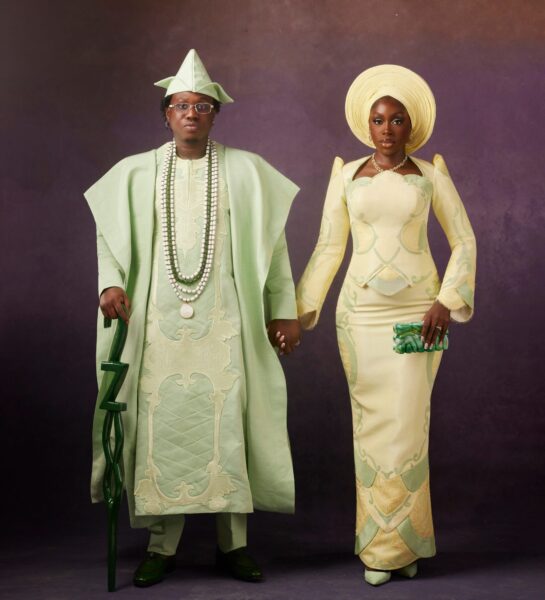
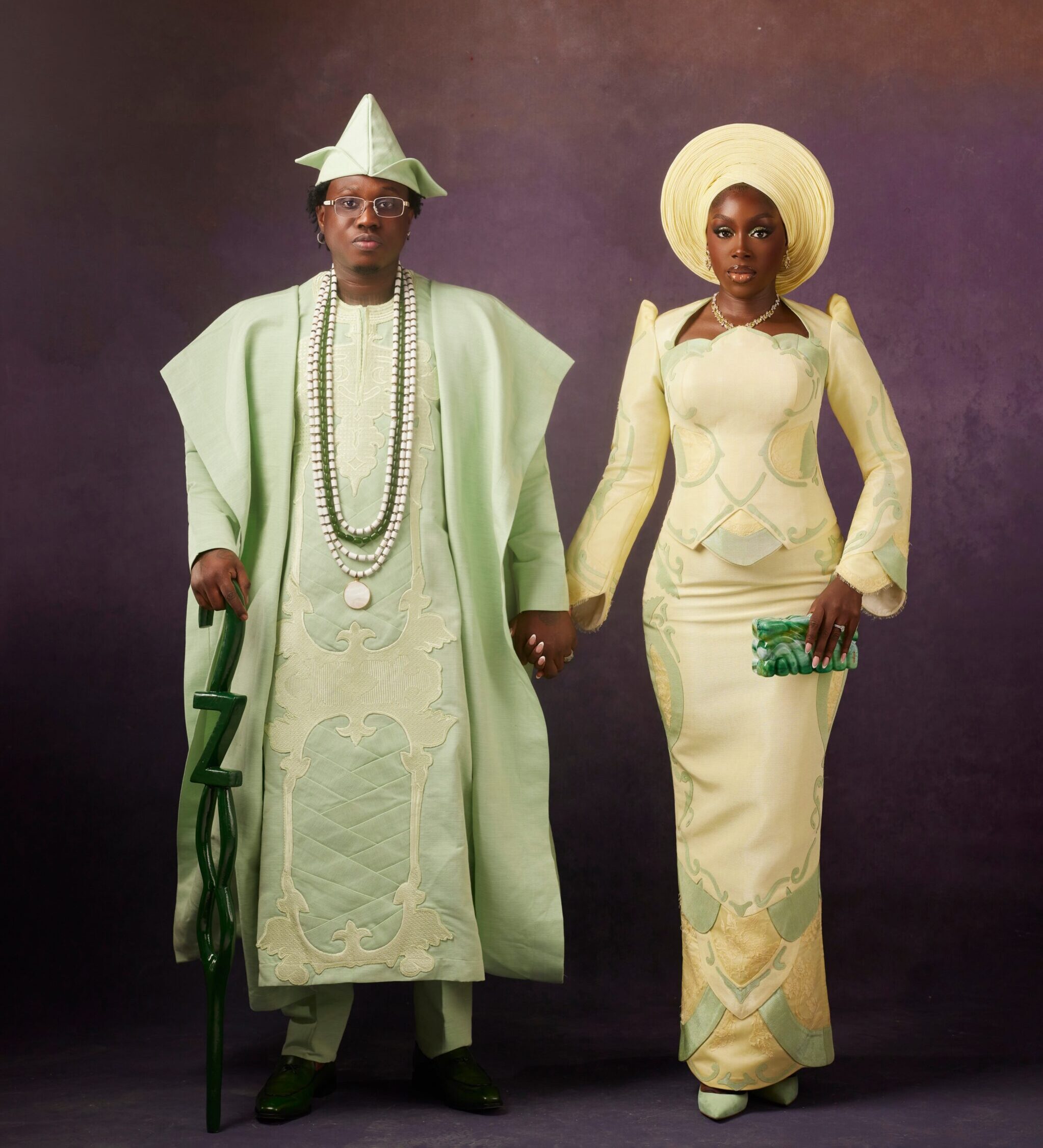
Following the Edo-themed ceremonies, the event pivoted to celebrate Zlatan Ibile’s Yoruba background. Rather than opting for the traditional crimson, royal blue, or gold commonly associated with Yoruba celebrations, the styling team introduced a refreshing visual contrast. Against a dramatic, moody plum studio backdrop, the couple appeared in coordinated pastel tones that immediately drew critical acclaim from fashion analysts and wedding enthusiasts.
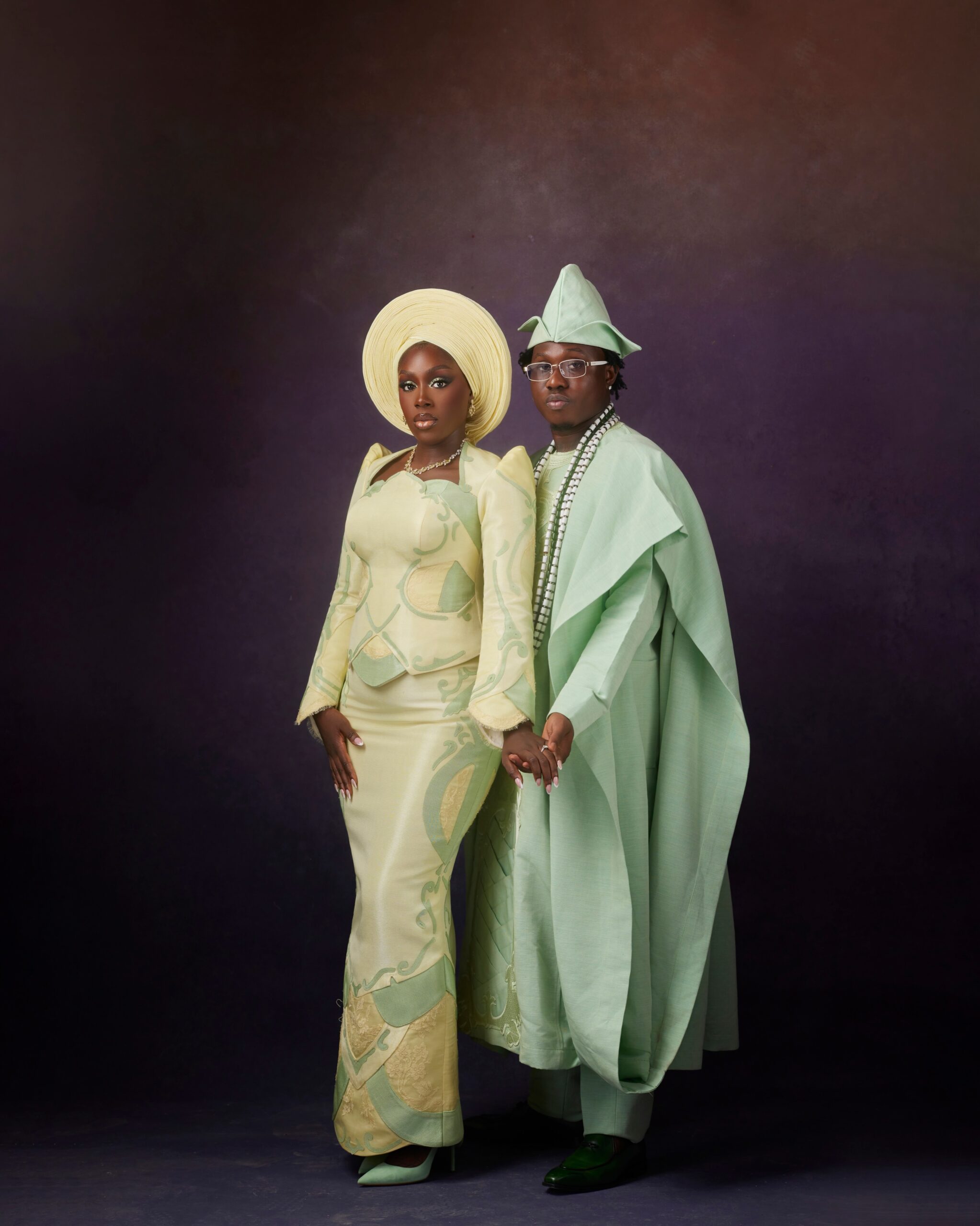
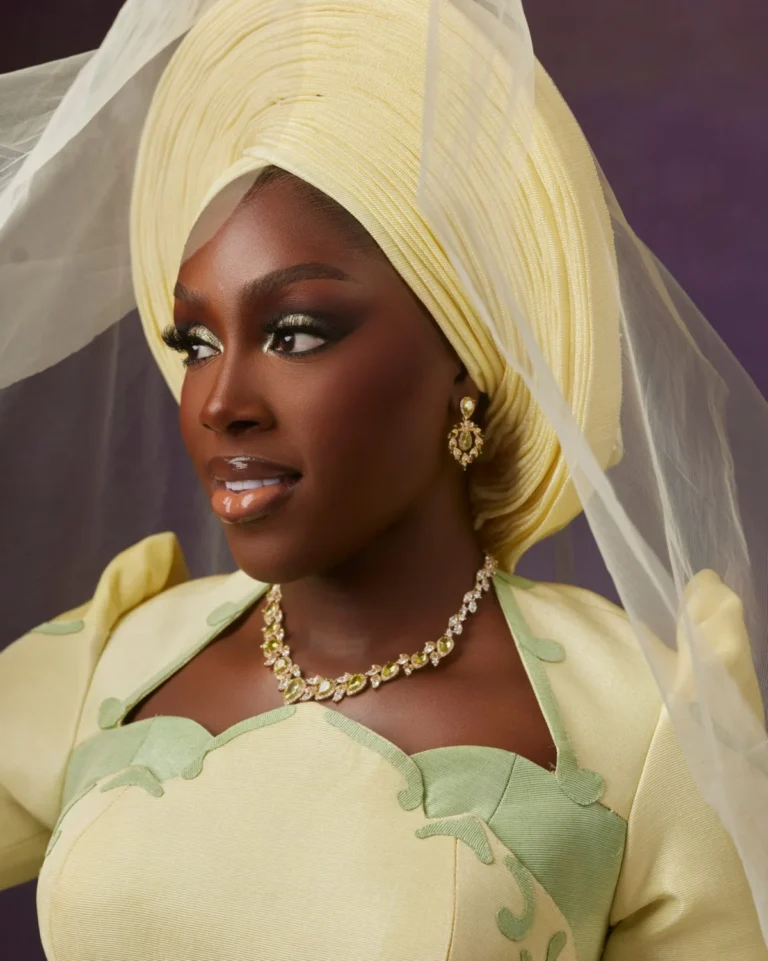
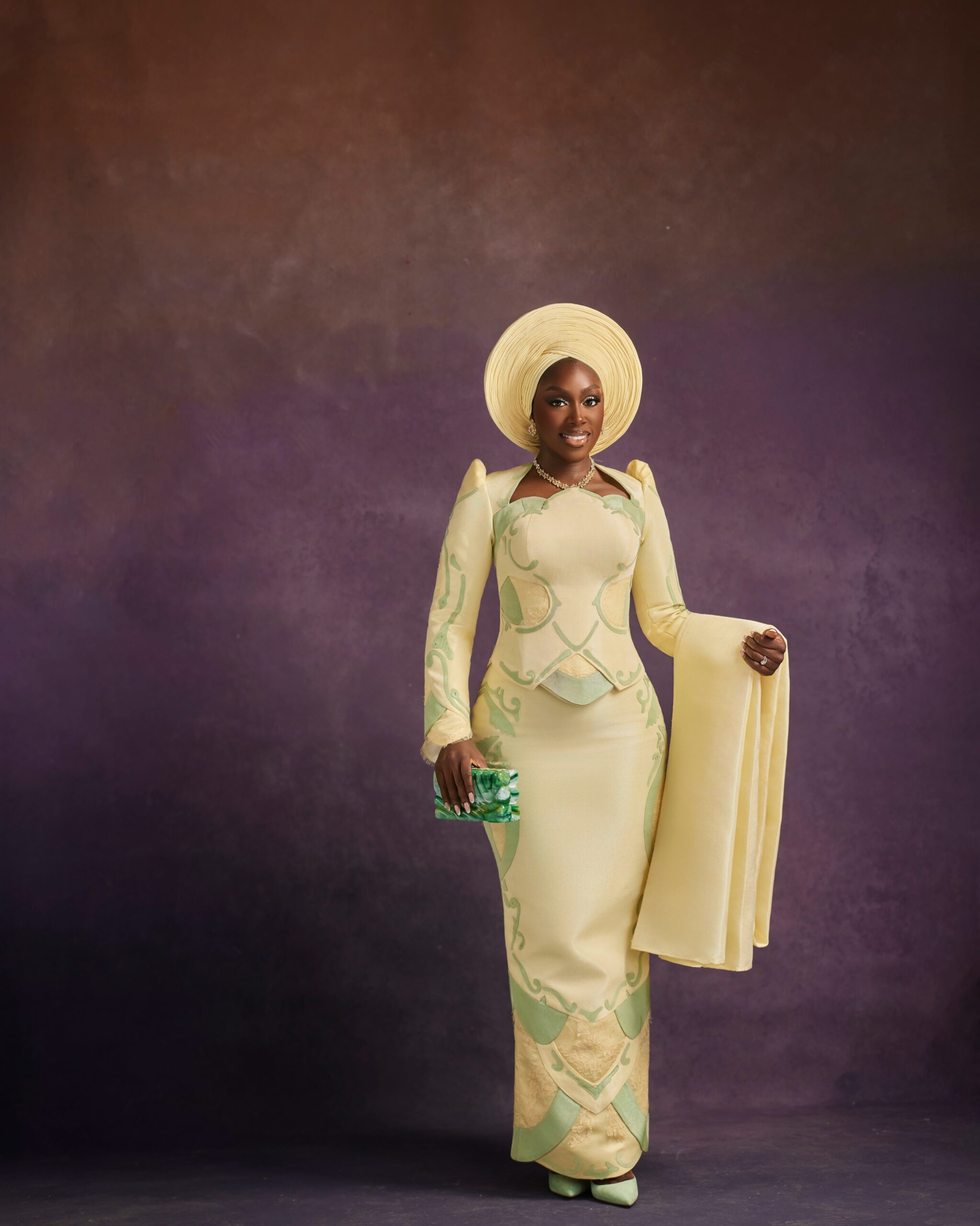
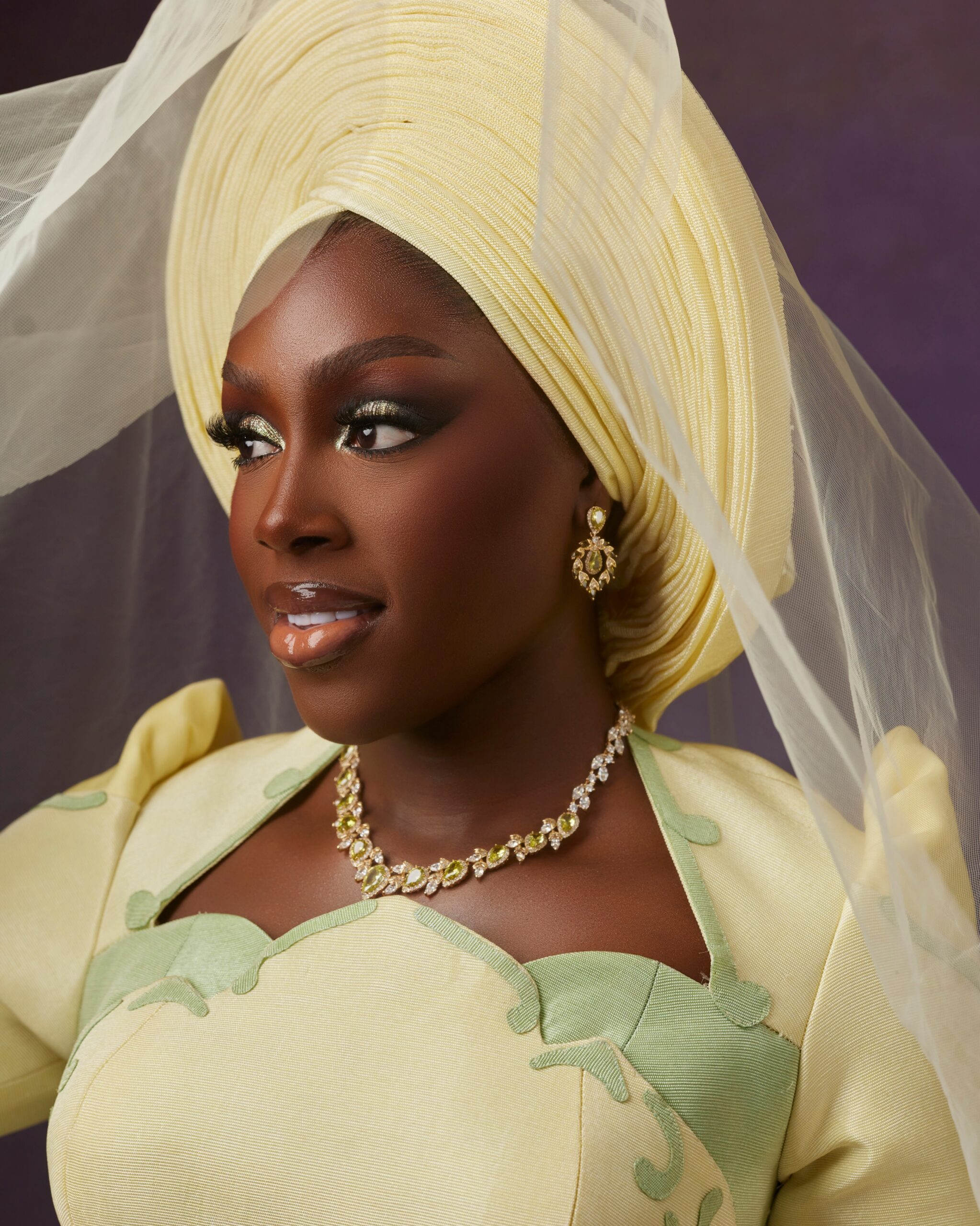
Davita Omoniyi’s second ensemble featured a custom lemon-yellow two-piece set structured around a sculpted, corset-style bodice with a sweetheart-inspired neckline. The gown’s long sleeves were finished with dramatic flared cuffs, adding a theatrical yet sophisticated edge to the silhouette. Intricate mint-green floral appliqués sprawled across the bodice and the floor-length fitted skirt, interspersed with subtle gold-toned accents that added depth to the fabric. Her look was completed by a voluminous, expertly pleated lemon-yellow gele headwrap, a sheer tulle veil draped gracefully over her arm, a statement green gemstone necklace, matching earrings, and a modern green marble clutch bag.
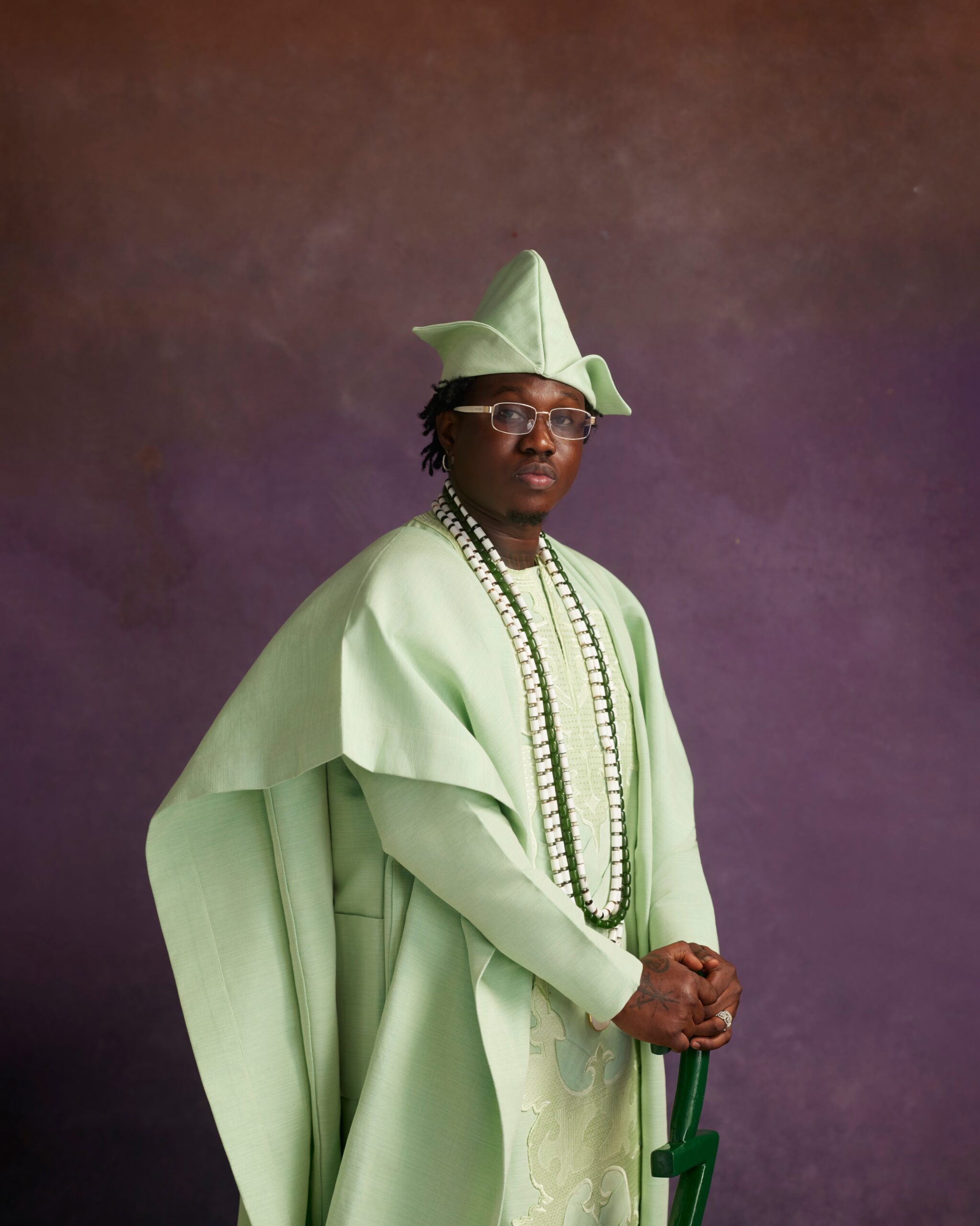
Complementing his bride, Zlatan Ibile stepped out in a custom mint-green agbada crafted by Mazelle Bridal. The garment featured understated, refined embroidery across the chest, maintaining a balance between traditional grandeur and minimalist modernism. He accessorized the agbada with a structured traditional fila cap, multi-stranded layers of pristine white beads, and a carved dark green walking stick that mirrored the botanical hues of his partner’s ensemble. The meticulous coordination demonstrated a high level of intentionality in wedding styling, where every accessory served to unify the couple’s visual presentation.
The Evolution of Celebrity Weddings in Nigeria
The marriage ceremony of Zlatan Ibile and Davita Omoniyi arrives at a time when celebrity weddings in Nigeria have evolved into multi-million-naira cultural productions. Over the past decade, high-profile unions within the Afrobeats community have transcended private family affairs, transforming into major media events that significantly influence the domestic fashion, beauty, and event-planning industries.
Design houses such as Mazelle Bridal have increasingly become institutional pillars for these high-stakes events. By executing custom pieces that seamlessly merge indigenous textile traditions with Western corsetry and contemporary color theory, these designers cater to a demographic of modern brides and grooms who refuse to choose between cultural authenticity and avant-garde aesthetics. Industry observers note that the deliberate selection of pastel palettes—traditionally overlooked in favor of saturated jewel tones for Yoruba ceremonies—signals a broader shift toward experimental event styling in the West African luxury market.
Furthermore, the integration of multiple cultural wardrobes reflects the cosmopolitan nature of contemporary Nigerian marriages. Interethnic unions require a delicate balancing act to honor both families adequately. By dedicating distinct phases of the multi-day or multi-stage celebration to specific ancestral backgrounds, couples like Zlatan and Davita are establishing a blueprint for inclusive, culturally rich wedding itineraries that resonate deeply with diverse audiences.
Economic and Cultural Implications of Celebrity Nuptials
The public rollout of high-profile weddings generates substantial economic activity across several sectors, including haute couture fashion, artisan beadwork, makeup artistry, and luxury event logistics. Stylists, makeup artists, photographers, and fabric merchants frequently experience a surge in brand visibility and client acquisition following the viral circulation of celebrity wedding imagery.
Goodnews Emmanuel Icon, the lead stylist behind the couple’s striking visual presentation, has seen heightened attention for orchestrating the transition between the Edo and Yoruba thematic frameworks. Similarly, artisanal craftsmen responsible for the carved walking sticks, traditional beads, and custom fabric weaving benefit from the national and international spotlight cast by mainstream media platforms and digital networks.
Beyond the immediate economic ripple effects, these celebrations serve an important socio-cultural function. In a diverse nation comprising over 250 ethnic groups, public displays of interethnic marriages championed by cultural influencers promote national unity and cultural exchange. By visibly celebrating both Edo and Yoruba traditions with equal reverence, Zlatan Ibile and Davita Omoniyi have underscored the beauty of multicultural integration in modern Nigerian society.
Future Outlook and Continuing Festivities
As the wedding celebrations continue to unfold, industry insiders and fans alike anticipate further wardrobe changes and traditional rites. Nigerian traditional weddings are notoriously dynamic, frequently featuring three or more distinct outfit changes that allow the couple to showcase different facets of their personalities and heritage.
The initial success of the Edo-themed regalia followed by the innovative pastel Yoruba aesthetic has raised public expectations for the remainder of the itinerary. Whether the couple will incorporate additional cultural elements or lean further into contemporary high fashion remains to be seen. However, the prevailing consensus among fashion critics is that the wedding has already secured its place as one of the most visually compelling celebrity unions of the decade.
Through a careful curation of color, heritage, and high-end tailoring, Zlatan Ibile and Davita Omoniyi have demonstrated that traditional marriage rites can remain deeply rooted in ancestral customs while simultaneously embracing the vanguard of global fashion trends. As the imagery from the ceremony continues to circulate across digital platforms, it leaves an indelible mark on the standards of contemporary African luxury celebrations.