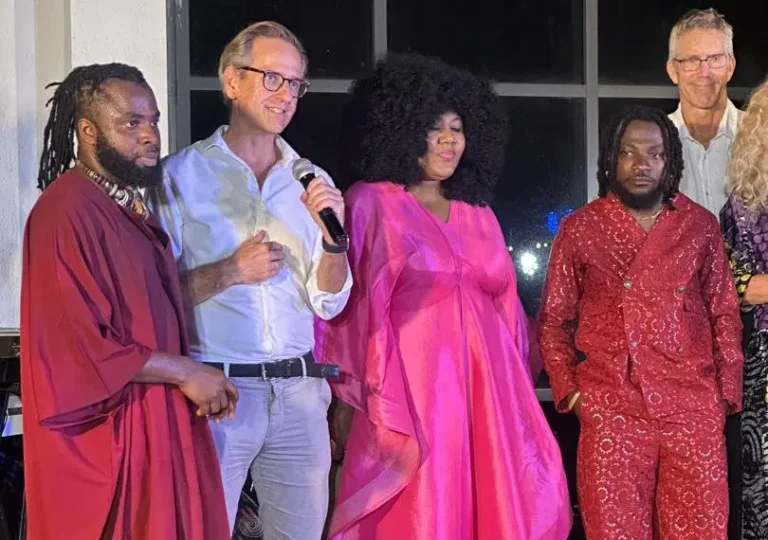
The fourth edition of the Abuja International Afrojazz Festival is set to redefine Nigeria’s cultural landscape by bridging the gap between local creative talent and international music markets. Scheduled to run from November 18 to 21, 2026, the upcoming festival will be headlined by renowned multi-instrumentalist, producer, and UNICEF Nigeria National Ambassador Cobhams Asuquo, alongside the festival’s visionary founder, The Salako. Beyond the anticipated showcase of world-class musical artistry, the 2026 festival introduces a transformative Professional Music Market designed to integrate Nigerian artists directly into the global touring, licensing, and management ecosystems.
As the African continent continues to experience an unprecedented surge in global interest for its diverse sonic outputs, the Abuja International Afrojazz Festival has evolved from a local celebration of jazz and alternative sounds into a critical institutional node for cultural diplomacy and creative industry development. With strategic support from prominent international bodies, including the Institut français Nigeria and the European Union Delegation to Nigeria and ECOWAS, the four-day event is poised to serve as a high-level convergence point for artists, policymakers, investors, and international music executives.
Main Facts and Event Overview
The 2026 festival itinerary has been meticulously structured to balance high-art performance with pragmatic, business-oriented industry sessions. Spanning multiple prominent venues across the Federal Capital Territory, the event will feature curated live showcases, intensive collaborative artist residencies, capacity-building panel sessions, and a grand finale concert that promises to showcase the zenith of contemporary Afrojazz and alternative African music.
The core of the commercial and networking activities will take place during the Professional Music Market, scheduled for November 19 and 20 in the Jabi district of Abuja. This dedicated B2B environment is expected to draw approximately 20 high-level international music industry professionals hailing from 10 distinct countries. The participant roster features an influential mix of international festival directors, prominent booking agents, independent record label executives, music journalists, intellectual property law experts, and artist managers seeking fresh, authentic sounds from the African continent.
Concurrently, intimate showcase performances will be hosted at The Nordic Abuja on the evenings of November 19 and 20. Out of a competitive pool of 75 applications originating from 26 countries, a rigorous selection process yielded seven diverse acts. This lineup includes four exceptional Nigerian performers alongside international talents representing the United Kingdom, the Benin Republic, and Austria, underscoring the festival’s growing reputation as a cross-border cultural melting pot.
The culmination of the festival will take place on November 21 with a grand finale concert hosted at the expansive BALI City Park in Wuse 2. Headliner Cobhams Asuquo and his full band will take center stage, performing alongside festival founder The Salako, soul singer Jessica Bongos, Chile-born instrumentalist Gustavo Cerqueiras, Greece-based Nigerian artist Adedeji, and participants from the festival’s exclusive multidisciplinary artist residency.
Chronology and Detailed Timeline of the Four-Day Festival
The 2026 Abuja International Afrojazz Festival follows a carefully sequenced schedule designed to maximize both artistic collaboration and commercial engagement over its four-day duration.
Day One: Wednesday, November 18, 2026 – Opening and Residency Commencement
The festival officially opens with the launch of the four-day artist residency program. This intensive collaborative workshop brings together Togolese musician Papyrus, Beninese vocal powerhouse Pepe Oleka, and Abuja-based alternative act Pearl Rocker. Over the course of four days, these artists will exchange musical idioms, rehearse, and compose original collaborative material specifically slated for premiere at the closing gala concert. Day one will also feature introductory networking mixers for early-arriving international delegates, local artists, and media representatives.
Day Two: Thursday, November 19, 2026 – Market Opening and Theme: CONNECT
The Professional Music Market officially opens its doors in Jabi, marking the beginning of intensive B2B engagements. The programming for this inaugural market day is themed CONNECT. Industry panels, keynote presentations, and clinic sessions will heavily focus on navigating global music ecosystems, understanding complex international intellectual property frameworks, unlocking revenue streams through modern monetisation strategies, and leveraging digital technology for global audience acquisition. In the evening, the first batch of selected international and local showcase acts will perform before delegates and invited guests at The Nordic Abuja.
Day Three: Friday, November 20, 2026 – Market Continuation and Theme: CREATE & DEVELOP
The second day of the Professional Music Market shifts its analytical and strategic focus toward the theme CREATE & DEVELOP. Discussions will center on the mechanics of the European music industry, cross-continental touring logistics, and sustainable models for building long-term professional partnerships between African creators and foreign agencies. Business networking sessions, one-on-one pitch meetings, and targeted mentoring clinics will dominate the daytime schedule. The evening will feature the second round of live showcase performances at The Nordic Abuja, providing another critical platform for selected artists to impress international booking agents.
Day Four: Saturday, November 21, 2026 – Grand Finale Concert
The festival concludes with its flagship public event: the grand finale concert at BALI City Park, Wuse 2. This high-energy event brings together the general public, festival delegates, and diplomats for an unforgettable night of live music. The performance lineup features the highly anticipated set by Cobhams Asuquo and his band, collaborative sets from the residency ensemble featuring Papyrus, Pepe Oleka, and Pearl Rocker, as well as performances by The Salako, Jessica Bongos, Gustavo Cerqueiras, and Adedeji.
Supporting Data and Institutional Evolution
Since its inception in 2021, the Abuja International Afrojazz Festival has demonstrated steady, quantifiable growth in both scale and international recognition. Conceived initially as a modest response to the lack of dedicated platforms for live jazz and alternative music in Nigeria’s political capital, the festival has steadily expanded its mandate to encompass cultural diplomacy and professional capacity building.
Data from the 2025 edition illustrate the event’s growing diplomatic and cultural clout. The festival attracted over 1,000 registered guests, drawing significant participation from the diplomatic community in Abuja. Notably, ambassadors and high-ranking cultural attachés from Sweden, Switzerland, Austria, and Egypt were in attendance, signaling the event’s utility as a platform for bilateral cultural exchange and soft-power diplomacy.
The introduction of the Professional Music Market for the 2026 edition represents a strategic leap forward, addressing one of the most persistent structural challenges facing Nigerian musicians: access to formal international export pathways. While Nigerian Afrobeats has achieved massive commercial saturation on global streaming platforms, niche genres such as Afrojazz, alternative soul, and contemporary highlife often struggle to secure the direct B2B infrastructure—such as specialized booking agencies, festival circuits, and institutional grant support—that facilitates sustainable international touring. By filtering 75 applications from 26 countries down to just seven elite showcase acts, the festival maintains a high standard of quality while offering foreign buyers a concentrated, highly vetted pool of creative talent.
Official Responses and Strategic Vision
The evolution of the festival from a performance-centric showcase into an active commercial hub reflects a deliberate shift in strategy by its leadership. Addressing media and stakeholders ahead of the November event, festival founder The Salako articulated the core philosophy driving the 2026 programming expansions.
“This year we are not only putting great artists on stage,” The Salako stated. “We are bringing the people who book festivals, run labels, and build careers into the same room as our artists.”
This sentiment underscores a growing recognition within the Nigerian creative economy that raw talent, while essential, must be complemented by institutional networks, legal literacy regarding intellectual property, and direct access to foreign distribution and touring networks. By embedding European Union and French institutional support directly into the festival’s framework, the organizers have secured a high degree of credibility that reassures international delegates of the event’s professional rigor and administrative transparency.
Furthermore, the involvement of Cobhams Asuquo as a headliner and cultural figurehead adds immense weight to the festival’s artistic credibility. As a blind producer, songwriter, and performer who has spent decades shaping the soundscape of Nigerian popular and alternative music, Asuquo’s presence reinforces the festival’s commitment to uncompromising musicianship, live instrumentation, and artistic integrity. His recent appointment as UNICEF Nigeria’s first national ambassador in 15 years further amplifies his role as a trusted moral and cultural leader capable of drawing broad public and institutional interest to the festival’s core messages.
Broader Impact and Industry Implications
The implementation of the Abuja International Afrojazz Festival 2026 carries several profound implications for the broader Nigerian entertainment and creative sectors.
First, it decentralizes the conversation around Nigerian music export. While Lagos remains the undisputed commercial capital of the nation’s music industry, Abuja’s positioning as a diplomatic hub offers unique advantages for cultural diplomacy and state-level institutional backing. By engaging directly with European Union delegations and international cultural institutes based in the capital, the festival opens up funding and cooperative channels that are frequently inaccessible to purely commercial ventures based in Lagos.
Second, the focus on intellectual property, digital technology, and monetisation during the CONNECT and CREATE & DEVELOP market sessions addresses critical vulnerabilities in the African music value chain. Many independent African artists suffer from a lack of formal education regarding music publishing, royalty collection societies, sync licensing, and cross-border tax compliance. By bringing intellectual property experts and international legal practitioners directly into dialogue with local creators, the Professional Music Market acts as an educational incubator that protects artists from exploitative contracts while preparing them for global business environments.
Finally, the inclusion of cross-border artistic residencies—such as the collaboration between Togolese, Beninese, and Nigerian musicians—fosters a Pan-African creative solidarity that enriches the musical product itself. In an era where global audiences increasingly value authentic cultural fusion and storytelling, these residency-born compositions offer a sophisticated alternative to algorithmic pop production, ensuring that Afrojazz continues to evolve as a dynamic, borderless art form.
As preparations finalize for the mid-November events across Jabi, The Nordic Abuja, and BALI City Park, the fourth Abuja International Afrojazz Festival stands as a testament to the resilience, growth, and increasing professionalization of Nigeria’s alternative music sector. By intentionally fusing high-level artistic performance with rigorous commercial infrastructure, the festival is not merely entertaining audiences; it is actively constructing the trade routes through which the next generation of African musical excellence will reach the world.