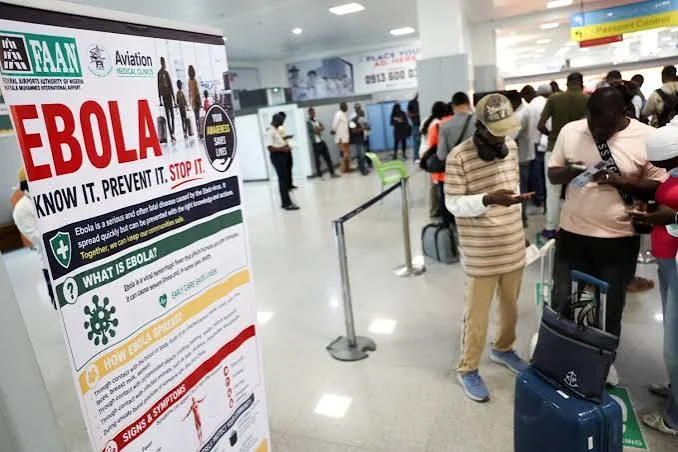
The Federal Government of Nigeria has issued a stern directive mandating the rigorous enforcement of Ebola Virus Disease (EVD) screening protocols across all international land, air, and sea borders. This directive, articulated in a formal circular dated October 22, 2026, serves as a high-level intervention following credible intelligence reports indicating widespread non-compliance with established health security measures. Signed by Daju Kachollum S., Permanent Secretary of the Federal Ministry of Health and Social Welfare, on behalf of the Coordinating Minister, Professor Muhammad Ali Pate, the advisory underscores a critical escalation in national efforts to insulate the country from the threat of viral hemorrhagic fevers.
The Catalyst for Heightened Security
The impetus for this policy recalibration originated from the Office of the National Security Adviser (ONSA), which flagged systemic vulnerabilities at various ports of entry. According to official communications, these lapses involve the bypass of temperature checks, incomplete health declaration forms, and insufficient surveillance of travelers arriving from high-risk regions. The ONSA’s intervention highlights the intersection of public health and national security; in an era of global connectivity, the failure to screen for high-consequence pathogens like the Ebola virus is categorized not merely as a medical oversight, but as a significant security risk.
The Federal Ministry of Health has now tasked all Ministries, Departments, and Agencies (MDAs), along with port health authorities and border security personnel, to immediately rectify these lapses. The directive is unequivocal: health screening is not discretionary. It is a mandatory component of national defense against biological threats.
Contextualizing the Ebola Threat
Ebola Virus Disease remains one of the most lethal pathogens known to medical science, characterized by its high mortality rate, which can reach up to 90% in untreated cases. The virus is transmitted through direct contact with the blood, secretions, or other bodily fluids of infected people, or with surfaces and materials contaminated with these fluids.
Historically, Nigeria has been lauded globally for its effective response to the 2014 Ebola outbreak, which was contained within months thanks to rapid contact tracing, strict screening at the Murtala Muhammed International Airport in Lagos, and robust public awareness campaigns. However, public health experts warn that complacency is the greatest enemy of containment. In the current global climate, where supply chain disruptions and regional instabilities in parts of Africa have strained border control resources, the risk of a re-introduction of the virus is perceived as elevated.
Chronology of Recent Surveillance Efforts
The October 2026 directive follows a series of incremental updates to Nigeria’s public health security framework.
- Mid-2026: Initial assessments of border readiness conducted by the Nigeria Centre for Disease Control (NCDC) and Port Health Services indicated that while protocols were theoretically in place, the physical infrastructure—such as functional thermal scanners and isolation bays—required urgent maintenance.
- September 2026: The Office of the National Security Adviser conducted a series of "spot-checks" at international airports and key land border crossings. The findings of these checks suggested that enforcement had become lax, with some transit points failing to record passenger health data accurately.
- October 22, 2026: The Federal Ministry of Health and Social Welfare issued the formal circular, mandating absolute compliance and threatening disciplinary action against personnel who impede the enforcement of these safety measures.
Analysis of Current Protocols
The government’s strategy relies on a multi-layered approach to pathogen surveillance. At the core of these protocols are three primary pillars:
- Thermal Surveillance: Every individual entering Nigeria, whether by air or land, must undergo non-contact temperature screening. Elevated temperatures act as the primary trigger for further medical evaluation.
- Health Declaration Systems: Travelers are required to disclose their travel history, specifically identifying if they have visited regions currently experiencing EVD outbreaks within the preceding 21 days—the incubation period of the virus.
- Active Surveillance and Reporting: Port health officers are mandated to document all symptomatic travelers and ensure they are immediately transferred to designated isolation facilities for diagnostic testing, typically utilizing Rapid Diagnostic Tests (RDTs) or PCR-based confirmation.
The Ministry’s recent circular emphasizes that these measures must be supported by improved coordination between agencies. Historically, "siloed" operations—where health authorities and immigration officers work independently—have led to gaps in coverage. The new directive mandates a unified response where security, immigration, and health personnel operate as a singular, cohesive unit.

Implications for National Security and Public Health
The economic and social implications of a resurgence of Ebola in Nigeria are profound. Given the country’s position as a regional economic hub, any disruption to movement or trade caused by a public health crisis would have immediate fiscal consequences. Therefore, the government’s insistence on "sustained compliance" is viewed as an economic imperative as much as a medical one.
By mandating that all MDAs provide "highest priority" to these protocols, the government is signaling that it will no longer tolerate administrative inertia. Furthermore, the explicit warning against interference with enforcement officers suggests that the government is prepared to address the corruption or bureaucratic obstruction that occasionally plagues border operations. If an enforcement officer is blocked from performing a screening, the individual responsible—regardless of rank or status—will face administrative and potentially legal repercussions.
Stakeholder Responsibilities
The directive places specific burdens on different echelons of the state:
- MDAs: Must circulate the advisory to every field office, ensuring that even the most remote border posts are aware of the mandate.
- Health Institutions: Required to provide the technical support and equipment necessary for screening officers.
- Enforcement Officers: Charged with the front-line duty of screening and tasked with documenting any breaches in protocol. They are protected by the Ministry’s instruction to ensure they carry out their duties without fear of intimidation.
- The Public: While not explicitly mentioned in the circular, the success of these measures relies on the cooperation of the traveling public. Transparency in declaring travel history and compliance with health requests is essential for the efficacy of these national measures.
Expert Perspective on Enforcement
Public health analysts note that while the policy is sound, the challenge will lie in the implementation. Nigeria’s land borders are vast and notoriously porous. While airports are easier to control, the cross-border movement of goods and people in the northern and western regions presents a significant logistical hurdle.
"The directive is a necessary step, but its effectiveness will be determined by the availability of resources at the grassroots level," noted one independent health policy consultant. "Ensuring that a small, remote border post in a rural area has the same screening capacity and adherence to protocol as the international airport in Lagos is the real test for the Ministry."
Looking Ahead
The government has made it clear that this is not a temporary measure. As the world becomes more interconnected, the threat of emerging infectious diseases (EIDs) will continue to evolve. By reinforcing these protocols, Nigeria is attempting to institutionalize a culture of "constant readiness."
The Federal Government’s commitment to transparency—calling for the documentation and reporting of any breaches—is a departure from past, more opaque management styles. By fostering a culture of accountability, the Ministry of Health hopes to identify weak links in the chain of command before they become vectors for disease transmission.
In conclusion, the directive from the Federal Ministry of Health and Social Welfare is a robust attempt to safeguard Nigeria’s public health landscape. By leveraging the authority of the Office of the National Security Adviser and demanding institutional accountability, the government is taking proactive steps to ensure that the hard-won successes of previous public health campaigns are not squandered. For the millions of travelers moving through Nigeria’s borders, these measures represent a necessary inconvenience, but for the nation at large, they remain the most vital line of defense against an invisible, yet potentially devastating, threat. The focus for the coming months will be on the execution of these mandates and the ongoing assessment of their impact on national security.