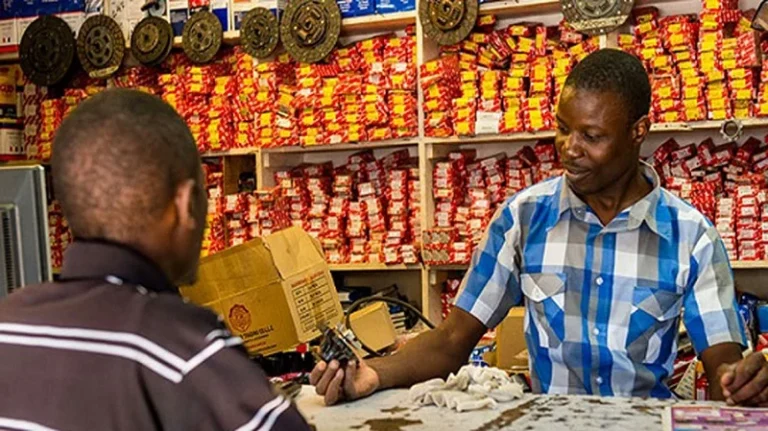
The backbone of Nigeria’s economic engine is stalling. According to the 2025 Informal Economy Report published by Moniepoint, which draws on data from five million businesses and extensive nationwide physical surveys, the nation’s micro, small, and medium-sized enterprises (MSMEs) are increasingly caught in a cycle of subsistence rather than expansion. The data reveals a sobering reality: 38% of these businesses generate less than ₦10,000 ($6.78) in daily profit. This systemic stagnation highlights a widening chasm between the informal sector’s massive contribution to national output—estimated at roughly 65% of GDP—and the actual financial health of the entrepreneurs driving it.
A Chronology of Economic Volatility
To understand the current crisis, one must trace the timeline of Nigeria’s macroeconomic instability over the past two years. The fiscal landscape shifted dramatically in mid-2023 when the Central Bank of Nigeria (CBN) began the process of unifying the exchange rate and removing longstanding currency restrictions. While intended to stimulate market efficiency, the policy triggered a sharp devaluation of the naira.
By the start of 2024, the currency had lost approximately 70% of its value against the dollar. The transition was abrupt, forcing businesses that rely on imported raw materials or finished goods to contend with skyrocketing procurement costs. By November 2024, Nigeria’s headline inflation reached a 28-year peak, primarily fueled by the soaring cost of transportation and logistics. This series of events created a “perfect storm” for the informal sector, where capital buffers are typically thin and the ability to absorb price shocks is minimal.
The Profit Squeeze: Revenue vs. Sustainability
The Moniepoint report introduces a critical distinction between top-line growth and bottom-line viability. While 65% of informal businesses reported an increase in revenue over the last year, this figure is misleading. Only 47% of those businesses saw a corresponding rise in profit. This disconnect is the defining characteristic of the current economic environment.
Nearly 79% of surveyed business owners indicated that their operational costs have increased significantly. The drivers are threefold: the devaluation of the naira, which decimated purchasing power; the rising cost of fuel, which inflated transport and logistics expenses; and the increased cost of imported inputs.
The data paints a granular picture of the daily struggle:
- 38% of businesses earn less than ₦10,000 ($6.78) in daily profit.
- 70% of businesses earn less than ₦50,000 ($33.89) in daily profit.
- The median daily profit range sits between ₦10,000 ($6.78) and ₦20,000 ($13.56).
This "profit squeeze" means that even when a business manages to increase its sales, the marginal gain is almost immediately eroded by the rising cost of replenishment, electricity, and basic business maintenance.
The Gender Gap in Economic Resilience
The report also highlights a troubling disparity in economic outcomes based on gender. Women-owned SMEs are disproportionately affected by the current volatility. The study found that 41% of women entrepreneurs operate at the lowest profit tier—earning less than ₦10,000 daily—compared to 34% of their male counterparts.
At the higher end of the spectrum, the gap remains consistent: only 10% of women-owned businesses manage to generate daily profits exceeding ₦50,000, whereas 16% of men-owned businesses reach that milestone. Analysts suggest that this divide may stem from unequal access to capital, societal constraints on time management, and a higher propensity for women-led enterprises to operate in sectors that are more sensitive to inflationary pressures, such as retail and food processing.
Policy Responses and the Path to Formalization
The government has acknowledged the severity of these challenges. Nurudeen Abubakar Zauro, Secretary/Head of the PreCEFI Secretariat and Technical Advisor to the President on Economic and Financial Inclusion, noted that the depreciation of the naira—from 460 NGN/USD in June 2023 to approximately 1600 NGN/USD by mid-2025—has acted as a primary catalyst for bankruptcy across the MSME space.
“This forced price hikes on imported commodities, reduced purchasing power, and created bottlenecks in supply chain networks,” Zauro stated. He emphasized that the government is aware that the diminishing contribution of the informal economy to the GDP is a direct result of these systemic failures. However, observers argue that current interventions remain too fragmented.
Foyinsolami Akinjayeju, CEO of Enhancing Financial Inclusion & Advancement, calls for a shift toward "coordinated, systemic measures." The goal, according to stakeholders, must be to bridge the gap between "survivalist" entrepreneurship and sustainable, growth-oriented business models.
Implications for the Broader Economy
The lack of resilience is clearly visible in the shift in savings behavior. In the previous year, 92.4% of informal businesses reported saving money. That figure has plummeted to 74%. When businesses stop saving, they lose their primary safety net against emergencies, leading to a higher mortality rate for enterprises that cannot survive a single month of downtime.
Currently, 42% of informal businesses have no financial buffer to survive more than 30 days if their income stream were to cease. This lack of liquidity has made business owners increasingly averse to formal borrowing. High interest rates and stringent lending conditions from traditional financial institutions have further pushed these entrepreneurs into a cycle where they rely solely on their own, shrinking savings for both expansion and survival.
A Call for Structural Upgrading
Industry leaders are pushing for a more robust approach to capacity building. Chinyere Almona, Director-General of the Lagos Chamber of Commerce and Industry, suggests that the solution lies in embedding institutional support directly into the fabric of local trade associations.
“A foundational step is the provision of structured capacity-building programs, embedded within local chambers of commerce and trade associations, to upskill operators in bookkeeping, inventory management, and digital tools,” Almona noted.
The rationale is that informal businesses often lack the basic accounting and administrative structure required to access formal credit markets or benefit from government grants. By digitizing their operations and formalizing their bookkeeping, these businesses could potentially unlock the data needed to secure lower-interest loans and optimize their supply chains.
Looking Ahead
The 2025 Moniepoint report serves as a diagnostic tool for Nigeria’s policymakers. It confirms that while the informal sector possesses the grit and labor force required to sustain the country, it lacks the macroeconomic stability and institutional scaffolding to thrive.
The path forward requires more than just monetary policy adjustments. It requires a concerted effort to lower the cost of doing business, which includes stabilizing the energy sector to reduce reliance on expensive fuel, streamlining tax and regulatory compliance to encourage formalization, and creating targeted credit facilities that do not rely on the high-interest models that currently keep these businesses in a state of debt-distress.
If Nigeria is to meet its developmental goals, the transition of the informal economy from a survivalist mode to a scalable, growth-oriented engine is not just an economic priority—it is a national imperative. Without systemic change, the data suggests that the majority of these businesses will remain trapped, their growth potential stifled by the very environment they operate within. The survival of the country’s MSMEs is inextricably linked to the survival of the Nigerian economy itself; as the costs mount and profits thin, the time for "fragmented interventions" has effectively run out.