Ten years after the landmark Paris Agreement entered into force, the devastating human toll of global warming has reached an unprecedented scale, prompting a coalition of leading scientists and public health experts to demand a fundamental reevaluation of how the international community responds. According to the 10th annual report published by the Lancet Countdown on health and climate change, escalating temperatures, extreme weather events, proliferating vector-borne diseases, and toxic air pollution are claiming millions of lives annually. In response to this compounding crisis, the report’s authors are formally calling on the World Health Organization (WHO) to designate climate change as an official global health emergency, arguing that current international frameworks are fundamentally unequipped to handle a crisis of this magnitude and duration.
The comprehensive findings paint a stark picture of a planet where human-driven warming is actively accelerating health risks faster than governments can adapt. Between 2016 and 2023, extreme heat fueled by climate change directly caused nearly three million deaths. Concurrently, populations worldwide are grappling with more rapid desertification, increasingly erratic rainfall, and expanding geographical habitats for dangerous pathogens such as the dengue-carrying Aedes aegypti mosquito and flesh-eating Vibrio bacteria. Furthermore, fossil fuel-derived air pollution continues to cause an estimated 2.78 million deaths each year, highlighting an urgent need for systemic policy overhauls that place human survival at the center of environmental negotiations.

The Chronology and Escalation of a Public Health Catastrophe
To fully understand the gravity of the current situation, it is necessary to examine the trajectory of international climate agreements and public health milestones over the past decade. When the Paris Agreement was adopted in 2015, nations committed to holding the increase in the global average temperature to well below 2.0°C above pre-industrial levels, with an aspirational target of limiting the increase to 1.5°C. However, the intervening years have seen a persistent lag between international climate pledges and actual policy implementation.
In the years immediately following the Paris pact, scientific monitoring groups began shifting their focus toward quantifying the explicit link between changing weather patterns and human morbidity. By 2020, extreme climate events—such as catastrophic flooding in East Africa that displaced nearly one million Somalians—underscored the immediate vulnerability of developing regions. By the mid-2020s, the concept of ordinary heatwaves had given way to destructive heatstorms that scorched agricultural lands, dried up municipal water supplies, and strained healthcare infrastructure to its breaking point.
Recent evaluations by the United Nations Environment Programme indicate that the window to prevent global temperatures from permanently overshooting the 1.5°C threshold has effectively closed under current trajectories, which currently project a perilous 2.8°C warming increase by the end of the century. As the world approaches upcoming diplomatic milestones—including the UN biodiversity summit COP17 in Yerevan, Armenia, and the upcoming COP31 climate conference in Antalya, Türkiye—the Lancet Countdown report serves as an urgent diagnostic of a decade defined by missed emissions targets and mounting human casualties.

Unprecedented Human and Economic Toll of Extreme Heat
The human cost of rising global temperatures is most visibly manifested in the soaring mortality rates associated with extreme heat. In 2023 alone, heat was linked to a record 710,000 deaths globally, with roughly 71.5% of those fatalities directly attributed to human-induced climate change. This marks a significant milestone as the first time the Lancet Countdown has directly quantified the proportion of heat deaths caused explicitly by anthropogenic warming.
On average, heat-related mortality between 2016 and 2023 rose by 36% compared to the preceding decade, translating to an annual average of over 540,000 deaths. Vulnerable populations—particularly newborns, pregnant women, and the elderly—bear the heaviest burden of this thermal stress. United Nations climate officials have increasingly characterized the threat of extreme heat to mothers and newborns as a dangerous new fault line in the global crisis.
Beyond the direct loss of life, chronic heat is inflicting immense economic and productivity damage. In 2025 alone, extreme heat erased 573 billion potential work hours, resulting in $1.07 trillion in lost labor income—marking the third consecutive year that global economic losses from heat stress surpassed the $1-trillion mark. The economic burden is distributed highly inequitably. Countries ranked lowest on the United Nations Human Development Index (HDI) suffered economic output losses equivalent to 5% of their GDP, compared to just 0.5% in the highest-ranked nations. Agricultural labor accounted for 78% of these losses in developing regions, exacerbating rural poverty and threatening regional food security.

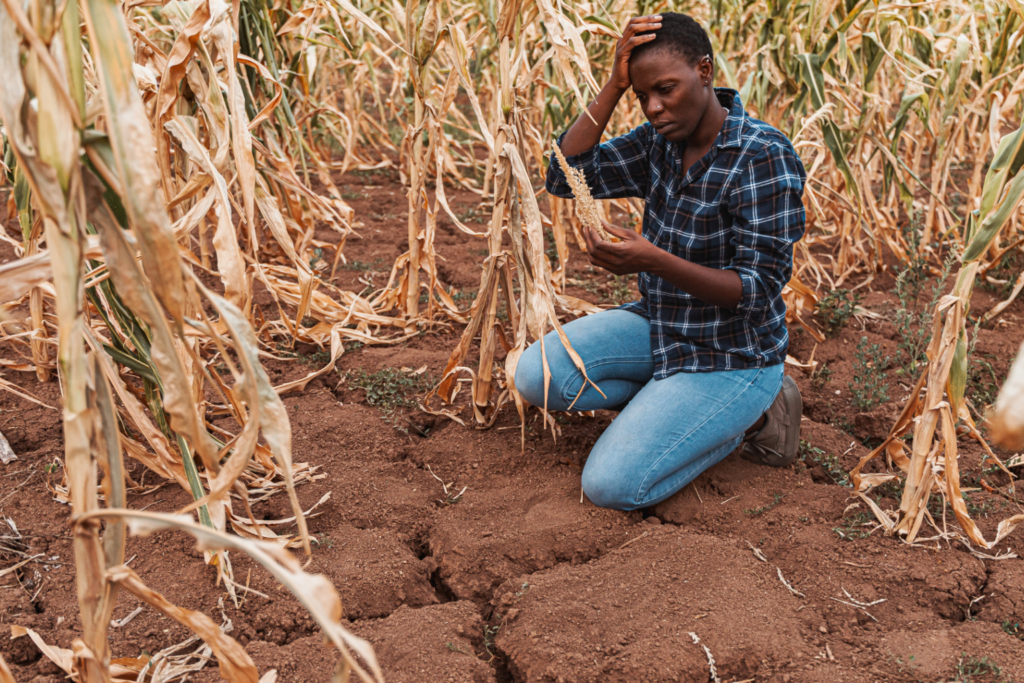
Simultaneously, extreme weather volatility has crippled food systems. The proportion of global land experiencing severe drought expanded eight times faster since 2016 than in the preceding decade, while regions affected by extreme precipitation grew by 57%. Combined, these phenomena pushed nearly 128 million additional people into moderate or severe food insecurity in 2024, compounding a global nutrition crisis that contributed to millions of diet-related deaths.
Expanding Vectors and the Geographic Shift of Disease
As thermal boundaries shift, infectious diseases are actively migrating into new territories, exposing immunologically naive populations to pathogens previously confined to tropical or subtropical zones. The transmission conditions for dengue fever, spread by the Aedes aegypti mosquito, escalated 125% faster between 2016 and 2023 than in the prior decade, fueling a record 14.4 million reported dengue cases in 2024.
Coastal and marine environments are similarly affected by rising sea temperatures. Vibriosis infections, contracted through exposure to warm coastal waters or the consumption of contaminated seafood, surged to an estimated 738,000 cases in 2025. The annual growth rate of these bacterial infections has accelerated dramatically, increasing by nearly 24,700 cases per year since 2016. Furthermore, malaria-transmitting parasites such as Plasmodium falciparum have expanded their reach into African highlands, where climate suitability rose by nearly 13%, while vectors for the West Nile virus advanced across parts of Europe.

Policy Failures and the Fossil Fuel Subsidy Paradox
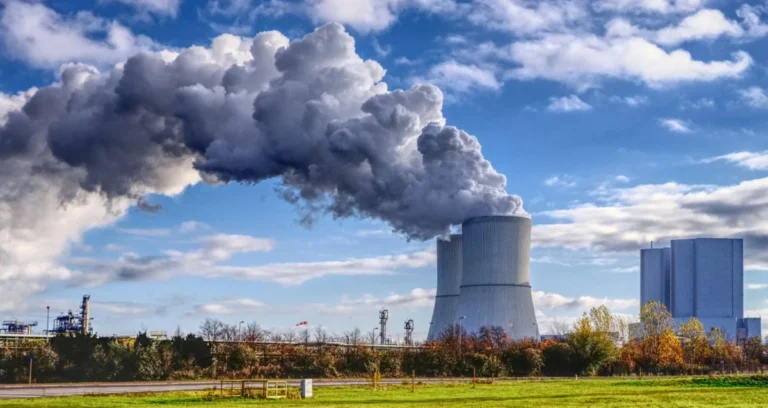
Despite mounting scientific evidence and escalating public health emergencies, international financial flows continue to heavily favor the very industries driving global warming. The report reveals that between 2016 and 2024, governments worldwide funneled a net $6.2 trillion into direct fossil fuel subsidies. In 2024 alone, at least 10 countries spent more money propping up oil, gas, and coal industries than maintaining and expanding their domestic public health systems.
When factoring in the indirect, unpaid costs of air pollution and environmental destruction, the International Monetary Fund (IMF) estimates that total global fossil fuel subsidies reached an astounding $7.4 trillion in 2024. Of this total, $6.7 trillion represented indirect subsidies—an amount nearly 25 times greater than the $300 billion annually that wealthy nations agreed to provide to developing countries for climate mitigation and adaptation by 2035.
Furthermore, corporate strategies among the world’s 100 largest oil and gas producers indicate that they remain on track to extract 150% more fossil fuels by 2040 than is compatible with a 1.5°C warming trajectory. The report also highlights a decades-long corporate disinformation campaign, noting that major energy conglomerates accurately predicted the dangers of fossil fuel-driven warming as early as the 1980s, yet chose to manufacture doubt and lobby against regulatory intervention using tactics historically deployed by the tobacco industry.
Institutional Shortcomings and the Call for a WHO Emergency Framework
A central argument of the new report is that existing global health governance structures are fundamentally misaligned with the realities of chronic, long-term planetary crises. While the World Health Organization’s Public Health Emergency of International Concern (PHEIC) mechanism has proven effective for rapid, acute disease outbreaks such as Ebola and COVID-19, it was never designed to address a multi-decadal, systemic catastrophe like climate change.
"The problem currently with the public health emergency of international concern is that it’s very tailored to short-lived emergencies and especially to emergencies that can cross borders like infectious diseases," explained Marina Romanello, executive director of the Lancet Countdown at University College London. "We want an emergency response that is fit for purpose, not only for emergencies like infectious diseases but also for catastrophes like those caused by climate change, so that we’re not responding to emergency after emergency."
The authors of the report advocate for the creation of a dedicated WHO instrument that formally acknowledges climate change as a permanent global health emergency. Until such a framework is established, they urge the international community to leverage existing instruments, such as the International Health Regulations, to systematically grade and respond to climate-driven health threats.

However, health systems remain profoundly underprepared. By 2025, 71% of WHO member states still lacked a formal national plan to adapt their health infrastructures to climate change, and 76% had not conducted a vulnerability assessment since 2020. Disparities in health security are stark: while over 80% of high-HDI countries report strong institutional readiness to manage health emergencies, only 34.6% of low-HDI nations possess equivalent capabilities. This vulnerability is further exacerbated by shrinking international development aid, with major donor nations projected to cut health, development, and humanitarian assistance to low- and middle-income countries by more than $50 billion between 2023 and 2026, frequently reallocating those funds toward domestic defense budgets.
Political Will and the Path Forward
Leadership figures across the global health and political spheres have echoed the report’s warnings, emphasizing that the barrier to progress is no longer an absence of scientific data, but a deficit of political resolve.
"What’s missing is not evidence, but the political will to act on it," noted Helen Clark, former Prime Minister of New Zealand and chair of the Lancet Countdown board. "Governments must double down on their climate action commitments and rebuild momentum for international co-operation."
WHO Director-General Tedros Adhanom Ghebreyesus reinforced this sentiment in a public release, stating unequivocally that "climate change is one of the greatest threats to health facing humanity."
To avert total systemic collapse, the Lancet Countdown has outlined a series of urgent policy targets for the coming decade. These include an immediate prohibition on new fossil fuel exploration, the complete phase-out of coal-fired power generation by 2035, the deployment of health-focused early warning systems in every country by the end of 2027, the establishment of a global climate and health data commons, and the provision of grant-based financing to protect developing nations from burdensome debt while adapting to environmental shocks.
Fulfilling these mandates, the report concludes, transcends the status of a major public health opportunity—it has become the singular operational imperative for ensuring a habitable future.