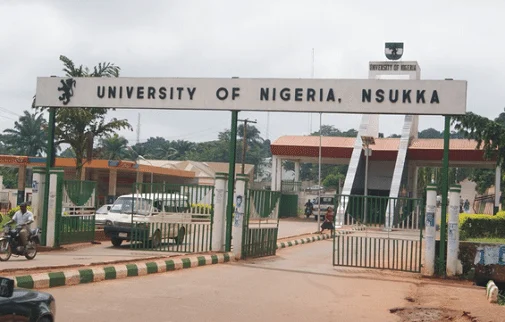
The University of Nigeria, Nsukka (UNN), has officially announced the activation of its online portals for the payment of acceptance fees for the 2023/2024 academic session. This development marks a critical juncture for thousands of candidates who successfully navigated the institution’s rigorous admission screening processes and have now been offered provisional admission into various undergraduate degree programs. With the activation of the payment procedure, fresh students can proceed to formalize their academic status, a mandatory step that precedes physical clearance, departmental registration, and the eventual issuance of matriculation numbers.
The release of the acceptance fee procedure follows weeks of eager anticipation from prospective undergraduates, many of whom have closely monitored the Joint Admissions and Matriculation Board (JAMB) Central Admissions Processing System (CAPS) alongside the university’s internal portals. University authorities have emphasized that adherence to the stipulated payment guidelines within the designated timeframe is non-negotiable for anyone wishing to secure their place in the current academic year. Failure to complete this initial financial obligation within the stipulated window typically results in the forfeiture of the admission offer, which may subsequently be reallocated to candidates on the institution’s extensive waiting lists.
Chronology of the 2023/2024 Admission Exercise
The pathway leading to the current acceptance fee payment phase has been characterized by a protracted and meticulous academic calendar. The journey for the 2023/2024 cohort effectively began with the registration for the Unified Tertiary Matriculation Examination (UTME) conducted by JAMB in early 2023, followed by the release of results and the subsequent setting of institutional cut-off marks. UNN, historically one of the most sought-after tertiary institutions in Nigeria, routinely attracts tens of thousands of applicants, making the admissions process exceptionally competitive.
Following the conclusion of the Post-UTME screening exercise, which was administered late last year, candidates experienced a staggered release of departmental admission lists. The university management, in alignment with federal guidelines and regulatory bodies, ensured that admissions were processed in batches through the JAMB CAPS portal. Candidates were first required to accept their admission offers on the national portal before they could become eligible to interact with the university’s internal payment architecture. The official activation of the acceptance fee portal this week serves as the culmination of the preliminary admission phase, transitioning successful applicants from prospective students to officially recognized freshers of the premier university.
Background Context and Institutional Significance
Founded in 1955 by Dr. Nnamdi Azikiwe and formally opened in October 1960, the University of Nigeria, Nsukka, holds a venerated status in the history of Nigerian higher education. As the first full-fledged indigenous and autonomous university in the country, its admission cycles are closely watched barometers for the broader educational sector in Nigeria. The institution operates across multiple campuses—primarily in Nsukka and Enugu State—and accommodates a massive student population distributed across numerous faculties ranging from medicine and engineering to the arts and social sciences.
The acceptance fee is a traditional administrative levy charged by Nigerian tertiary institutions to confirm a candidate’s genuine commitment to taking up an offered admission slot. Historically, the revenue generated from these fees contributes to the administrative overhead required to process thousands of new records, verify credentials, and set up initial student profiles on the university’s enterprise resource planning systems. For the 2023/2024 academic session, the management has iterated that the payment process has been streamlined to mitigate the challenges of long queues, racketeering, and fraudulent middle-men that historically plagued physical payment systems.
Detailed Step-by-Step Payment Procedure
To safeguard against fraud and ensure a seamless transaction experience, the university ICT directorate has outlined a specific protocol that all admitted candidates must follow. While exact portal links and invoice generation steps are strictly managed via the official UNN portal (unn.edu.ng), the general administrative workflow requires candidates to execute the following sequence:

- Profile Verification: Candidates must log into the UNN student portal using their JAMB Registration Number to generate their unique identification profile.
- Invoice Generation: Navigate to the acceptance fee section to generate an electronic invoice containing a Remita Retrieval Reference (RRR) number. This code is unique to the individual transaction and ties the payment directly to the applicant’s file.
- Payment Execution: Payments can be processed through any commercial bank in Nigeria using the generated RRR code, or directly online via debit cards, internet banking, or mobile money platforms integrated with the Remita payment gateway.
- Receipt Printout: Upon successful transaction completion, candidates must return to the portal to print their official UNN Acceptance Fee Receipt, which serves as primary evidence of payment during physical clearance.
- Document Upload: Subsequent steps require the uploading of academic credentials, birth certificates, local government identification letters, and the newly printed acceptance receipt.
Supporting Data and Admission Demographics
While the exact cumulative admission figures for the 2023/2024 academic year are subject to the final statutory Senate approvals and JAMB quota compliance reports, historical data provides context to the sheer scale of the exercise. UNN typically receives upwards of 100,000 applications annually across its various faculties, while its carrying capacity hovers around 10,000 to 12,000 admission slots. This translates to an admission selectivity rate of roughly 10 to 12 percent, positioning the institution among the most competitive centers for higher learning in West Africa.
The high demand places immense pressure on both the university’s administrative infrastructure and its digital networks. Consequently, the phased release of the acceptance fee payment window is designed to manage server traffic and prevent systemic crashes that typically occur when thousands of users attempt to access financial gateways simultaneously. Financial analysts within the education sector note that institutional reliance on automated gateways like Remita has drastically reduced transaction leakages and improved the speed of financial reconciliation for the university bursary department.
Official Responses and Stakeholder Reactions
Reactions from the university community, student bodies, and parental stakeholders have been largely optimistic, tempered by the economic realities currently facing Nigerian households. Representatives of student unions on campus have commended the management for keeping the portal activation transparent, while simultaneously issuing advisories to freshers to exercise caution when utilizing commercial cybercafés for their online transactions.
"The opening of the acceptance fee portal is a welcome development that brings clarity to months of waiting," noted a student representative speaking on condition of anonymity due to protocol restrictions. "We urge all new entrants to follow the official guidelines meticulously and avoid falling prey to fraudulent websites promising accelerated clearance outside the approved university framework."
University authorities have similarly reiterated warnings regarding cyber security. Parents and guardians have been advised to ensure that payments are strictly made through the designated RRR generation channels on the official UNN domain rather than third-party links circulated on unverified social media platforms. The Bursary Department has established dedicated help desks and helpline numbers to assist candidates who encounter technical hitches, such as payment failures or discrepancies with bio-data reconciliation.
Broader Impact and Economic Implications
The commencement of the acceptance fee payment procedure has immediate ripple effects across the local economy of Nsukka and surrounding communities. The influx of fresh students, accompanied by their parents and guardians for physical verification and accommodation hunting, serves as a major economic catalyst for local businesses, real estate operators, transport providers, and retail enterprises. Rental markets in areas suchanos, Hilltop, and UNN market experience a surge in demand as new students scramble to secure off-campus lodging ahead of the commencement of lectures.
Furthermore, from a macroeconomic perspective, the predictability of the academic calendar—signaled by foundational processes like the acceptance fee payment—is vital for stabilizing human capital development in the region. Timely completion of admissions ensures that the university can maintain its projected instructional hours, minimizing the disruptions that have historically afflicted the public tertiary education sector in Nigeria. As candidates complete this vital financial and administrative hurdle, the focus will swiftly shift toward matriculation ceremonies, the commencement of general studies lectures, and full integration into the vibrant intellectual community that defines the University of Nigeria, Nsukka.