
The global health architecture is undergoing a profound structural evolution as incoming Executive Director Mark Dybul steps back into leadership at the Global Fund to Fight AIDS, Tuberculosis and Malaria. Dybul’s return to the Geneva-based institution marks a critical inflection point for international health financing. Rather than prioritizing bureaucratic agency mergers within European headquarters, Dybul argues that the ultimate determinant of success lies in bolstering national health sovereignty, strengthening domestic health systems, and ensuring deep alignment at the country level. As multilateral and bilateral aid flows confront increasing fiscal constraints, the incoming leadership must navigate a radically transformed global landscape—one characterized by robust economic growth across the Global South, rising demands for local manufacturing, and complex intersections between technological innovation and public health delivery.

The Evolution of Global Health: From 2000 to the Present Era
To understand the strategic vision driving Dybul’s appointment, it is necessary to examine the historical trajectory of international health funding over the past two decades. At the turn of the millennium, the global health landscape was defined by acute crisis and rapid mobilization. The emergence of the HIV/AIDS pandemic, coupled with devastating burdens of tuberculosis and malaria, catalyzed an unprecedented wave of political energy and financial resource generation. This era saw the birth of foundational institutions, including the Global Fund in 2002 and Gavi, the Vaccine Alliance, in 2000. These entities were designed to channel external donor assistance directly into heavily burdened nations, bypassing chronic domestic underfunding.
Over the subsequent twenty-five years, however, the economic and technical realities of recipient nations have experienced a paradigm shift. Many low- and middle-income countries (LMICs) that once relied entirely on external grants have seen their gross domestic products (GDPs) expand from single-digit billions to triple-digit billions, with several economies reaching the trillion-dollar threshold. Accompanying this macroeconomic growth is a heightened demand for national ownership, policy sovereignty, and advanced technical capacity. Consequently, the core objective of international assistance has shifted from emergency rescue operations to the systematic management of sustainable health transitions, aiming to end long-term dependency on foreign aid.

The Accra Reset and the Future of Aid Architecture
Central to current multilateral strategy is the framework known as the Accra Reset, a strategic initiative calling for a five- to ten-year wind-down of duplicative functions within the international health architecture. The overarching goal is to streamline operations so that national governments can seamlessly assume full financial and administrative control over their health systems.
Dybul emphasizes that discussions surrounding the Accra Reset must not hyper-focus on rapid financial withdrawal. Instead, successful transitions require a phased, highly flexible approach tailored to the unique economic and epidemiological profiles of individual states. Current estimates suggest that between 60% and 80% of existing bilateral and multilateral health budgets are directed toward nations that possess the economic and institutional capacity to transition away from external financing over time. By carefully planning these exits, international donors can liberate critical financial capital to support more fragile states or nations facing acute health crises that will require external backing for a longer duration.

Rather than fixating on Geneva-centric consolidation—such as proposals to merge major global health agencies—Dybul contends that institutional structures must adapt organically to the needs defined by countries and communities themselves. The primary metric of success is operational efficiency at the grassroots level, particularly as medical innovations bridge previously siloed disease silos.
Operational Convergence and Procurement Dynamics
The acceleration of scientific research has driven a convergence of preventive and therapeutic options across major infectious diseases. A prime example is the intersection of malaria vaccines and traditional treatments, a development that has necessitated unprecedented operational collaboration between the Global Fund and Gavi. Under recent leadership, the two organizations have established joint task forces to coordinate procurement, deployment, and programmatic delivery, demonstrating that functional operational alignment can yield significant health gains without requiring disruptive organizational mergers.

Parallel to this clinical convergence is a fierce debate surrounding procurement sovereignty. Historically, the Global Fund has leveraged massive purchasing volumes to secure rock-bottom prices for pharmaceuticals, diagnostics, and bed nets, predominantly sourcing manufactured goods from Asian markets. However, regional bodies such as the Africa CDC have strongly advocated for localized manufacturing and pooled procurement frameworks, epitomized by initiatives to operationalize the African Medicines Agency.
Balancing these competing priorities presents a complex logistical and financial challenge. While direct price competition has historically favored Asian suppliers, the Global Fund has progressively refined its procurement scoring mechanisms to account for broader variables, including shipping logistics, carbon footprints, and on-time delivery reliability. Incorporating these holistic metrics naturally incentivizes regional production networks. Nevertheless, historical precedents—such as the closure of prominent African antiretroviral manufacturing facilities due to constrained market access—underscore the reality that sustainable local production requires long-term market guarantees, robust demand forecasting, and extensive board-level consensus.
Navigating Technological Philanthropy and Data Sovereignty
As public health budgets face downward pressure from traditional donor governments, the global health sector has seen a substantial influx of philanthropic capital driven by artificial intelligence (AI) and advanced technology initiatives. While these investments offer immense potential for predictive epidemiology, supply chain optimization, and diagnostic accuracy, they simultaneously raise legitimate concerns regarding data extraction, privacy, and the imposition of private-sector priorities on sovereign public health systems.
Dybul maintains that national sovereignty must encompass not only financial and operational planning, but data sovereignty as well. Because the Global Fund operates through a unique tripartite governance model that incorporates foundations, private-sector entities, and civil society organizations alongside sovereign states, it provides a structured platform to negotiate these tensions. Crucially, philanthropic tech funding is typically channeled through collaborative mechanisms rather than direct corporate ownership of health data, mitigating immediate risks of exploitation. Ensuring that technological tools align directly with nationally defined health plans remains the central safeguard against external overreach.

Safeguarding Civil Society and Key Populations
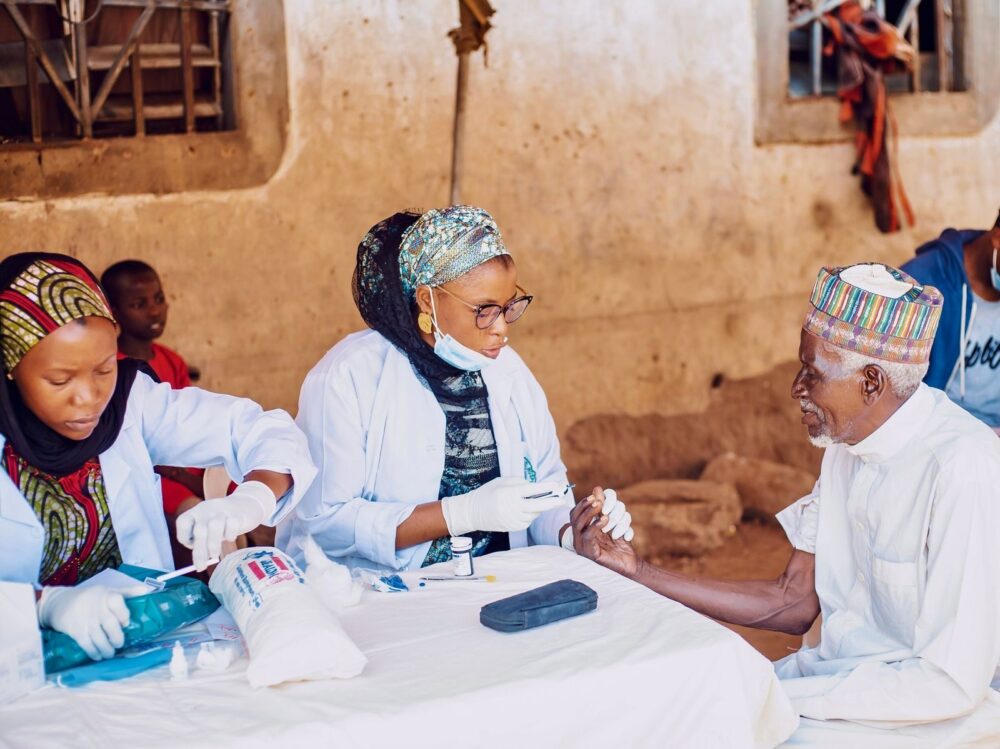
A persistent vulnerability in health system transitions is the potential marginalization of vulnerable groups. In numerous transitioning nations, domestic political environments remain hostile toward funding targeted harm reduction programs or healthcare services for LGBTQ+ populations. Because co-financing agreements increasingly shift financial responsibility onto national treasuries, civil society organizations (CSOs) that deliver up to 40% of frontline healthcare in certain regions face severe funding cliffs if governments exclude them from state budgets.
Addressing this challenge requires proactive diplomatic and financial engagement. During his prior tenure as executive director, Dybul collaborated with agencies like UNAIDS to demonstrate to national finance ministries that ignoring marginalized populations inevitably fuels uncontrolled epidemics that undermine broader macroeconomic stability. By presenting empirical data on the economic costs of unmanaged disease outbreaks, several governments ultimately modified legal frameworks to permit state funding transfers to non-governmental frontline providers. Under Dybul’s renewed leadership, the Global Fund faces the ongoing task of leveraging its institutional influence, alongside targeted philanthropic partnerships, to protect these essential community-led services.

Bipartisan Engagement and the Path Forward
Operating within the contemporary geopolitical climate requires delicate navigation of shifting donor priorities. Despite a prevailing political preference in Washington and other capitals for bilateral aid modalities over multilateral pooling, Dybul expresses strong optimism regarding the potential for strategic alignment. Citing his extensive bipartisan engagement with the United States Congress and multiple presidential administrations, he emphasizes that bilateral and multilateral programs can function harmoniously if all external actors subordinate their efforts to unified, country-led national health plans.
As the international community confronts fiscal austerity and complex geopolitical divisions, Dybul draws parallels to the foundational spirit of 2000. The challenges facing global health today—ranging from declining resource allocations to structural transitions—are significant, but they also provide a powerful catalyst for institutional innovation. By approaching these obstacles with a collaborative, solution-oriented mindset centered firmly on country ownership and community empowerment, the Global Fund aims to secure sustainable health outcomes for the next quarter-century.