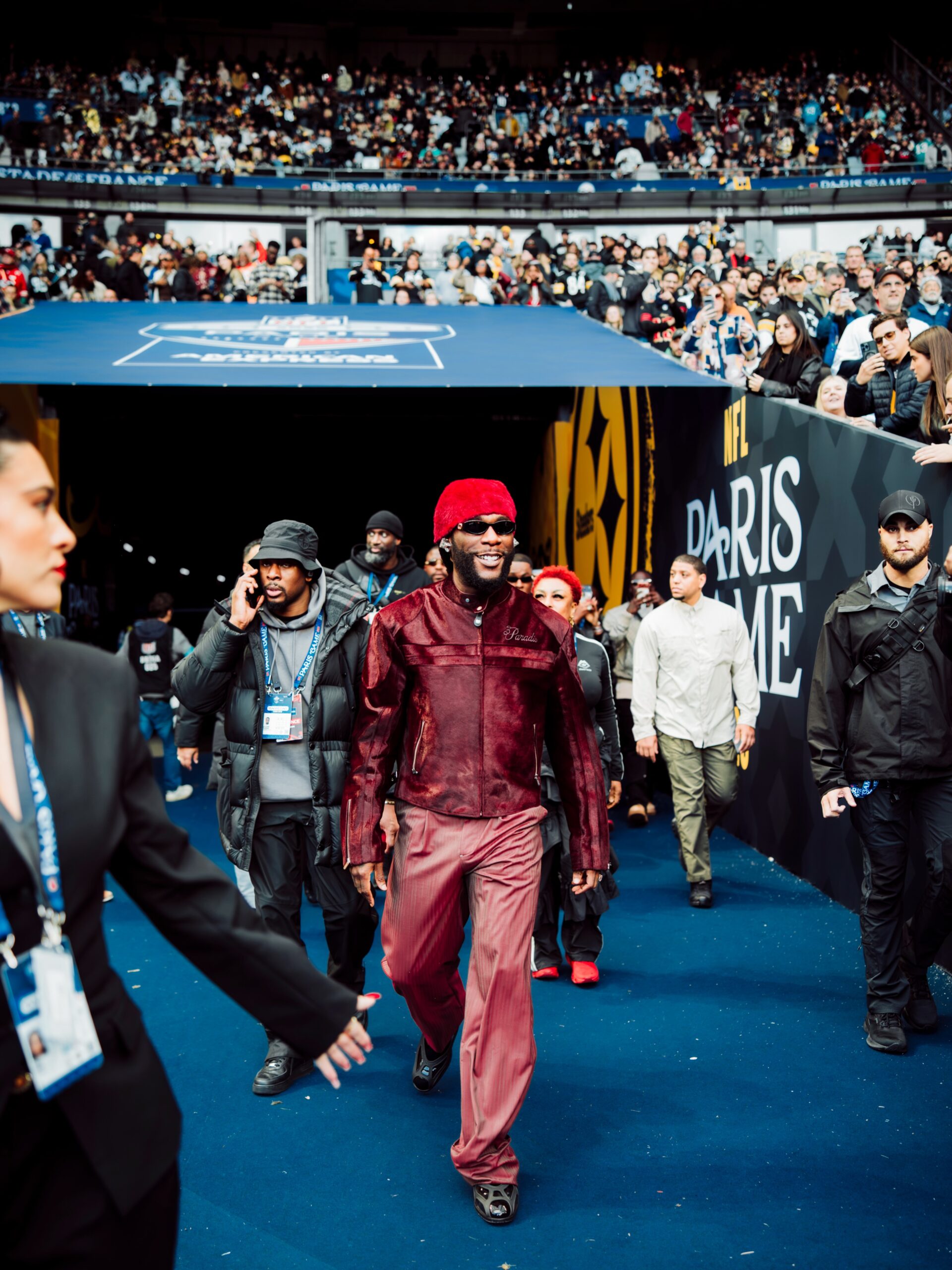
The intersection of global sports and high-culture entertainment reached a new milestone at the historic Stade de France, where Nigerian Grammy Award-winning artist Burna Boy headlined the halftime show for the inaugural NFL Paris Game. The marquee international matchup featured the Pittsburgh Steelers going head-to-head against the New Orleans Saints, but it was the electrifying mid-game musical presentation that commanded international headlines and brought the vibrant sounds of West African music to a massive American football audience in Europe.
Stepping onto the pitch of the 80,000-capacity arena, Burna Boy—born Damini Ebunoluwa Ogulu—delivered a meticulously curated set that underscored his status as a titan of global contemporary music. The performance was not merely a concert segment; it was a cultural exchange that bridged American sports culture, European sports fandom, and African musical dominance.
A Chronological Breakdown of the Performance
The sequence of the halftime show was designed to build momentum, seamlessly transitioning through languages, genres, and guest appearances. Burna Boy’s return to the Stade de France was significant; the venue had previously played host to his historic, record-breaking solo concert, cementing his special relationship with the French capital.
The set commenced with an energetic rendition of "4 Kampe II," his collaborative track with French-Haitian artist Joé Dwèt Filé. As pyrotechnics illuminated the stadium, Burna Boy commanded the stage, effortlessly weaving between English, French, and Haitian Creole to honor the diverse demographics within the stadium. This linguistic fluidity set the tone for an inclusive, borderless musical experience.
Midway through the set, the tempo shifted as French singer Yseult joined the Nigerian superstar on stage. Their dynamic vocal interplay captivated the tens of thousands of fans packed into the stands and millions more streaming the broadcast globally. The performance climaxed with a high-octane medley of Burna Boy’s most globally recognized anthems, including "On the Low," "Ye," and the ubiquitous smash hit "Last Last."
Adding a distinct local flavor to the proceedings, French judo champion Teddy Riner made a special appearance on stage alongside the musical acts, bridging the worlds of elite international athletics and world-class entertainment. The integration of local sports icons emphasized the NFL’s strategy of embedding the event within the fabric of French culture.
High Fashion and Behind-the-Scenes Encounters
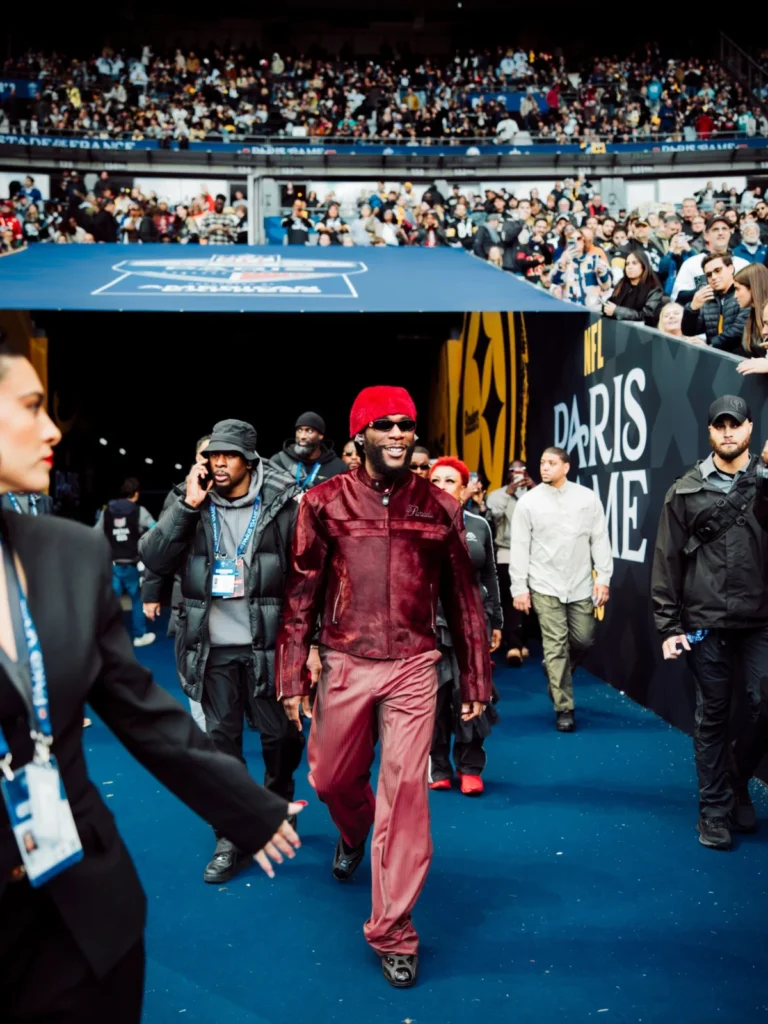
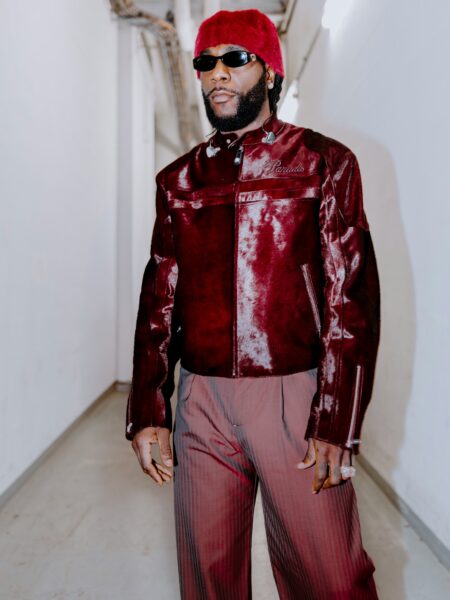
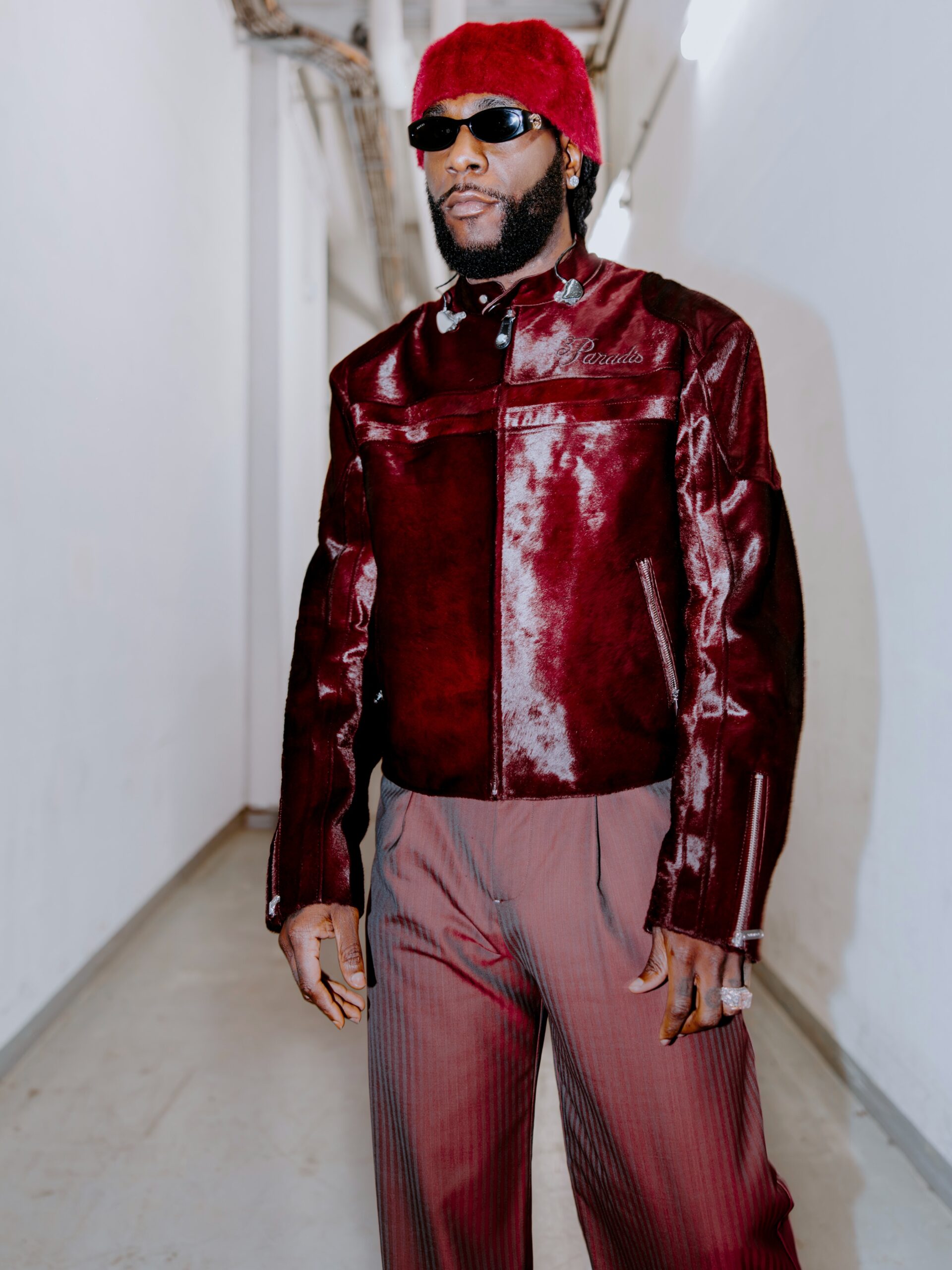
In recent years, Burna Boy has cultivated a reputation as a global fashion icon, and his appearance at the Stade de France was no exception. He arrived and performed in a custom luxury streetwear ensemble curated by the label 3.PARADIS. The centerpiece of his look was a structured, oversized maroon leather jacket paired with tailored cargo trousers, accented by heavy silver neck chains and dark tinted sunglasses. The striking visual presentation matched the grand scale of the production, further cementing his influence in the global fashion sphere.
Away from the blinding stadium lights, the backstage area was a hub for international cross-industry networking. Burna Boy was spotted catching up with French football star Paul Pogba, highlighting the mutual respect shared between Africa’s foremost musical export and Europe’s premier athletic talents.
The Timing and Broader Cultural Ecosystem
The high-profile NFL halftime show coincided with a busy commercial and creative weekend for the artist in Paris. Alongside his musical preparations, the weekend marked the official launch of his debut sneaker collaboration with Swiss sportswear brand On, introduced under the banner of his ongoing "No Giant Stands Alone" campaign. This simultaneous push into athletic footwear design underscores a broader commercial strategy: transforming artistic influence into lifestyle and fashion empires.
Furthermore, Burna Boy’s appearance at the NFL Paris Game builds upon an impressive pedigree of major international sporting events. Rather than confining his performances to traditional arenas and festival circuits, the artist has systematically targeted the world’s biggest sporting stages. His résumé now boasts landmark performances at the NBA All-Star Game and the UEFA Champions League Final kickoff show. These strategic bookings reflect a deliberate effort by sports leagues to appeal to younger, more diverse, and globally minded demographics through Afrobeats.
Implications and the Global Rise of Afrobeats
The integration of an African artist of Burna Boy’s magnitude into an official National Football League fixture hosted in Europe carries profound industry implications. Historically, the NFL’s marquee entertainment slots—most notably the Super Bowl halftime show—have been dominated by North American pop, rock, and hip-hop acts. By expanding international series games to include localized cultural and musical titans, the NFL is actively acknowledging the borderless nature of modern fandom.
For the Afrobeats genre, this performance represents another crucial brick in the wall of global institutional acceptance. As African artists continue to sell out stadiums across North America, Europe, and Asia, their inclusion in mainstream Western sporting events validates the genre’s commercial viability and cultural ubiquity. It signals to corporate sponsors, sports franchises, and event promoters that African music possesses the universal appeal required to anchor major broadcast events.
Industry analysts note that such performances create a multiplier effect, driving streaming numbers, elevating international tour ticket sales, and opening doors for cross-continental brand partnerships. By captivating a traditional American football audience with tracks like "Ye" and "Last Last," Burna Boy demonstrated that language and geographical boundaries are secondary to undeniable stagecraft and musical excellence.
As the echoes of the Stade de France fade, the partnership between international sports bodies and African music pioneers appears stronger than ever. Burna Boy’s triumph in Paris serves as a blueprint for future cultural collaborations, proving that when global sports meet the pinnacle of African music, the result is nothing short of historic.