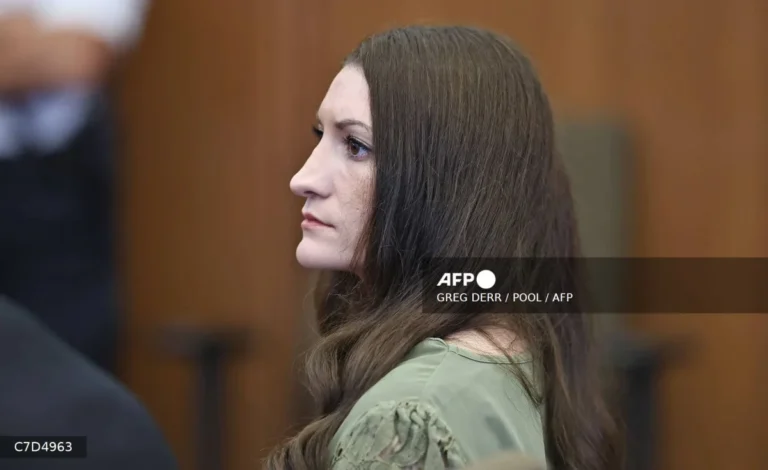
The legal battle surrounding Lindsay Clancy, a 36-year-old Massachusetts mother whose tragic case brought national attention to the severe impacts of postpartum mental illness, is far from over. Following a dramatic court proceeding on Monday, state prosecutors formally announced their intention to seek a retrial after her initial murder trial ended in a hung jury and a subsequent mistrial. The high-profile case has deeply polarized communities across the United States, sparking intense legal, medical, and social debates regarding criminal accountability, the depths of maternal mental health crises, and the adequacy of support systems for new mothers.
Clancy stands accused of the January 2023 strangulation deaths of her three young children: five-year-old Cora, three-year-old Dawson, and eight-month-old infant Callan. Throughout the legal proceedings, the defense has not disputed that Clancy committed the physical acts that caused the children’s deaths. Instead, her legal team mounted a defense predicated on severe mental defect, arguing that Clancy was suffering from acute postpartum psychosis at the time of the incident—a debilitating medical condition that they argue should excuse her from criminal responsibility under the law.
The path to a potential second trial follows weeks of emotionally draining testimony at the Plymouth County Superior Court in Plymouth, Massachusetts. After deliberating for days, a jury consisting of nine women and three men informed the court that they were hopelessly deadlocked. Under United States criminal procedure, a jury must reach a unanimous verdict to either convict or acquit a defendant. Because the panel could not reach a consensus, the presiding judge declared a mistrial, leaving the future of the prosecution uncertain until Monday’s formal announcement by the state.
Procedural Next Steps and Timeline
During Monday’s court appearance, prosecutor Jennifer Sprague addressed the Massachusetts court regarding the state’s path forward. “This would be a retrial. As to what that looks like will depend,” Sprague stated, though she did not immediately elaborate on the exact parameters or specific charges Clancy would face if the proceedings move forward.
The realization of a new trial hinges primarily on a pending legal maneuver by the defense. Judge William Sullivan is currently weighing an outstanding defense motion to dismiss the charges against Clancy entirely. If Judge Sullivan denies this motion, the prosecution’s push for a retrial is expected to proceed. The court has established a firm timeline for these interim decisions; Judge Sullivan has indicated he will render a decision on the motion to dismiss by the next scheduled hearing on November 16. Furthermore, the court has tentatively earmarked March 2027 as the targeted start date for a potential second trial should the case return to the courtroom.
Kevin Reddington, the defense attorney representing Clancy, acknowledged the trajectory of the case, indicating that his legal team would not formally oppose a retrial in the event that Judge Sullivan declines to grant the motion to dismiss the charges. This cooperative procedural stance suggests that both sides are preparing for the possibility of relitigating the complex medical and factual questions that defined the first trial.
The Tragedy of January 2023 and the Defense of Postpartum Psychosis
The events that set this legal drama in motion occurred on a snowy evening in January 2023 at the family’s residence in Duxbury, an affluent coastal town in Plymouth County, Massachusetts. Emergency responders rushed to the home following a distress call and discovered the three children gravely injured. Despite urgent medical intervention, Cora, Dawson, and Callan were pronounced dead.
In the immediate aftermath of the tragedy, Clancy allegedly inflicted severe wounds upon her own neck and wrists before jumping from a second-story window of the family home. The suicide attempt left her severely injured, resulting in permanent paralysis from the waist down and confining her to a wheelchair, a condition that has visibly impacted her appearance and mobility during court appearances.
At the heart of the defense’s strategy was the diagnosis and impact of postpartum psychosis. Medical experts and defense witnesses testified that Clancy experienced a catastrophic descent into mental illness following the birth of her youngest child. Described by psychiatric professionals as a rare and extreme medical emergency, postpartum psychosis affects approximately one to two women out of every 1,000 births. Symptoms frequently include hallucinations, delusions, severe confusion, sleep disturbances, and an overwhelming sense of paranoia or despair.
During the trial, Clancy’s defense presented evidence that she was experiencing a severe psychotic episode characterized by auditory hallucinations, specifically claiming that she heard an internal voice commanding her to harm her children and herself. The defense argued that this detachment from reality entirely eclipsed her ability to understand the nature and consequences of her actions, rendering her legally insane at the time of the incident.
The Prosecution’s Counter-Argument
Conversely, the state’s prosecution team vigorously contested the defense’s characterization of Clancy’s mental state, arguing that her actions demonstrated a clear capacity for planning and an awareness of right and wrong. Prosecutors presented a timeline of events leading up to the tragedy, suggesting that Clancy had meticulously planned the killings during a narrow window of time while her husband, Patrick Clancy, was briefly out of the house running errands.
State attorneys argued that Clancy utilized sophisticated methods to isolate the children and executed the acts with deliberate intent. They maintained that while Clancy may have been experiencing depression or anxiety—common postpartum struggles—she did not meet the stringent legal threshold for insanity. According to the state’s medical experts, Clancy retained the cognitive ability to understand the finality and consequences of her actions, pointing to her alleged efforts to conceal her intentions and her subsequent suicide attempt as evidence of a consciousness of guilt rather than a total psychotic break.
The trial itself was an exhaustive and harrowing legal undertaking, featuring testimony from more than 80 witnesses, including first responders, medical professionals, friends, and family members. The emotional toll of the proceedings extended far beyond the courtroom, drawing intense scrutiny from the public and media outlets nationwide.
Broader Implications for Maternal Mental Health and the Legal System
The case of Lindsay Clancy has ignited a profound national conversation regarding the intersection of severe mental illness and criminal law, particularly concerning mothers who experience psychiatric crises related to childbirth. Advocacy groups, mental health professionals, and legal scholars have closely followed the proceedings, highlighting what they describe as a widespread societal failure to adequately recognize, diagnose, and treat postpartum psychiatric disorders before they escalate into catastrophic tragedies.
Medical professionals have long advocated for a clearer distinction between standard postpartum depression—which, while serious, rarely involves psychosis—and true postpartum psychosis, which represents a psychiatric emergency requiring immediate inpatient hospitalization and intensive intervention. Critics of the current healthcare infrastructure argue that routine postpartum check-ups frequently fail to screen adequately for psychotic symptoms, leaving vulnerable mothers without the safety nets necessary to protect both themselves and their children.
From a legal perspective, the hung jury and the impending prospect of a retrial underscore the persistent difficulties juries face when tasked with evaluating complex psychiatric testimony in cases involving extreme violence. Jurors are frequently asked to reconcile objective, physical tragedies with subjective, medicalized explanations of human behavior that challenge conventional understandings of culpability and morality.
As the legal teams prepare for the potential resumption of proceedings in early 2027, the focus remains fixed on the upcoming November hearing. Judge Sullivan’s decision regarding the defense motion to dismiss will ultimately dictate whether the justice system will attempt once more to establish criminal responsibility in a tragedy that has left an indelible mark on the Duxbury community and the national consciousness alike.