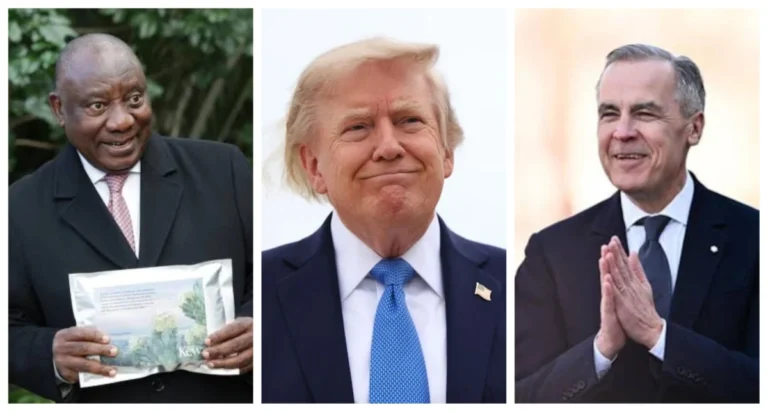
The geopolitical landscape of international trade shifted dramatically following the pivotal November 3 midterm elections, which delivered a stinging rebuke to the current administration. Republicans suffered sweeping losses across the country, forfeiting their majorities in both the United States Senate and the House of Representatives. In an electoral wave reminiscent of historical legislative pivots, Democratic candidates successfully secured victories in traditional Republican strongholds—including historically conservative districts in Texas, Kansas, and South Carolina. This seismic shift in Washington’s legislative power corridors has fundamentally altered the trajectory of global trade negotiations, emboldening international partners and rivals alike to push back against aggressive American tariff policies, delay critical investments, and demand more favorable terms.
The political backlash against the ruling party did not materialize in a vacuum. For months, the American electorate grappled with mounting domestic economic pressures, chief among them the soaring cost of living driven by persistent inflation. These domestic strains were severely exacerbated by aggressive presidential trade tariffs and the lingering fallout from an eight-month geopolitical conflict with Iran. The protracted Middle Eastern hostilities severely disrupted vital global energy supply routes, driving Brent crude oil to a staggering $138.21 per barrel in April—its highest valuation since the global financial crisis of 2008. Consequently, energy shocks translated directly into inflated consumer prices at home, leaving voters deeply dissatisfied with the administration’s economic stewardship and paving the way for the decisive congressional turnover.
With President Donald Trump now forced to answer to a hostile, Democrat-controlled Congress, international observers note that the executive branch’s unchecked authority over foreign economic policy has evaporated. According to trade analysts and global market intelligence gathered by Business Insider Africa, America’s trade rivals and dissatisfied partners are calculating that the White House faces significantly elevated political hurdles in prosecuting further trade wars. This newfound political equilibrium has opened a window of opportunity for major economies—ranging from China and Canada to India and South Africa—to recalibrate their negotiating postures, stall concessions, and seek relief from punitive trade measures.
China Eyes Tariff Relief Amid Legislative Deadlock
Among the most prominent nations positioning to exploit Washington’s weakened political posture is the People’s Republic of China. Beijing has long sought relief from a crippling web of trade restrictions designed to curb its export economy. The tangible impact of these prolonged trade tensions is clearly delineated in official US trade data, which illustrates a significant contraction in the bilateral trade imbalance. Specifically, America’s goods trade deficit with China narrowed substantially from $295.5 billion in 2024 down to $202.1 billion in 2025, underscoring the severe toll that tariffs and supply chain decouplings have exacted on Chinese manufacturers.
However, with a temporary bilateral trade truce fast approaching its expiration date in January 2027, Beijing is widely expected to adopt a more assertive stance. Chinese leadership calculates that President Trump will face fierce legislative resistance from Democrats should he attempt to escalate or prolong trade hostilities. Saul Eslake, a prominent macroeconomist at Corinna Economic Advisory in Australia, noted the strategic opening created by the midterms. "Xi Jinping will recognize that Trump’s authority has been greatly weakened by these results, and will no doubt be thinking about ways of exploiting that," Eslake observed in statements to international news agencies.
Despite the clear strategic implications, official diplomatic channels in Beijing have maintained a measured public posture. Chinese Foreign Ministry spokesperson Mao Ning characterized the legislative shift as an internal domestic matter for the United States, reiterating that Beijing remains committed to managing bilateral differences while seeking areas of expanded cooperation. Nevertheless, economic analysts anticipate that Beijing will press aggressively for lower tariff barriers and a rollback of stringent technological export controls as negotiations resume ahead of the 2027 deadline.
Canada Adopts a Waiting Strategy as Ottawa Stalls Talks
For Canada, the congressional shift offers a welcome reprieve following months of fractured and contentious trade dialogue. Relations between Ottawa and Washington had plunged into a deep freeze due to relentless disagreements over market access, intellectual property, and sweeping American tariffs on Canadian steel, aluminum, and manufactured goods. Trade talks completely stalled in August after Canadian Prime Minister Mark Carney’s administration firmly rejected stringent American demands that Ottawa deemed economically untenable.
Rather than capitulating to Washington’s pressure, Canadian leadership signaled a willingness to absorb short-term economic friction rather than lock the country into a suboptimal, long-term agreement. In an interview with political media outlets on October 30, Prime Minister Carney was asked directly whether Canada could successfully hold out against American economic pressure until a potential successor to the presidency took office. His response was unequivocal: "Well, if that’s what it takes, yeah."
This resolute Canadian stance is anticipated to find considerable ideological and political backing within the newly empowered Democratic legislative caucus. Key congressional figures, including influential Democratic Senator Ron Wyden—a senior member of the powerful Senate Finance Committee—have repeatedly criticized the White House’s tariff regime. Wyden and other lawmakers have publicly argued for the immediate removal of import levies on Canadian commodities, emphasizing that these duties inflict unnecessary financial pain on businesses and consumers on both sides of the border.
India Retains Flexibility to Delay Concessions
South Asia is similarly poised to benefit from the altered political landscape in Washington, with New Delhi gaining vital negotiating flexibility as it seeks relief from heavy import duties. Throughout 2025, trade relations between the United States and India deteriorated sharply after Washington slapped tariffs of up to 50% on a wide array of Indian exports. These punitive measures were deployed amid broader geopolitical disagreements, most notably India’s continued procurement of discounted Russian crude oil. The resulting trade fallout heavily impacted Indian sectors specializing in textiles, jewelry, and footwear, while simultaneously driving up input costs for American retail importers.
After months of grueling diplomatic friction, both nations managed to establish a provisional framework in February 2026 aimed at reducing tariff rates on the majority of Indian goods down to an 18% ceiling. Despite this preliminary breakthrough, final implementation stalled as negotiators wrangled over remaining structural details. Indian Commerce Minister Piyush Goyal noted that while the agreement had advanced to the final drafting stages, New Delhi would refuse to sign unless it secured concrete competitive advantages over rival exporting nations.
Reinforcing this cautious approach, Indian Finance Minister Nirmala Sitharaman stated in October that extracting any further policy concessions from domestic industries would prove "very, very difficult." The sweeping Democratic victory in the midterms is expected to fortify India’s resolve. With President Trump now subject to heightened congressional scrutiny and restricted legislative maneuvering room, New Delhi feels increasingly empowered to resist additional American demands without fear of immediate unilateral escalation.
South Africa Eyes Diplomatic Reset Amid AGOA Crisis
The implications of the US midterm elections extend profoundly into the Southern Hemisphere, offering South Africa a glimmer of hope amid a severe bilateral trade crisis. Pretoria recently absorbed a heavy economic blow when the Washington administration formally announced on November 2 that South Africa would be stripped of its beneficiary status under the African Growth and Opportunity Act (AGOA) effective January 1, 2027. This impending exclusion followed months of escalating diplomatic friction regarding South Africa’s domestic governance and foreign policy alignments.
The impending termination of AGOA threatens preferential duty-free access for critical South African exports, including automotive vehicles, citrus fruits, and wine. This looming exclusion compounds existing trade headwinds, particularly after South African agricultural exports to the United States suffered a steep 28% year-on-year decline during the second quarter of 2026. Initially, South African President Cyril Ramaphosa adopted a pragmatic and stoic tone regarding the looming termination, urging his citizens not to panic and famously remarking, "We should not go out and jump off tall buildings and think that this is the end of the world."
However, President Ramaphosa’s public demeanor underwent a striking transformation following the certification of the US midterm election results. Welcoming the Democratic takeover of the legislative branch during a public address on November 4, Ramaphosa declared, "We have seen that the Democrats have taken control of the Senate and of the House, and the people of America have spoken." He asserted that the shifting political winds in Washington could inaugurate an entirely new era in bilateral and global relations.
"We’re hoping that, on a bilateral basis, there will be a coming together of minds, where we will find a proper path forward on geopolitics as well as on trade matters and investment matters," Ramaphosa added. Pretoria is acutely aware that congressional Democrats have historically been more supportive of multilateral trade frameworks like AGOA and less inclined toward unilateral tariff mechanisms. Consequently, South African diplomats are preparing to leverage the new congressional power dynamic to lobby for a reconsideration of the AGOA exclusion before the 2027 deadline takes effect.
Broader Economic Implications and Global Outlook
The collective reaction of global trading partners to the US midterm results highlights a profound structural vulnerability in unilateral executive trade policy. When trade strategy relies heavily on presidential decree without robust bipartisan consensus, domestic political shifts can instantaneously alter a nation’s international leverage. As inflation persists, supply chains adapt, and foreign governments coordinate their responses, the ability of the White House to dictate terms to the global economy has been severely curtailed.
Economists and trade policy experts suggest that the next two years will be defined by protracted defensive positioning rather than sweeping trade expansion. Nations such as China, Canada, India, and South Africa are expected to utilize domestic legal avenues, diplomatic alliances, and the newly emboldened Democratic legislative majority to run out the clock on aggressive trade policies. Whether this legislative deadlock results in permanent structural reforms to US trade law or merely provides a temporary tactical pause remains one of the defining economic questions of the decade. Nonetheless, the message from foreign capitals is clear: Washington’s monopoly on trade coercion has been successfully challenged, setting the stage for a more fragmented, highly negotiated global marketplace.