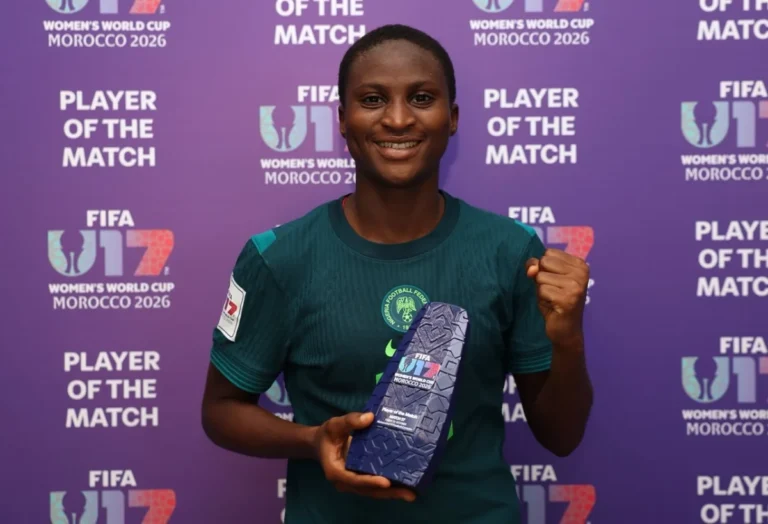
The stage is set for a high-stakes encounter as Nigeria’s U-17 women’s national team, the Flamingos, aim to secure a coveted spot in the semi-finals of the FIFA U-17 Women’s World Cup. Under the tactical guidance of head coach Akeem Busari, the Nigerian side has navigated a challenging path to the last eight, demonstrating a resilient blend of attacking flair and defensive fortitude. However, standing in their way is a disciplined Venezuela squad that has already signaled its intent by eliminating heavyweights Germany. The match, scheduled for Sunday, represents more than just a progression in the tournament; it is a test of character for a young squad looking to etch their names into Nigerian football history.
The Path to the Quarter-Finals: A Chronology of Growth
The Flamingos’ journey in the 2026 edition of the tournament has been one of adaptation and relentless improvement. Their campaign began with a sobering reality check in the form of a defeat to Poland. Rather than allowing the early setback to derail their morale, the team utilized the result as a catalyst for a tactical overhaul.
Following the opening match, the team showcased their offensive potential in a decisive victory over Puerto Rico. This momentum was carried into their high-profile clash against the defending champions, DPR Korea. In a performance that earned widespread acclaim, the Flamingos dismantled the Korean side with a 3-1 scoreline, signaling that they were a force to be reckoned with. Their momentum continued into the round of 16, where they overcame a stubborn Mexico side 2-1. This string of victories has not only bolstered the team’s confidence but also cemented their reputation as one of the most prolific attacking units in the competition.
Venezuela’s path, while different, is equally commendable. The South American side survived a tough group stage, highlighted by a dramatic 3-2 comeback victory over Zambia, where a stoppage-time winner kept their dreams alive. Their most significant achievement, however, came in the round of 16 when they neutralized Germany. By securing a 1-0 win through an early strike from Diana Bravo, Venezuela proved that they possess the defensive discipline necessary to stifle world-class opposition.
Key Personnel: The Duel of Individual Brilliance
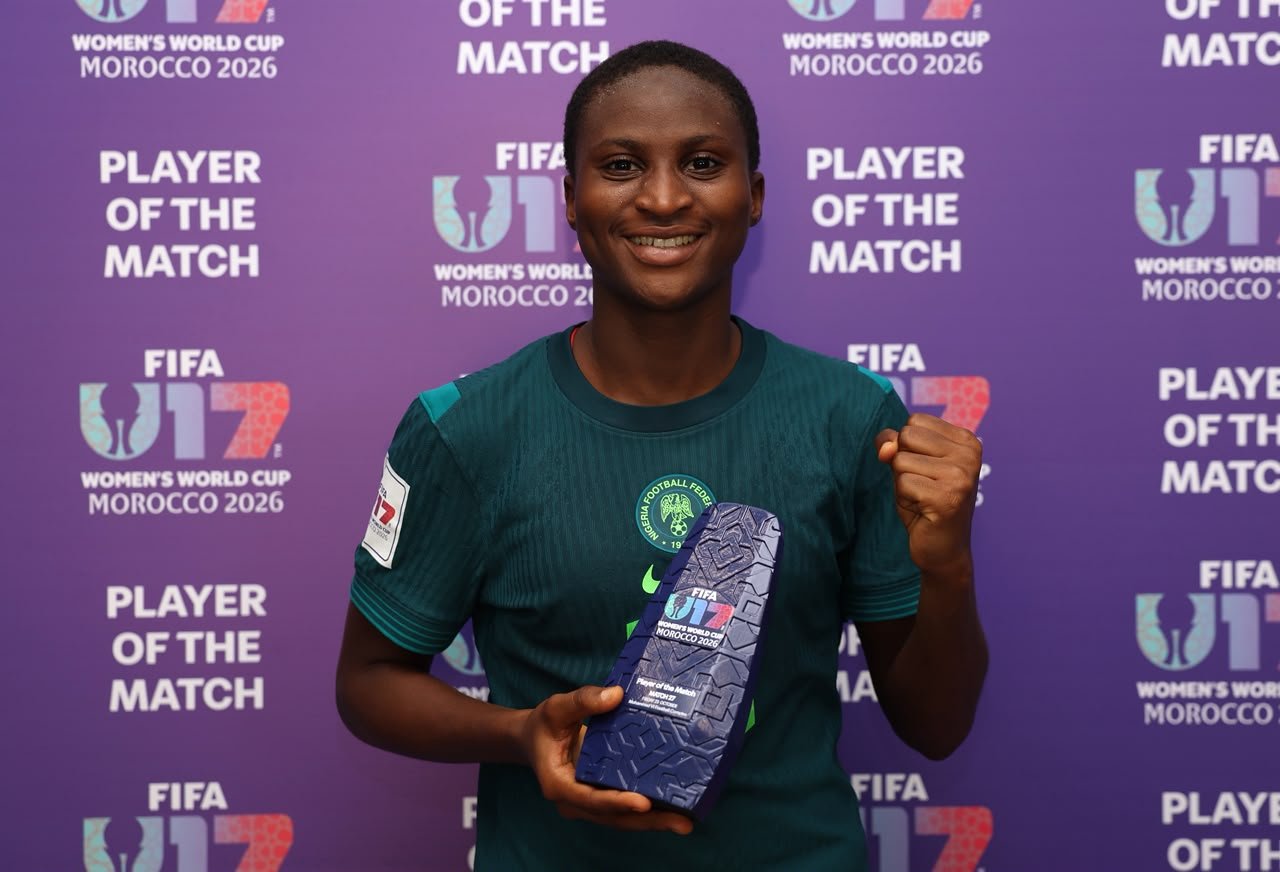
While the outcome will ultimately be determined by collective effort, five specific players have emerged as the potential architects of victory for their respective nations.
For Nigeria, Oluebube Umejiaku has been the heartbeat of the attack. With her clinical finishing and vision, she has found the back of the net against Poland, DPR Korea, and Mexico. Beyond her scoring, her ability to drift into pockets of space and provide crucial assists—such as the one for Precious Oscar against Puerto Rico—makes her a multifaceted threat.
Complementing her is Oluwakemi Adegbuyi, whose energetic presence has been a nightmare for opposing defenders. Adegbuyi’s ability to score in high-pressure moments, notably against DPR Korea, provides the Flamingos with a vital outlet. Her agility allows her to find gaps even when the opposition attempts to pack the midfield, making her a critical component in Busari’s offensive strategy.
Defensively, the Flamingos have found an unlikely hero in goalkeeper Jane Ijirigho. Standing at an imposing 1.92 meters, Ijirigho is the tallest player in the tournament. Her performance against Mexico was a masterclass in shot-stopping; her fingertip save against Citlalli Reyes and her redirection of Kemberly Garcia’s long-range strike onto the crossbar were pivotal in maintaining Nigeria’s lead. Her height offers a defensive insurance policy that few other teams in the tournament possess.
Venezuela will look to counter this with the attacking prowess of Diana Bravo and the late-game heroics of Andrea Suárez. Bravo’s goal against Germany in the fifth minute serves as a warning: Nigeria cannot afford a slow start. If Venezuela manages to secure an early lead, they have proven they are capable of holding it under extreme duress. Suárez, meanwhile, provides the "clutch" factor. Her ability to remain composed in the final minutes of a game ensures that Venezuela remains a threat until the final whistle, forcing opponents to maintain high levels of concentration throughout the duration of the match.

Tactical Analysis and Expected Dynamics
The tactical battle on Sunday will likely hinge on whether Nigeria can break down a low-block defense. Venezuela demonstrated against Germany that they are comfortable sitting deep, absorbing pressure, and relying on tactical fouls and quick transitions to maintain their lead.
For the Flamingos, the key will be patience. Busari’s side has shown a propensity for direct, attacking football, but against a team as disciplined as Venezuela, they must avoid falling into the trap of over-committing their defensive line. The midfield battle will be intense; Nigeria must recycle possession efficiently to prevent Venezuela from hitting them on the counter-attack, a scenario that would bring Ijirigho’s shot-stopping abilities into play once more.
Data from the tournament suggests that Nigeria’s efficiency in the final third is high, but their defensive organization has occasionally been stretched. If the Flamingos can control the tempo early, they force Venezuela out of their defensive shell. Conversely, if Venezuela succeeds in frustrating the Nigerian attack, the match may descend into a war of attrition where individual mistakes—and individual brilliance—will decide the outcome.
Broader Implications for Women’s Football
The stakes extend beyond the immediate reach of a semi-final berth. For Nigeria, a successful run in this tournament would underscore the effectiveness of their youth development programs and further elevate the profile of the Flamingos on the global stage. Increased investment in women’s football in Nigeria has yielded consistent results, and a semi-final appearance would be a significant milestone for the federation.
For Venezuela, this tournament represents a turning point in their international standing. Having already knocked out a traditional powerhouse like Germany, the South Americans have already defied expectations. A victory over Nigeria would be a statement to the rest of the world that their football infrastructure is producing world-class talent capable of competing at the highest levels.

Official Perspectives and Preparation
While both camps have maintained a guarded approach in the lead-up to the match, the focus has been on physical recovery and tactical refinement. Coach Akeem Busari has emphasized that the team’s success thus far is a product of unity, noting that no single player is responsible for the team’s progress. "We have a group that understands the assignment," a team source suggested. "The victory over DPR Korea gave us the belief that we can beat anyone, but the quarter-final is a different beast entirely."
Similarly, the Venezuelan technical staff has focused heavily on video analysis, specifically dissecting the movement of Nigeria’s forward line. The sentiment in the Venezuelan camp is that they have already achieved the "impossible" by beating Germany, and they now enter the quarter-finals with the belief that they are not just participants, but contenders.
Conclusion: A Clash of Philosophies
As the Flamingos prepare to step onto the pitch in Morocco, the narrative is clear: they must match their technical quality with the mental maturity required for knockout football. Nigeria enters the game as the higher-scoring side, but they face an opponent that thrives on defensive resilience and psychological warfare.
Whether it is Umejiaku’s clinical finishing, Ijirigho’s commanding presence in goal, or the tactical discipline of the Venezuelan unit, the quarter-final is set to be a defining moment for these young athletes. As the world watches, the Flamingos look to prove that their journey in the 2026 FIFA U-17 Women’s World Cup is far from over, and that they possess the grit to continue their march toward the title. The match represents the ultimate intersection of ambition, preparation, and the unpredictable nature of football. Regardless of the final score, both teams have already demonstrated that the future of women’s international football is in capable, determined hands.