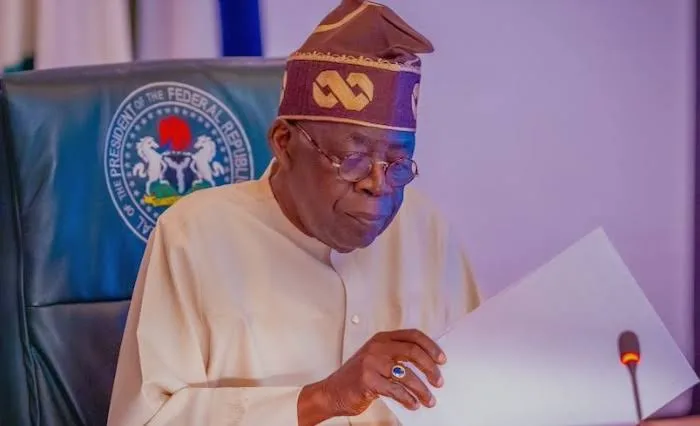
The political and socio-economic landscape of the Niger Delta region has once again turned its focus toward the oil-rich communities of Ogoniland, following a resolute demand by youth leaders for the federal administration to act on long-standing grievances. A formidable coalition representing the younger demographic of the area has formally appealed to President Bola Tinubu and the Federal Government to transition recommendations from ongoing dialogue processes into actionable state policies. At the core of this renewed agitation is the persistent call for the creation of Bori State, a structural adjustment the coalition argues is vital for achieving genuine political inclusion, resource control, and equitable administrative representation.
The Coalition of Ogoni Youth Groups (COYOG), speaking through a joint statement endorsed by 17 prominent youth leaders—including Chief Kpakol Kpakol of the Ogoni National Youth Congress and Gen. Ikeh Albert Jnr of the Khana Youth Assembly—issued explicit warnings regarding the integrity of the ongoing talks. The youth leaders caution that political actors and entrenched elite interests must not be allowed to co-opt or subvert the dialogue framework for narrow, partisan objectives. By framing the current engagements as a historic continuation of the broader struggle for environmental remediation, economic justice, and self-determination, the coalition insists that the eventual outcomes must authentically mirror the collective aspirations of the Ogoni populace rather than serve as tools for political patronage.
Historical Context and Background of the Ogoni Struggle
To fully grasp the gravity of the demands currently placed before the federal administration, it is essential to examine the decades-long trajectory of the Ogoni struggle. Located in Rivers State, Ogoniland has historically served as a major contributor to Nigeria’s national wealth through extensive crude oil exploitation, which began in the late 1950s under multinational oil conglomerates, most notably Shell Petroleum Development Company. However, this massive extraction came at a devastating ecological cost. Decades of oil spills, gas flaring, and environmental degradation severely compromised the local ecosystem, destroying traditional livelihoods centered around farming and fishing, and leaving communities grappling with severe health hazards.
The institutional neglect and environmental devastation catalyzed intense local resistance in the early 1990s, spearheaded by the Movement for the Survival of the Ogoni People (MOSOP) under the leadership of environmental rights activist Ken Saro-Wiwa. The peaceful mass mobilization demanding environmental justice, resource control, and political autonomy was met with severe state repression, culminating in the tragic execution of Saro-Wiwa and eight other Ogoni leaders in November 1995. This watershed moment drew intense international condemnation, isolating Nigeria diplomatically and placing the plight of the Ogoni people on the global human rights agenda.
In the decades following the return to civilian rule in 1999, successive administrations attempted to address the wounds of the past through various reconciliation and remediation initiatives. The most notable of these was the landmark 2011 United Nations Environment Programme (UNEP) environmental assessment report on Ogoniland. The report detailed catastrophic levels of hydrocarbon pollution in soil and groundwater, prompting the establishment of the Hydrocarbon Pollution Remediation Project (HYPREP) in 2016 to oversee the clean-up process. Despite these institutional interventions, local stakeholders have frequently voiced frustration over the slow pace of remediation, the lack of sustainable economic empowerment, and lingering political marginalization within the architecture of Rivers State and the Nigerian federation.
Structural Demands and Governance Framework
Beyond environmental remediation, the contemporary dialogue process has increasingly focused on structural political restructuring as the ultimate panacea for the historical marginalization of ethnic minorities in the Niger Delta. The creation of Bori State has thus emerged as a non-negotiable benchmark for the Ogoni leadership. Proponents of the state argue that Ogoniland, comprising distinct local government areas such as Khana, Gokana, Tai, and Eleme, possesses the demographic weight, economic viability, and cultural homogeneity required to function as an autonomous administrative entity within the Nigerian federal structure.
The coalition contends that the current geopolitical arrangement dilutes the political influence of the Ogoni people, restricting their capacity to determine their own developmental priorities. By carving out Bori State—named after the traditional headquarters of the Ogoni people—advocates believe the region would secure direct access to federal allocations, enhance local governance efficiency, and provide adequate representation in national legislative and executive bodies.
In their comprehensive communique, COYOG laid out specific governance benchmarks to ensure that the dialogue process moves beyond rhetorical commitments. The youth representatives called for the immediate issuance of a formal, binding interim Memorandum of Understanding (MoU). This document, according to the group, must explicitly delineate institutional responsibilities, implementation timelines, funding allocations, rigorous monitoring mechanisms, and regular public reporting schedules to maintain transparency and public trust.
Furthermore, the coalition demanded the formal inauguration of a representative Presidential Implementation Committee. This body would be vested with clear statutory mandates, measurable milestones, and adequate bureaucratic authority to supervise the execution of the recommendations generated by the Ogoni Dialogue Committee.
“We want Tinubu to establish a representative Presidential Implementation Committee with a clearly defined mandate, measurable milestones, and sufficient authority to coordinate the implementation of the recommendations,” the coalition stated. “The demands contained in the Ogoni Dialogue Committee report should not be reduced to political promises or ceremonial declarations. The demand for Bori State is a fundamental question of political inclusion. Any genuine effort to address the Ogoni question must engage this demand openly and seriously.”
Financial Transparency and Leadership Clarity
Another critical dimension of the coalition’s recent intervention centers on financial accountability and internal organizational governance. Amid circulating reports regarding a proposed $300 million development fund earmarked for regional interventions, COYOG has demanded absolute transparency from the handlers of the process. The youth groups insisted on receiving verifiable, publicly accessible data concerning the exact origin of the funds, the specific development purposes they are intended to serve, and the structural management arrangements established to disburse and monitor the capital. The coalition maintained that financial opacity would severely undermine the credibility of the entire dialogue initiative, making strict accountability a non-negotiable prerequisite for continued community engagement.
In tandem with financial transparency, the leadership of the dialogue process itself has become a point of internal administrative focus. To prevent factionalization and mitigate the risk of external manipulation by opportunistic politicians, COYOG moved quickly to clarify the hierarchical structure of the engagement. The group officially reaffirmed Professor Don Baridam as the substantive leader of the Ogoni Dialogue Committee, warning unauthorized individuals against parading themselves with parallel authority or attempting to negotiate on behalf of the Ogoni people outside the established institutional framework.
The coalition emphasized that maintaining a unified front is vital for preserving the moral authority of their demands. By rallying around recognized elders and institutional structures, the youth leadership hopes to present a cohesive negotiating posture to the federal administration.
Broader Implications and Socio-Political Impact
The insistence by Ogoni youth groups on the implementation of dialogue recommendations—particularly the creation of Bori State—carries profound implications for Nigeria’s broader federalist discourse and the stability of the Niger Delta. For years, demands for state creation have remained a recurrent theme in Nigeria’s constitutional debates. Ethnic minorities and marginalized nationalities frequently view the creation of new states as the most effective structural remedy against perceived domination by major ethnic blocs and as a mechanism for bringing government closer to the grassroots.
Should the federal government engage seriously with the demand for Bori State, it could trigger a wider conversation regarding the restructuring of the Nigerian federation and set a precedent for other ethnic nationalities agitating for administrative autonomy. Conversely, dismissing or ignoring these structural aspirations risks reigniting tensions in a region that remains strategically vital to the national economy due to its heavy concentration of oil and gas infrastructure. Maintaining peace and security in the Niger Delta depends heavily on the government’s ability to manage expectations, deliver tangible infrastructural and environmental dividends, and foster inclusive political dialogue.
As the political class looks ahead to future national developments, the ball remains squarely in the court of the federal administration. Observers note that President Tinubu’s response to the demands articulated by the Coalition of Ogoni Youth Groups will serve as a definitive litmus test of the administration’s commitment to genuine reconciliation, structural equity, and the rule of law in the Niger Delta. For now, the Ogoni youth have drawn a clear line in the sand, signaling that their generation is fully prepared to hold leadership accountable to the promises of justice, dignity, and sustainable development.