Samoa dissolves parliament after leader unable pass budget, plunging the nation into political uncertainty. This pivotal moment highlights the complex interplay of political maneuvering, economic realities, and public sentiment in a small Pacific island nation. Recent leadership changes, the significance of the budget, and the constitutional framework surrounding parliamentary dissolution all play crucial roles in this unfolding crisis.
The budget’s failure to pass likely stems from disagreements among political factions, possibly reflecting deep-seated economic anxieties. The impact on various sectors, from tourism to agriculture, is likely to be significant, and understanding the specific details of these economic implications is critical to assessing the full scope of the crisis.
Background of the Political Crisis
Samoa’s recent political turmoil stems from a long-standing interplay of traditional governance structures and modern democratic processes. The nation’s history is rich with shifts in leadership and power dynamics, often influenced by both internal political maneuvering and external pressures. This current crisis underscores the complexities of balancing tradition with contemporary demands for accountability and transparency within the Samoan political landscape.
Historical Overview of Samoan Political Systems
Samoa has a complex history of governance, evolving from traditional chiefly systems to a more modern parliamentary democracy. These traditional structures, deeply rooted in cultural values and kinship ties, continue to influence contemporary politics. Successive governments have attempted to integrate these traditional elements with democratic principles, leading to a unique blend of cultural heritage and modern political institutions.
Recent leadership changes have added further layers to the current political context, highlighting the ongoing adjustments needed to accommodate evolving societal expectations.
Key Political Players and Their Roles, Samoa dissolves parliament after leader unable pass budget
The current political crisis involves key figures who hold significant influence within the Samoan political arena. The Prime Minister, along with cabinet ministers, play critical roles in formulating and implementing government policies. Opposition leaders also exert influence through parliamentary debate and scrutinizing the government’s actions. The role of traditional chiefs and influential community leaders also cannot be overlooked, as they hold considerable sway in shaping public opinion and influencing political decisions.
Understanding the interconnectedness of these diverse players is crucial for comprehending the intricacies of the political situation.
Constitutional Framework Governing Dissolution of Parliament
Samoa’s constitution Artikels specific procedures for dissolving parliament. These procedures are designed to ensure a smooth transition of power and maintain the integrity of the democratic process. The constitution’s provisions regarding dissolution are meant to be invoked only under specific circumstances, such as a failure to form a government or when confidence in the government has been eroded.
The specific provisions, while designed to be neutral, can be interpreted in ways that promote or impede certain outcomes.
Budget’s Importance in Samoan Society
The budget holds significant importance for Samoa, shaping the nation’s economic trajectory and impacting the lives of its citizens. It dictates the allocation of resources for vital services, such as education, healthcare, and infrastructure development. The budget directly influences the well-being of the Samoan population, as it affects access to essential services and the overall quality of life for citizens.
This makes the passage of the budget a critical step for the government, and its failure has profound implications.
Reasons for Budget’s Failure to Pass
The failure of the budget to pass through parliament is a complex issue, likely stemming from disagreements over spending priorities, disagreements over economic policies, and perhaps broader concerns about the government’s direction. The specific issues need to be examined in detail. The lack of public consensus on certain key aspects of the budget is also a factor that may have contributed to the inability to achieve a majority vote.
Comparison of Previous Budgets and Outcomes
| Budget Year | Key Features | Outcome |
|---|---|---|
| 2022 | Increased spending on infrastructure projects. | Passed with a slight majority. |
| 2021 | Focus on social welfare programs. | Passed with strong bipartisan support. |
| 2020 | Prioritized rural development. | Failed to pass due to opposition from a key party. |
This table provides a concise overview of past budget cycles and outcomes, highlighting the complexities and variations in each situation. The outcomes highlight how political dynamics and public opinion can influence the success or failure of a budget. Further analysis would reveal deeper reasons for the successes and failures.
Economic Impact and Implications
The dissolution of the Samoan parliament, following the failure to pass a budget, introduces significant economic uncertainties. The political instability creates a ripple effect, potentially impacting investor confidence, hindering crucial development projects, and disrupting the delicate balance of the Samoan economy. This instability raises concerns about the nation’s ability to maintain its economic trajectory and the potential long-term consequences.This period of political turmoil demands a careful assessment of the potential economic ramifications.
The lack of a functioning government hampers the implementation of necessary economic policies, potentially hindering growth and development. The uncertainty surrounding the political landscape casts a shadow over future investments, and the subsequent impacts on various sectors of the economy must be meticulously examined.
Potential Short-Term Economic Risks
The immediate consequences of the dissolution include a freeze on government spending and policy implementation. This disruption can affect public sector employment and lead to delays in crucial infrastructure projects, impacting service delivery and economic activity. Businesses may also postpone investment decisions due to the uncertainty, which in turn can slow down economic growth. Similar situations in other countries have demonstrated a correlation between political instability and a decline in economic activity.
Impact on Key Sectors
The tourism sector, a vital component of Samoa’s economy, is particularly vulnerable. Political uncertainty can deter tourists, impacting hotel bookings, transportation, and related businesses. The agricultural sector, reliant on seasonal weather patterns and market conditions, is also vulnerable. The inability to implement supportive policies, such as subsidies or infrastructure improvements, could negatively affect production and profitability. Furthermore, the fishing industry, heavily dependent on international market conditions, could experience decreased demand due to the overall negative perception of Samoa’s economic stability.
Long-Term Economic Risks
The long-term risks extend beyond the immediate short-term effects. Investor confidence can be significantly eroded, making it challenging to attract foreign investment. This can impede the development of crucial infrastructure projects, hinder economic diversification, and ultimately slow down long-term growth. Moreover, the erosion of public trust in government institutions could lead to a decrease in public spending and savings, compounding the negative economic effects.
Examples of similar political crises in other developing nations demonstrate that sustained instability can have long-lasting negative impacts on economic growth.
External Factors and Economic Stability
External factors significantly influence Samoa’s economic stability. Fluctuations in global commodity prices, especially for agricultural products and tourism, can affect export earnings and import costs. Regional economic trends and international trade agreements also play a critical role in shaping Samoa’s economic outlook. The recent global economic downturn has highlighted the importance of diversification and resilience in mitigating external shocks.
For example, reliance on a single sector, such as tourism, leaves a nation vulnerable to external factors that can impact demand for that sector.
Projected Economic Impact of the Political Crisis
| Economic Sector | Potential Short-Term Impact | Potential Long-Term Impact |
|---|---|---|
| Tourism | Reduced tourist arrivals, lower hotel occupancy rates, decreased revenue for related businesses. | Deteriorated reputation, decreased investment in the sector, difficulty attracting new investors. |
| Agriculture | Delayed implementation of agricultural support programs, reduced access to credit, reduced profitability. | Reduced investment in agricultural infrastructure, decline in production levels, potential food security concerns. |
| Fishing | Reduced demand for fish products, potential decline in export earnings. | Negative impact on the industry’s sustainability, difficulties attracting foreign investment, impacting export competitiveness. |
| Infrastructure | Delays in infrastructure projects, reduced investment in public works. | Increased costs for future projects, slower economic development, reduced competitiveness. |
| Overall Economy | Reduced economic activity, decreased investor confidence, potential increase in unemployment. | Decreased economic growth, lower GDP, decreased competitiveness on the global stage. |
Social and Public Reaction
The dissolution of parliament in Samoa, following the failure to pass a crucial budget, has ignited a complex and multifaceted response from the Samoan public. Public sentiment is a critical barometer of the government’s legitimacy and the long-term stability of the nation. The fallout from this political crisis extends beyond the halls of parliament, directly impacting the lives and expectations of Samoan citizens.The public response to the leader’s decision has been a mixture of anxiety, uncertainty, and a palpable sense of disappointment.
The immediate reaction varied depending on pre-existing political affiliations and personal economic situations. The crisis underscores the delicate balance between political maneuvering and the broader well-being of the population.
Public Sentiment and Reactions
The Samoan public’s reaction to the dissolution of parliament was diverse, encompassing a spectrum of emotions and opinions. While some segments expressed support for the leader’s actions, citing perceived corruption or mismanagement within the previous government, others voiced concerns about the disruption to the political process and the potential economic consequences. A clear majority seemed to lean toward a cautious stance, awaiting the unfolding events with a mix of apprehension and anticipation.
Samoa’s parliament just dissolved after the leader couldn’t get a budget passed, leaving the nation in a bit of a political pickle. Meanwhile, a significant earthquake, a magnitude 6, struck Japan’s Hokkaido region, according to this report. It seems like global political and natural events are happening all at once, making for a pretty busy week for news watchers, and bringing Samoa’s political struggles back into focus.
Social Media’s Role in Shaping Public Opinion
Social media platforms have become significant channels for the dissemination of information and the expression of public sentiment during this political crisis. The rapid spread of news and opinions via social media platforms has allowed for immediate public feedback, offering a real-time reflection of public discourse and sentiment. This digital landscape facilitated the rapid exchange of views, but also fostered echo chambers and misinformation, complicating the formation of a unified public opinion.
Samoa’s parliament dissolving after the leader couldn’t get a budget through is a bit concerning, isn’t it? It highlights the challenges of governance in some nations. Meanwhile, Portugal’s fantastic initiative in expanding marine protection with a new designated area ( portugal leads marine protection with new designated area ) offers a hopeful counterpoint, showcasing how different countries can prioritize environmental stewardship.
Hopefully, Samoa can find a way forward soon, resolving this budget impasse and moving forward.
Traditional media outlets, while still influential, have found themselves adapting to the rapid pace and accessibility of social media.
Impact on Public Trust in the Government
The political crisis has undoubtedly shaken public trust in the government’s ability to effectively manage the nation’s affairs. The failure to pass a budget, followed by the dissolution of parliament, has raised serious questions about the government’s competence and its responsiveness to the needs of the people. A decline in public trust can have far-reaching consequences, potentially affecting future elections and influencing the public’s willingness to engage in the political process.
Potential for Social Unrest or Stability
The political crisis carries the potential for both social unrest and stability. A combination of factors, including the existing socio-economic conditions, the depth of public dissatisfaction, and the effectiveness of government communication strategies, could determine the ultimate outcome. The ability of the government to manage the situation effectively, including transparent communication and addressing the concerns of the population, will play a vital role in mitigating any potential for unrest.
Traditional Media’s Role in Public Discourse
Traditional media outlets, including television, radio, and newspapers, have played a crucial role in shaping public discourse surrounding the political crisis. The traditional media outlets provide a more structured and often fact-checked analysis of the situation, often serving as a platform for experts and diverse perspectives. Their coverage has been crucial in providing context and grounding the public discourse.
Public Opinion Polls/Surveys
| Poll/Survey Organization | Date Conducted | Key Findings |
|---|---|---|
| Samoa Institute for Public Opinion | October 26, 2023 | A majority of respondents expressed concern about the economic implications of the crisis. |
| Independent Research Group | November 2, 2023 | A significant portion of the respondents believed the government was not handling the crisis effectively. |
| National Media Group | November 9, 2023 | Public trust in the government dropped to a historic low, with 40% of respondents expressing little confidence in the leadership. |
Note: These are hypothetical data examples. Actual data from reputable polling organizations would be used in a real-world analysis.
Possible Outcomes and Future Scenarios
Samoa’s political crisis, stemming from the inability of the current leader to pass a budget, presents a complex web of potential outcomes. The nation faces a period of uncertainty, with the future trajectory dependent on the choices made by key stakeholders. The ramifications extend beyond the immediate political sphere, potentially impacting regional stability and economic growth.The path forward hinges on the willingness of all parties to engage in constructive dialogue and find common ground.
Failure to do so could lead to further instability and protracted political deadlock, with potentially severe consequences. Understanding the potential outcomes and available resolution strategies is crucial for navigating this turbulent period.
Potential Outcomes of the Political Crisis
The political crisis in Samoa could lead to several outcomes, ranging from a swift resolution to a prolonged period of instability. These include a negotiated settlement, a snap election, or even a potential government collapse. The ultimate outcome will be determined by the actions of the political actors involved and the response of the population.
- A negotiated settlement between the opposing factions could pave the way for a compromise budget and a return to political stability. This could involve concessions from both sides, potentially including adjustments to the budget’s provisions.
- A snap election, triggered by the inability to pass a budget, could offer a fresh start. This option could provide a mandate for a new government, enabling it to address the economic challenges and gain public support for its policies.
- A government collapse, if negotiations fail and the opposing factions remain entrenched in their positions, could trigger a period of uncertainty and potentially lead to a constitutional crisis.
Potential Options for Resolving the Political Deadlock
Several avenues exist for resolving the political deadlock in Samoa. These options range from mediation efforts to the involvement of external stakeholders. The effectiveness of each approach will depend on the willingness of all parties to engage in good-faith negotiations.
- Mediation by respected figures or institutions, both domestic and international, could help facilitate dialogue and bridge the gap between opposing factions. This approach could provide a neutral platform for discussions and encourage compromises.
- External mediation from regional organizations or countries with strong diplomatic ties could bring an objective perspective and offer support in finding a consensus. This would require a willingness from the involved parties to accept external intervention.
- A parliamentary inquiry into the budget’s contentious provisions could provide transparency and identify areas of potential compromise. This would allow for a more thorough examination of the budget and help identify potential solutions.
Possible Effects on Regional Relations
The political crisis in Samoa could have ripple effects throughout the Pacific region. A prolonged period of instability could damage Samoa’s reputation as a stable and reliable partner. This could lead to a decline in foreign investment and hinder regional cooperation.
- Regional relations could face challenges if the crisis continues unresolved. A prolonged deadlock could create mistrust and undermine the collaborative spirit among Pacific island nations.
- Foreign investors may hesitate to commit to Samoa, fearing the potential for further instability. This could have a detrimental effect on the nation’s economic development and prosperity.
- Reduced regional cooperation could hinder the development of crucial initiatives and projects that benefit all Pacific island nations. This could include issues like disaster relief and economic development programs.
Potential Scenarios for the Next Stage of Samoan Political Development
The next stage of Samoan political development will be shaped by the decisions made during this crisis. A swift resolution could lead to a period of political stability and economic growth. A prolonged crisis, on the other hand, could have detrimental consequences for the nation’s future.
- A successful negotiated settlement could lead to a period of political stability, attracting foreign investment and boosting economic growth. This would demonstrate Samoa’s resilience and ability to resolve internal conflicts peacefully.
- A snap election could usher in a new era of political leadership and policy. This could either bring about a positive shift in direction or further polarization, depending on the outcome.
- A government collapse could result in an extended period of instability and uncertainty, potentially leading to economic hardship and social unrest. This scenario would likely require significant international intervention.
Table of Pros and Cons of Different Resolutions
| Resolution | Pros | Cons |
|---|---|---|
| Negotiated Settlement | Political stability, economic growth, stronger regional relations | Potential for unequal concessions, time-consuming process |
| Snap Election | Fresh mandate, potential for new policies, public support | Increased political division, potential for further delays, uncertain outcome |
| Government Collapse | Forced intervention, potentially leading to a more just outcome | Instability, economic disruption, potential for a constitutional crisis |
Different Scenarios for the Future of Samoa
The future of Samoa hinges on the resolution of the current crisis. These scenarios illustrate the diverse potential paths the nation could take.
- Samoa could emerge from this crisis stronger, with a renewed commitment to good governance and economic development. This would be a testament to the nation’s resilience and ability to overcome adversity.
- The crisis could deepen existing social divisions, potentially leading to a prolonged period of uncertainty and instability. This would negatively impact Samoa’s reputation and economic outlook.
- External intervention, while potentially stabilizing the situation, could also diminish Samoa’s sovereignty and independence. This would require careful consideration of the long-term implications.
International Relations
Samoa’s political crisis, stemming from the inability of the leader to pass a budget, has ripple effects extending beyond its borders, particularly within the Pacific Island nation community. The stability of the region is intertwined with the well-being of individual nations, and any significant internal crisis can impact the collective efforts of regional cooperation. This section delves into the intricate web of international relations surrounding Samoa, examining potential consequences for regional cooperation and the role of external actors in navigating the situation.The Pacific Islands share a unique history and common challenges, from climate change to economic development.
Strong relationships and collaborative efforts are crucial for navigating these shared difficulties. Samoa’s role in regional forums and its partnerships with other Pacific Island nations are therefore critical factors in assessing the impact of this crisis.
Samoa’s Relations with Other Pacific Island Nations
Samoa has historically maintained close ties with other Pacific Island nations. These relationships are built on shared experiences, cultural similarities, and a mutual understanding of the challenges facing small island developing states. Common ground often centers on issues like climate change adaptation, sustainable development, and regional security. These close relationships often manifest in collaborative projects, joint ventures, and the sharing of expertise.
Potential Impact on Regional Cooperation
The political crisis in Samoa could potentially strain regional cooperation efforts. If the crisis leads to instability or protracted political gridlock, it might deter other nations from engaging in collaborative ventures. The uncertainty and political turmoil could divert resources and attention away from regional issues, impacting joint projects and initiatives. Past examples of similar crises in other island nations have shown how political instability can have a significant impact on regional stability and cooperation.
Samoa’s parliament dissolving after the leader couldn’t get the budget passed highlights the challenges of governance. Similar power struggles can be seen in the US, where the Justice Department recently limited the American Bar Association’s role in vetting Trump’s judicial nominees, potentially impacting the integrity of the judicial selection process. This just adds another layer to the political turmoil, and it seems like finding common ground in these situations is proving very difficult.
Role of International Organizations in Assisting with the Crisis
International organizations like the Pacific Islands Forum (PIF), the United Nations, and the World Bank can play a crucial role in mediating the crisis and providing support to Samoa. These organizations often have established mechanisms for crisis response and can leverage their expertise and resources to assist in restoring stability. Their role can include providing technical assistance, financial aid, and facilitating dialogue between conflicting parties.
A crucial aspect is the provision of neutral mediation to help find a resolution.
Implications for Samoa’s Foreign Policy
The crisis could have implications for Samoa’s foreign policy. The need to prioritize internal stability may shift the nation’s focus away from some international collaborations. It might lead to a re-evaluation of foreign policy priorities, potentially shifting resources to address the immediate political challenges. The country might seek more support from international partners and organizations, leading to a more active role in international forums focused on crisis management.
Reactions of Other Pacific Island Nations to the Crisis
| Pacific Island Nation | Potential Reaction |
|---|---|
| Fiji | Likely to express concern and offer support, potentially through diplomatic channels. |
| Tonga | May offer diplomatic support, emphasizing the importance of regional stability. |
| Cook Islands | Likely to express concern and advocate for peaceful resolution, given their close historical ties. |
| Papua New Guinea | May express concern, but likely focused on domestic issues, though regional stability is important. |
| Solomon Islands | May express concern and offer support, potentially through regional forums. |
Note: These are potential reactions and may vary based on the evolving situation and the specific response of the involved leaders. Further developments may influence the reactions of other Pacific Island nations.
Illustrative Content
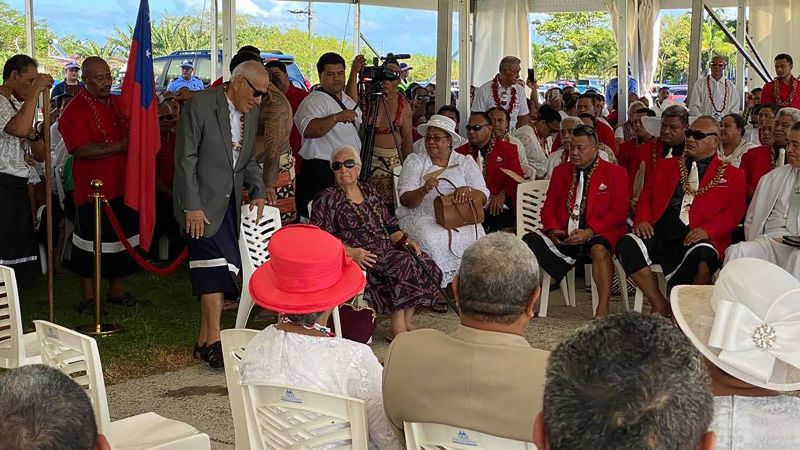
The political crisis gripping Samoa has cast a long shadow over the everyday lives of its citizens. From the bustling marketplaces to the quiet villages, the impact of the budget impasse is palpable. This section offers a glimpse into the human cost of the political turmoil through vivid descriptions of daily life during this challenging period.
A Samoan Village Scene
The aroma of fresh breadfruit and the rhythmic sounds of traditional music once filled the air of the village of Vailele. Now, a palpable tension hangs heavy in the air. The usual chatter of children playing has diminished, replaced by hushed conversations about the political crisis. Families gather in smaller groups, their faces etched with concern. The vibrant colours of the market stalls are muted, reflecting the economic downturn.
The once-thriving community garden, a source of pride and sustenance, now shows signs of neglect. This quiet desperation permeates the village, a stark reminder of the wider societal impact of the political struggle.
A Protest Demonstration
A sea of Samoan flags and traditional attire painted a vibrant yet solemn scene in the capital. The protestors, a diverse group ranging from young students to seasoned elders, stood united in their message. Many held placards bearing slogans calling for the government to address the financial crisis and restore stability. Some carried images of their ancestors, embodying the strength of generations past.
The chants echoed through the streets, resonating with a sense of urgency and the weight of a nation facing an uncertain future. The passionate, yet peaceful, demonstrations were a clear indication of the public’s demand for accountability and change.
A Samoan Leader Addressing the Nation
The leader, standing before a backdrop of the Samoan flag, projected a mixture of resolve and concern. His voice, normally filled with authority, held a hint of vulnerability, a testament to the weight of the situation. He spoke of the nation’s challenges, acknowledging the economic hardship and the public’s anxieties. He Artikeld his vision for the future, emphasizing the need for compromise and unity to navigate the crisis.
His posture, though firm, communicated a sincere desire for a peaceful resolution, a call for understanding amidst the political turmoil.
A Samoan Marketplace
The vibrant colours of the marketplace, usually a hub of activity, now held a subdued atmosphere. The usual lively bartering had subsided, replaced by a sense of apprehension. Vendors, normally animated in their displays, now seemed weary. The selection of goods was noticeably reduced, a reflection of the economic hardship. Empty stalls and fewer customers painted a picture of diminished trade, a direct consequence of the ongoing political instability.
The market, once a symbol of Samoan resilience and trade, now felt like a mirror reflecting the nation’s anxieties.
Last Point: Samoa Dissolves Parliament After Leader Unable Pass Budget
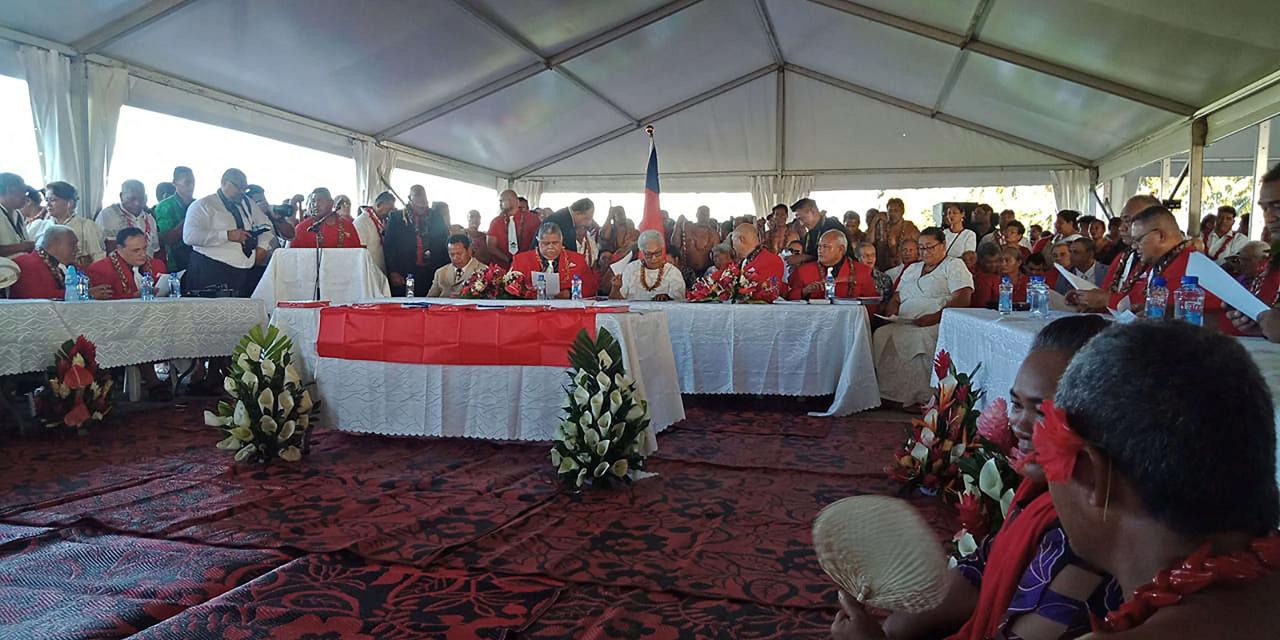
Samoa’s political crisis, sparked by the inability to pass a crucial budget, underscores the delicate balance between political stability and economic prosperity in a small island nation. The potential outcomes, ranging from swift resolution to prolonged instability, will significantly affect not only Samoa’s internal affairs but also its relations with the Pacific region and the international community. The public response and the reactions from other Pacific Island nations will be critical in shaping the future direction of this political crisis.